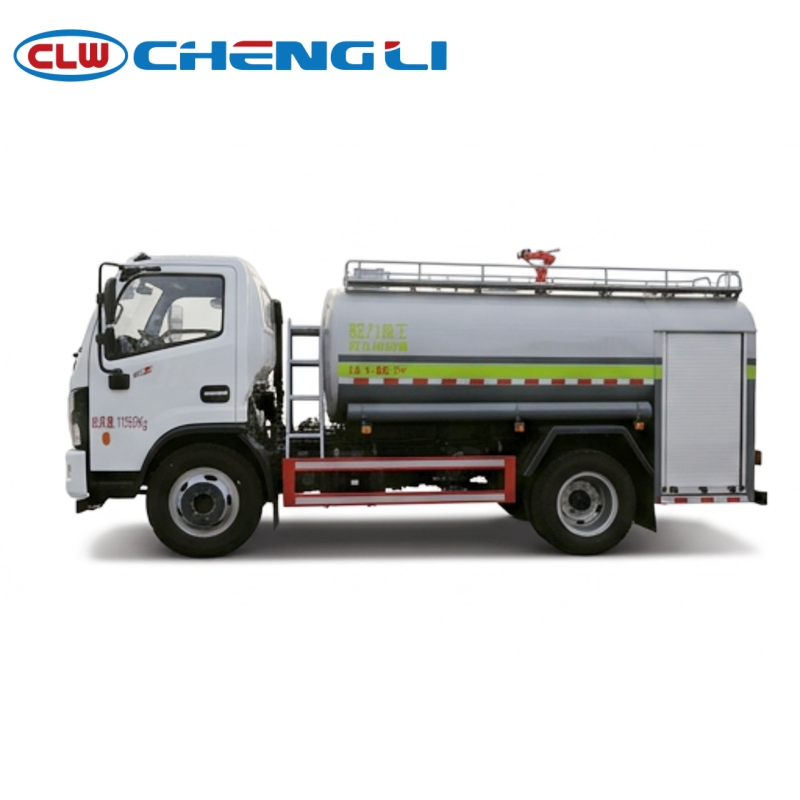
Choose a special-truck chassis by the completed vehicle's legal weight, body length, duty cycle and service support in the destination market. HOWO, Dongfeng, FAW, Foton and Isuzu all appear in our published range, but a brand name alone does not establish payload, reliability or parts availability. Compare exact chassis codes, engines, axles and final body configurations before deciding.
How should five chassis brands be compared fairly?
Start with vehicles doing similar work at similar gross vehicle weights. A 4x2 sprinkler truck with a 12 t GVW is not directly comparable with a 4x2 fire truck carrying a high-output pump or an 18 t sprinkler chassis. Different bodies consume different shares of the mass allowance. Build a comparison sheet with the requested job, approved GVW, finished curb mass, rated payload, wheelbase, engine variant and the service network that can actually support that variant.
The table below shows published examples, not a brand ranking. Three are sprinkler trucks and two are fire trucks. Their water figures are physical tank volumes or stated water tanks; they are not interchangeable proof of legal full-load capacity. Every model must be assessed within its own mission and final approval.
| Brand example | Vehicle and body | Drive and GVW | Published water figure | Wheelbase |
|---|---|---|---|---|
| Dongfeng | Diesel water sprinkler | 4x2; 11,995 kg | 7 m³ physical tank | 3,800 mm |
| FAW Jiefang | Diesel water sprinkler | 4x2; 11,995 kg | 6.88 m³ physical tank | 3,900 mm |
| Foton | Water sprinkler | 4x2; 18,000 kg | 11.1 m³ effective tank volume | 3,950 mm |
| HOWO | Water tank fire truck | 4x2; 19,200 kg | 8,150 L water tank | 4,700 mm |
| Isuzu Elf | Water fire truck | 4x2; 7,360 kg | 3,000 L water tank | 3,360 mm |
The different GVWs explain much of the capacity spread. The Isuzu fire truck is a smaller vehicle than the HOWO fire truck, and the Foton sprinkler sits in a heavier class than the Dongfeng and FAW sprinklers. Do not turn these differences into claims that one chassis brand is inherently more capable. Compare like with like, then decide whether the operating route needs the larger class.
Where does Dongfeng fit in a special-truck order?
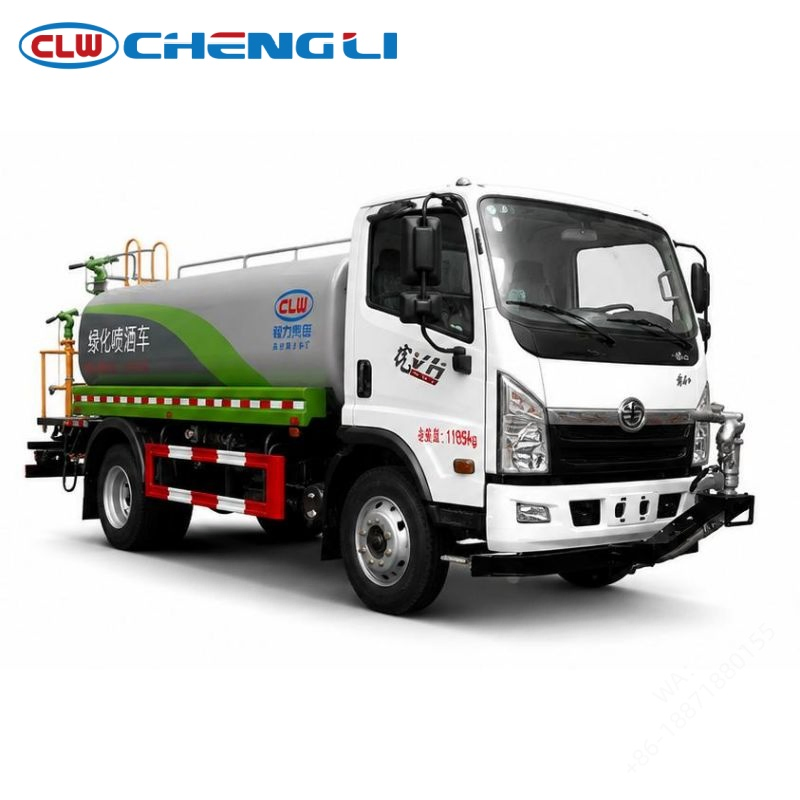
Dongfeng appears in many of our vehicle families, including tankers, sprinklers, rescue trucks and machinery carriers. The Dongfeng 4x2 diesel sprinkler has an 11,995 kg GVW, 3,800 mm wheelbase and a 7 m³ physical water tank. Its front and rear nozzles plus water cannon address routine road wetting and directed spray. The exact road-legal water load still depends on the finished truck's mass approval.
A broad body range can make a brand familiar to buyers, but the chassis model and engine variant remain the decisive specifications. Request the exact model code, engine power, emission configuration, tire size, axle ratings and transmission. A mechanic who can service one Dongfeng powertrain may not stock parts for every other one. Check the local distributor or independent workshop against the specific components on the proposed build.
Dongfeng also offers 4x4 and 6x4 special vehicles in our range. Those drive choices solve different traction and mass-distribution problems. Select drive type from route conditions and finished weight, then compare brands within that chosen class. Otherwise a low-price light-duty configuration may appear favorable only because it cannot perform the required job.
What should buyers check on FAW and Foton chassis?
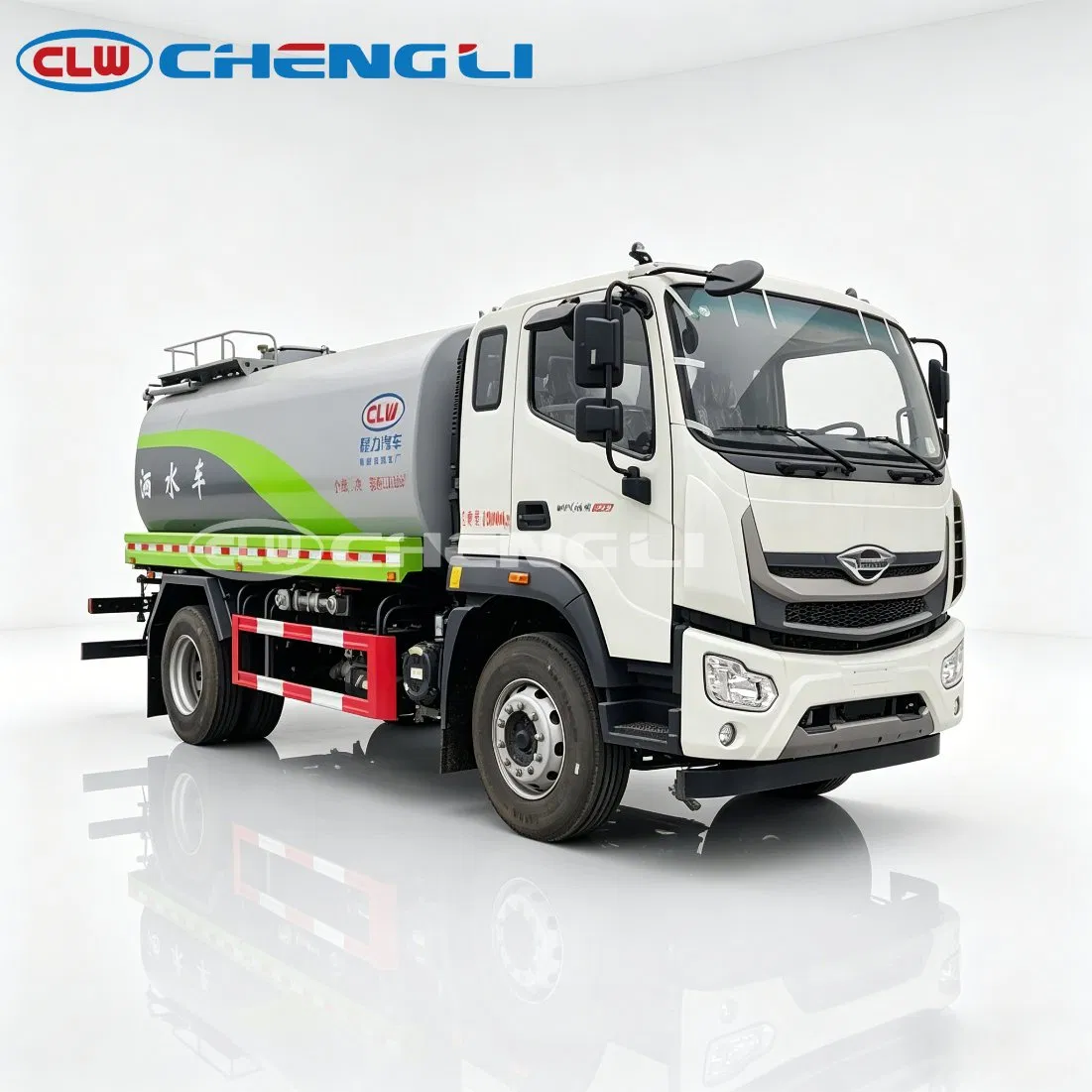
The FAW Jiefang 4x2 sprinkler has an 11,995 kg GVW, 3,900 mm wheelbase and 6.88 m³ physical water tank. Engine choices in its published configuration span 149–179 hp from several suppliers. That is a practical reminder that a brand badge does not identify one engine. Ask which approved engine is fitted, which emissions version applies, and whether its parts and diagnostic support are available where the vehicle will work.
The Foton 4x2 sprinkler is an 18,000 kg GVW build with a 3,950 mm wheelbase. Its stated effective water-tank volume is 11.1 m³, compared with an 11.6 m³ total tank figure. The difference illustrates why two quotes must use the same kind of capacity figure. Its 6,675 kg curb mass is one input to a payload calculation, but a full-tank allowance must also satisfy the finished vehicle's approved payload and axle weights.
Both brands appear in several working roles on the site, so specify the role before requesting alternatives. A water truck's tank, pump and spray system may account for most of the body mass. A crane truck on the same base chassis would instead need a radius-specific lift chart and outrigger layout. The chassis badge cannot tell a buyer whether either body is suitable without the completed vehicle data.
How do HOWO and Isuzu examples change the comparison?
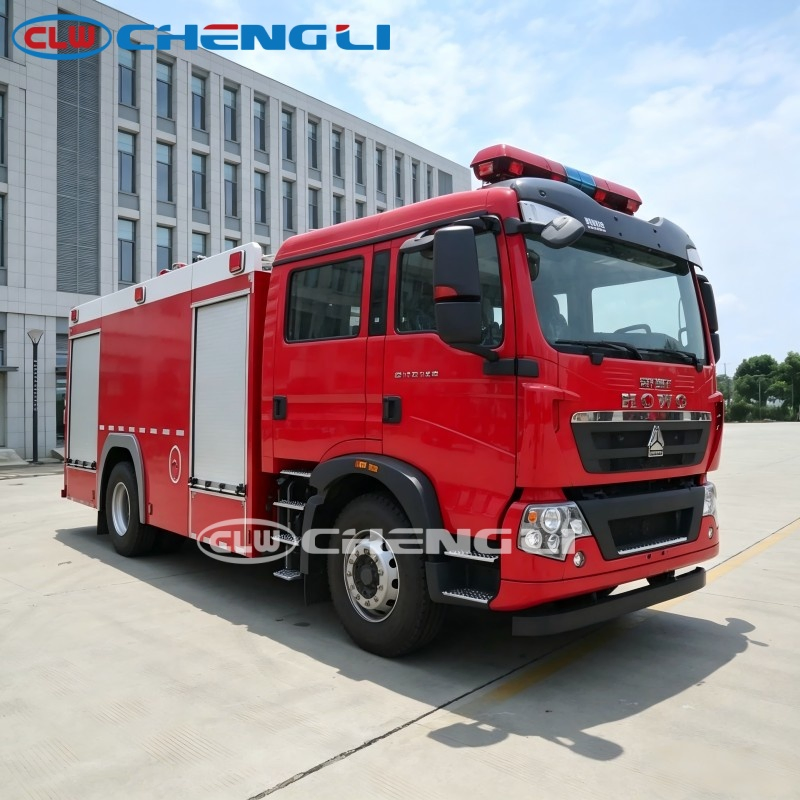
Our HOWO 4x2 water fire truck has a 19,200 kg GVW, 4,700 mm wheelbase, 8,150 L water tank and a CB10/60 pump rated at 60 L/s. Its 10,600 kg curb weight and 8,150 kg stated payload reflect a fire-fighting body, not just a bare water tank. Compare pump flow, hose arrangements, crew space and loaded axle mass when selecting this class. A 4x2 HOWO fire build should not be judged against a light municipal sprinkler on tank capacity alone.
Our Isuzu Elf 4x2 water fire truck has a 7,360 kg GVW, 3,360 mm wheelbase, 3,000 L water tank and a listed 30 L/s fire pump. Its smaller size can suit tighter access where the job's water and pump requirements fit the final configuration. Those numbers do not demonstrate that Isuzu is universally easier to maintain or less costly to operate. Ask for the exact engine version, parts list and local service coverage.
In another application, the published Isuzu refrigerated live-fish truck has a 4,495 kg GVW and 1,100 kg stated payload, while a HOWO refrigerated truck in our range has an 18,000 kg GVW and 10,705 kg rated payload. This is a class difference, not a verdict on the brands. Body insulation, refrigeration equipment and cargo requirement should determine which vehicle class enters the shortlist.
What do parts and service availability mean in an export market?
Availability is local and configuration-specific. A supplier may offer several engine, brake or emission variants under the same chassis family. Before purchase, identify the workshops that can diagnose the chosen engine and electrical system, the nearest stock of regular service parts, and the expected way to obtain less common body components. Ask for part numbers or diagrams for filters, belts, brake wear items, pump seals and hydraulic hoses used on the final build.
Separate chassis support from body support. A local dealer may repair the engine and brakes while a tanker pump, sweeper fan or fire pump requires a specialist. Ask who will provide drawings, fault codes and replacement parts for the mounted equipment. Also confirm the language of maintenance material and the availability of technicians able to commission the equipment.
Emissions rules are another configuration question. A truck advertised with several possible standards is not automatically approved in your country. State the destination and registration requirement before the supplier fixes the engine variant. Check the actual certificate package for the chosen chassis and finished body rather than assuming an option is fitted because it appears in a product family.
How should a buyer make the final shortlist?
Use a common duty sheet for every offer: cargo or extinguishing agent, target working load, route distance, road surface, gradient, maximum height, turning space and operating hours. Require the supplier to return the same data fields for each proposed chassis. A comparison based on equal duty reveals whether the difference is in chassis class, body equipment or optional features.
Score each proposal against non-negotiable requirements first. If a vehicle cannot meet legal axle loads, site access or the required pump output, a cheaper quotation does not solve the problem. Then compare local service, parts, fuel or charging arrangements, driver familiarity and the total operational burden. Do not assign numerical reliability rankings without comparable fleet evidence from your own market.
For municipal water work, the municipal sanitation applications page sets the broader route context. For another job, browse the relevant product categories and compare complete vehicles serving that job. The brand shortlist should follow the mission, not precede it.
What should you confirm before ordering?
- Specify the exact chassis model, engine model, power, transmission, drive layout and emission version.
- Request finished GVW, curb mass, rated payload, axle ratings and body drawing for each proposed build.
- Compare vehicles in the same duty class and with the same definition of tank or body capacity.
- Check loaded turning space, overall height, wheelbase, tire size and route bridge limits.
- Ask local workshops which exact powertrain and electronic systems they can diagnose.
- Obtain parts lists for both chassis and specialized body, with a process for ordering replacements.
- Verify destination-market registration documents for the selected configuration before production.
FAQ
Is one of these chassis brands the most reliable?
Our published product specifications cannot establish a cross-brand reliability ranking. Reliability depends on the specific engine, assembly, maintenance, load and road conditions. Ask local operators for comparable fleet records and check that service parts for the exact chassis variant are available before choosing.
Why can two 4x2 trucks have very different carrying capacities?
4x2 describes axle drive, not gross vehicle weight. Our Isuzu Elf fire truck has 7,360 kg GVW, while the HOWO water fire truck has 19,200 kg GVW. They also carry different bodies and pumps. Compare approved total and axle masses, plus finished curb weight, before calculating any usable load.
Does a larger water tank make a better sprinkler truck?
Only if the route and chassis can use it. A larger physical vessel can reduce refill trips, but loaded water mass, axle limits, turning space and pump output may become constraints. The FAW 6.88 m³ and Foton 11.1 m³ examples occupy different GVW classes, so compare each against the same route and required working volume.
Can I choose an engine from the chassis brand name?
No. Some vehicle families offer multiple engine suppliers and outputs. The FAW sprinkler configuration lists 149–179 hp options from several makers. Specify the exact fitted engine, emissions approval, transmission match and local parts support in the order sheet rather than relying on the chassis brand alone.
Should the local chassis dealer also service the special body?
Do not assume so. Engine, brakes and diagnostics may be covered by one workshop, while a fire pump, spray system or hydraulic body needs separate support. Establish who provides commissioning, drawings, fault finding and parts for each system, and record those responsibilities before the vehicle is shipped.
Select HOWO, Dongfeng, FAW, Foton or Isuzu by the completed vehicle that meets your job and can be supported locally. Send us the duty sheet and destination market through our contact page for a comparison based on matching configurations.