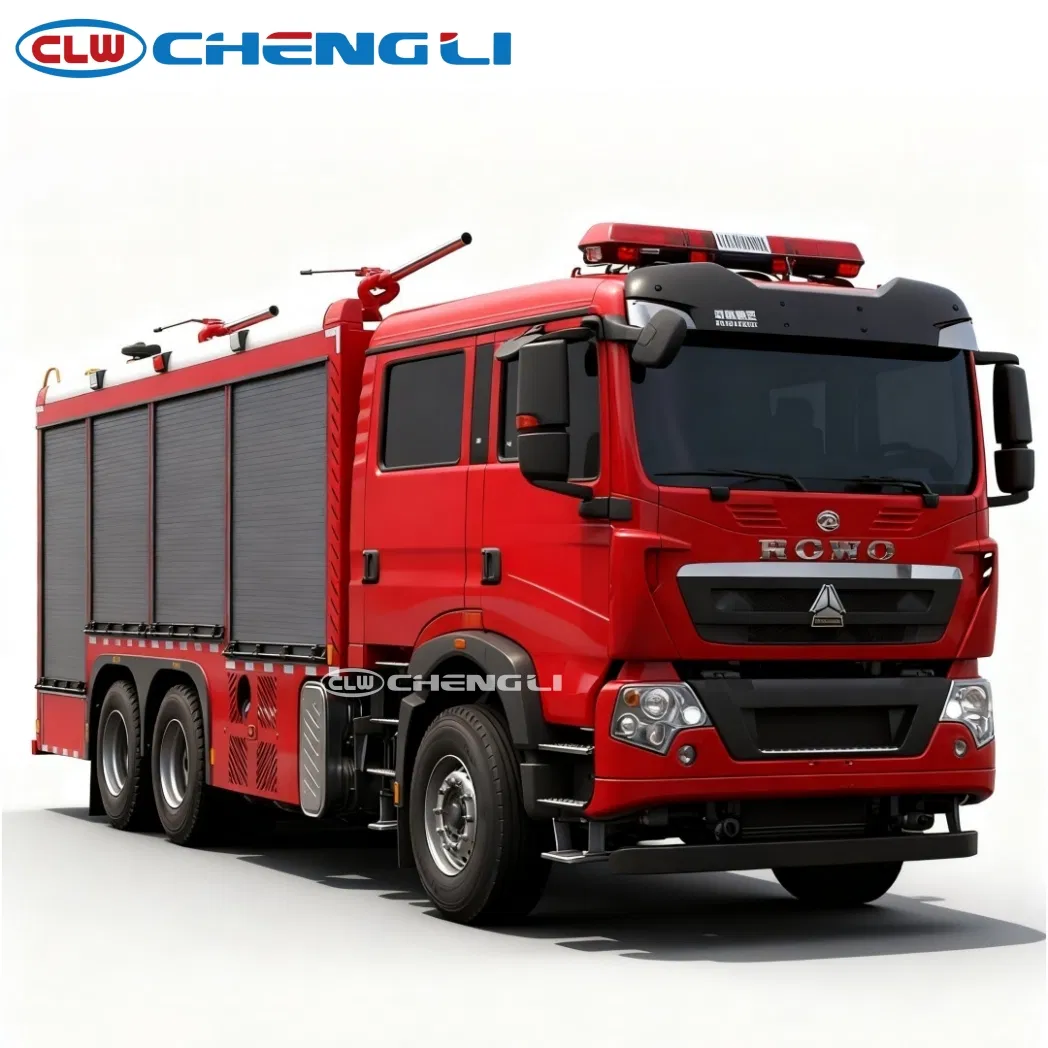
An airport ground fleet has three layers. Aircraft refuelers, either hydrant dispensers or tanker refuelers, put jet fuel into the wing. Crash tenders and structural fire trucks cover the runway, the fuel farm and the terminal. Support trucks fuel ground equipment, sweep debris from the pavement and move staff. Each layer answers to different rules, so each one is specified on its own terms.
What vehicles make up an airport ground fleet?
Airports group airside vehicles by what they touch. Anything that connects to an aircraft, such as a refueler, a lavatory service truck or a catering lift, works to the procedures of the airline and the fuel supplier. Emergency vehicles answer to the airport rescue and firefighting (ARFF) service. Everything else is support equipment, and it still has to meet airside driving rules: a beacon, a radio, conspicuity markings and an airside permit for the driver.
The table maps the main roles to vehicle types and shows where our current range fits.
| Role | Vehicle type | What drives the specification | Our current range |
|---|---|---|---|
| Into-plane fueling | Hydrant dispenser or tanker refueler | Flow rate, filtration, deadman control, lift platform | Not currently listed |
| Runway fire and rescue | ARFF crash tender | Airport fire category, acceleration, pump-and-roll | Not currently listed |
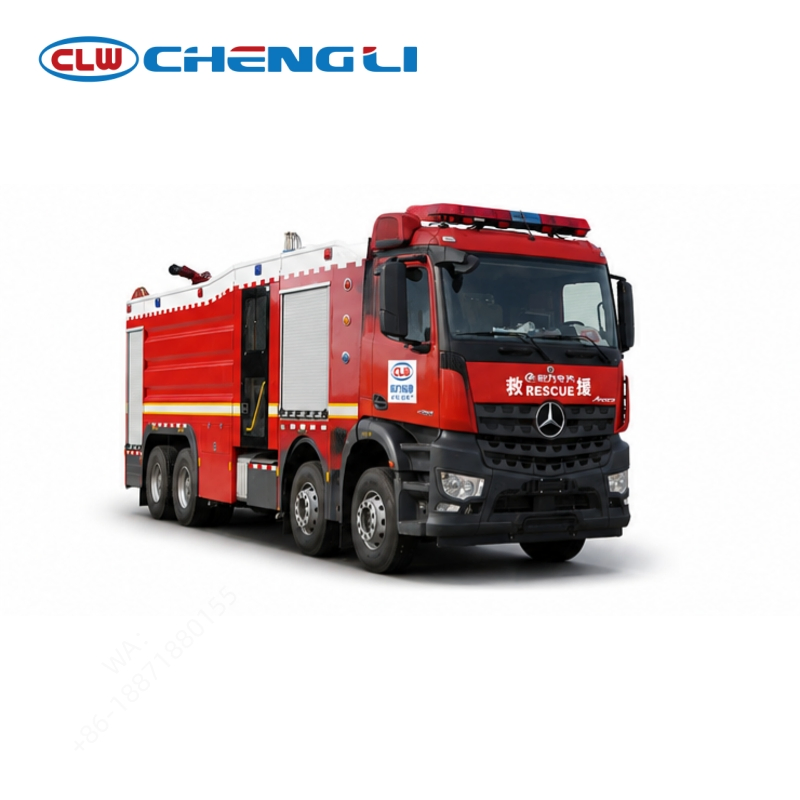
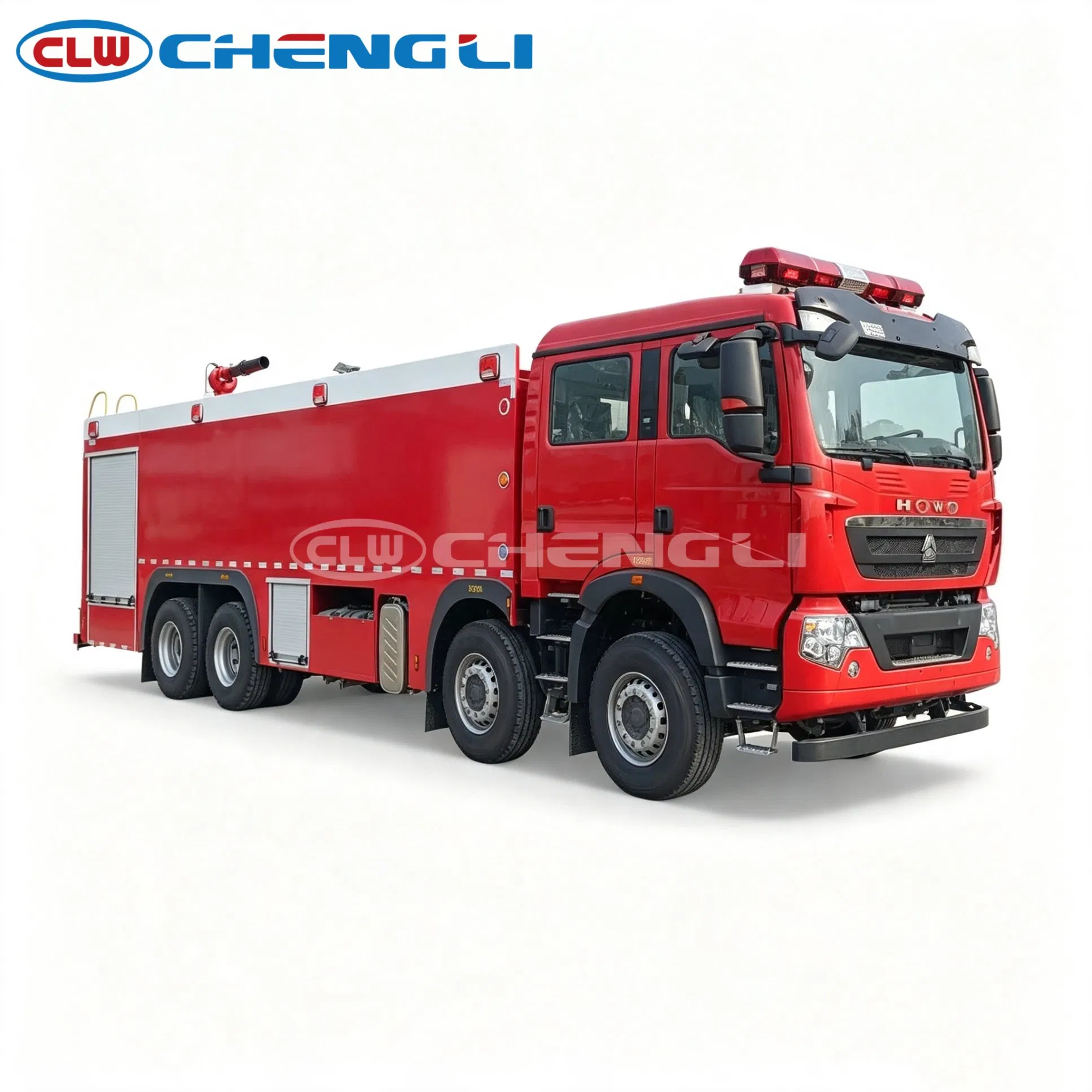
| Complementary agent and standby | Dry powder or foam fire truck | Agent mass and volume, crew, discharge method | 6,000 kg dry powder 6x4; 12,600 L and 20,900 L water-and-foam 8x4 |
| Terminal, hangar and fuel farm fires | Structural pumper | Pump flow and pressure, water tank | Rear pump rated 100 L/s at 1.0 MPa on the HOWO 8x4 |
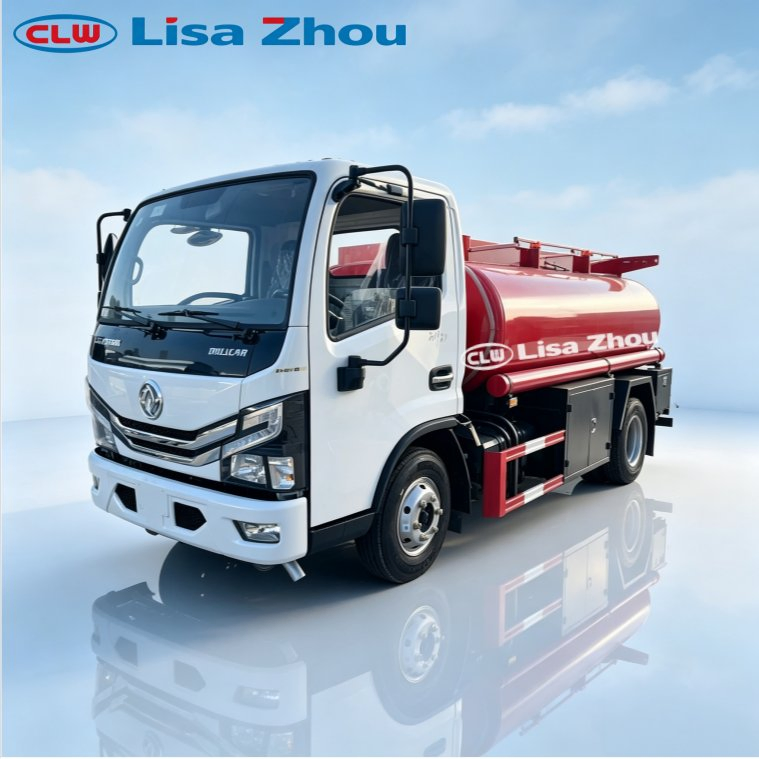
| Ground equipment fuel | Fuel bowser | Tank size, compartments, meter, hose reel | 6,000 L to 20,000 L tankers with pump and reel options |
| Pavement cleaning | Sweeper or washer-sweeper | Working width, suction, water tank | Up to 3.2 m cleaning width |
| Staff and crew transport | Minibus | Seats, height, turning space | 24–31 seat minibus |
Aircraft refueler trucks: hydrant dispensers vs tanker refuelers
There are two kinds of aircraft refueler, and the fuel infrastructure at the airport decides which one you need. A hydrant dispenser carries no fuel. It connects by hose to a pit valve in the apron, filters and meters the fuel, and lifts the delivery hose to the wing on a platform. Large airports with an underground hydrant network run mostly dispensers, because one truck can serve aircraft after aircraft without returning to the fuel farm.
A tanker refueler carries its own load and pumps it into the aircraft. Regional airports, military airfields and airports without hydrants depend on them. Jet A-1 weighs about 0.8 kg/L, so tank size is limited by chassis payload exactly as on any fuel truck: 20,000 L of jet fuel is roughly 16 t before the tank, pump and filter skid are counted.
Both types carry equipment a road tanker does not: filter water separators or filter monitors, sampling points for water checks, pressure control at the nozzle, a deadman control that stops flow when the operator lets go, bonding cables, and hoses and couplings made for aviation fuel. Airports and into-plane operators set their own equipment and inspection standards, so the specification starts with them, not with the truck builder. We do not currently list aircraft refuelers.
Crash tenders and the airport fire service
An ARFF crash tender is built for one job: reach an aircraft fire anywhere on the movement area within the required response time and discharge foam while still moving. That calls for very high acceleration, all-wheel drive on a purpose-built chassis, a roof turret and often a bumper turret. The International Civil Aviation Organization (ICAO) groups airports into rescue and firefighting categories by the length and fuselage width of the largest aircraft they handle, and each category sets a minimum number of vehicles and quantity of agent. We do not currently list ARFF crash tenders.
Commercial truck chassis cannot match a crash tender off the pavement, but they still earn a place at the airport. Heavy water-and-foam trucks resupply the crash tenders with water, cover fuel farms and hangars, and fight structural fires at the terminal. Our Mercedes Arocs 8x4 water and foam truck carries 12,600 L of water and 5,500 L of foam concentrate behind a six-seat crew cab, with a 579 hp engine and a roof monitor. The HOWO 8x4 alternative carries 20,900 L of water and 3,900 L of foam and has a rear pump rated at 100 L/s at 1.0 MPa, which makes it a strong water supply unit for long incidents.
Dry powder as a complementary agent
Dry chemical powder is effective on running-fuel and pressurized-fuel fires, such as fuel escaping from a damaged wing tank or fuel line, where foam struggles to form a blanket. Airport fire services carry it as a complementary agent next to foam. Our HOWO 6x4 dry powder fire truck holds 6,000 kg of powder in two 3,000 L cylinders, runs at 24,450 kg GVW and is rated for 100 km/h on the road. Powder gives no cooling and no protection against re-ignition, so it works alongside a foam vehicle, never instead of one.
Fuel bowsers for ground support equipment
Tugs, ground power units, belt loaders, generators and airside buses run on diesel or gasoline, not jet fuel, and many airports refuel them on the stand instead of sending them to a fuel station. That is bowser work. Our Dongfeng 6,000 L pump-in/pump-out tanker is 6,840 mm long, fills at 50 m³/h, carries a flame arrester and two fire extinguishers as standard, and takes an optional high-flow dispenser with a 15 m hose reel.
Where both diesel and gasoline are needed, the HOWO 6x4 20,000 L tanker splits its tank into four compartments with a level indicator for each, and meters through a flow meter and a 15 m reel. At 10,350 mm long it needs more room on the stand, so it suits a central refueling point better than tight gate areas.
Keep ground fuel and aviation fuel equipment strictly apart. Distinct colors, product labels and nozzle types on the bowser reduce the chance of a diesel or gasoline nozzle ever reaching an aircraft.
Sweepers, water trucks and FOD control
Foreign object debris (FOD), such as stones, bolts, luggage tags and pavement fragments, can be drawn into jet engines or cut aircraft tires. Airports inspect runways and taxiways on a fixed schedule and sweep aprons and service roads where debris collects. A truck sweeper with side brushes and central suction picks up grit and small parts in one pass; dedicated FOD sweepers often add a magnetic bar for metal pieces.
Our Dongfeng 4x2 washing and suction sweeper cleans up to 3.2 m wide, is 6,350 mm long on a 7,360 kg GVW chassis, and combines high-pressure jets with suction, which suits aprons, cargo yards and terminal forecourts. It is not a runway rubber-removal machine; rubber deposits in touchdown zones need dedicated ultra-high-pressure equipment. Water trucks complete the cleaning fleet: they wash down spills on aprons, supply fire training grounds and keep dust down during runway works.
Passenger, crew and maintenance support
Apron buses that carry passengers between gate and aircraft are a specialized low-floor type that we do not currently list. For staff, crew and contractor transport, a 24–31 seat minibus on a 7,400 kg GVW chassis covers shift changes between car parks, offices and work areas. Around them, refrigerated trucks supply the catering units, aerial work platforms service terminal lighting and facades, and emergency support vehicles bring lighting and power to night works and incidents. Our airport vehicle overview groups these trucks by the job they do.
What to confirm before ordering airside vehicles
- Airside rules: beacon color and position, radio, conspicuity markings, speed limiter and any vehicle inspection the airport requires before it issues a permit.
- Height and clearance: overall height against wings, engine nacelles and boarding bridges, and turning space on the stands the truck will use.
- Fire service role: whether the truck counts toward the airport fire category or serves as a support, structural or standby vehicle; specify the standard your aviation authority requires and confirm it at quotation.
- Agents: water volume, foam concentrate type and volume, dry powder mass and discharge method, matched to the risks the vehicle covers.
- Ground fuel: diesel, gasoline or both, number of compartments, meter type and hose length, with no shared fittings with aviation fuel equipment.
- Cleaning duty: surfaces to sweep, working width, water tank size and whether magnetic pickup is needed.
- Chassis: drive type, emission level, left- or right-hand drive and local service support for the engine brand.
FAQ
What is the difference between an aircraft refueler and a fuel tanker?
A road fuel tanker moves fuel between terminals, depots and stations and unloads through couplings or a simple pump. An aircraft refueler delivers into the wing and adds filtration, water detection, nozzle pressure control, a deadman system and often a lift platform, all to keep jet fuel clean and the flow under control. The tanks can look alike, but the two vehicles are not interchangeable.
How much fuel does an aircraft refueler carry?
A hydrant dispenser carries none; it draws from the airport hydrant network. Tanker refuelers are sized like other fuel trucks, by chassis payload. At about 0.8 kg/L, every 10,000 L of jet fuel weighs roughly 8 t, so a two-axle chassis carries far less than a three- or four-axle one. Size the tank to the aircraft you fuel and the number of turns the truck can make per shift.
Can a standard fire truck be used at an airport?
Yes, for structural, fuel farm, hangar and standby duties, and many airports run them next to their crash tenders. A standard fire truck does not usually meet the acceleration, off-pavement mobility and pump-and-roll performance expected of ARFF vehicles, so check with your aviation authority before counting it toward the airport fire category.
Why do airport fire services carry dry powder?
Foam smothers and cools a pool fire but has trouble with fuel that is spraying or running from height. Dry powder interrupts combustion quickly and reaches those fires. It gives no cooling and no protection against re-ignition, so crews apply it together with foam rather than on its own.
Do airport sweepers need special equipment?
A municipal-style sweeper handles aprons, service roads and car parks well. Runway and taxiway FOD work often adds magnetic bars, strong suction for small hard objects and work lights for night shifts. Rubber build-up in runway touchdown zones is a separate job that calls for ultra-high-pressure water or chemical treatment, not a sweeper.
Start with the rules of the airport itself: the fuel infrastructure decides between hydrant dispensers and tanker refuelers, the fire category decides the crash tenders, and the support fleet fills the gaps around them. Browse our fire trucks from 850 L to 25,000 L for standby and structural cover, then tell us your airport roles, agents and fuel products and our engineers will propose a configuration for each vehicle.