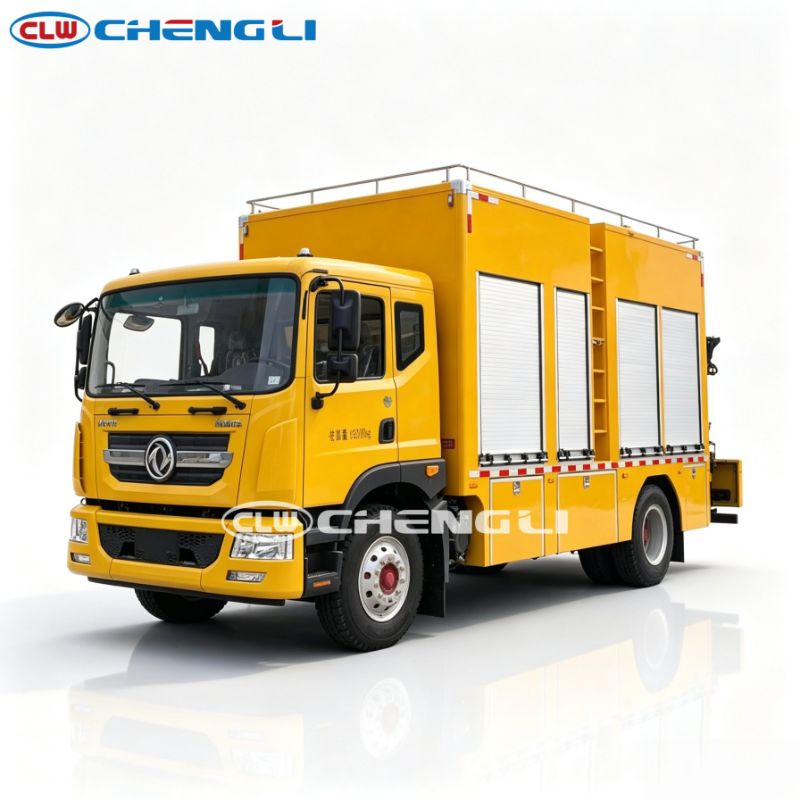
Pick a rescue truck by the job it arrives to do. Lighting trucks bring a generator, floodlights and power distribution; drainage trucks bring a pump, generator and control cabinet; utility rescue vans bring a compressor, cutter and welder; heavier trucks add a crane and winch. Chassis size follows the kit and the crew, from a 3,300 kg pickup to a 12,000 kg truck.
What a rescue truck carries
A rescue truck is a mobile toolbox with its own power. Fire and emergency services often grade rescue trucks as light, medium or heavy by the equipment they carry, and the same logic works for municipal and utility fleets. Four equipment groups cover most calls:
- Light and power: a generator set, floodlights and a power distribution cabinet for night scenes and outages.
- Water removal: a drainage pump with its own generator and controls for flooded streets, underpasses and basements.
- Cutting and repair: an air compressor, cutting machine and welder for burst pipes, damaged structures and plant failures.
- Lifting and pulling: a crane and winch to move wreckage, debris or stuck vehicles.
Our rescue trucks compared
The table sets our current rescue trucks side by side. Equipment ratings such as generator output, pump flow, winch pull and crane capacity are chosen when the truck is specified.
| Truck | GVW | Size (L × W) | Crew | Main equipment |
|---|---|---|---|---|
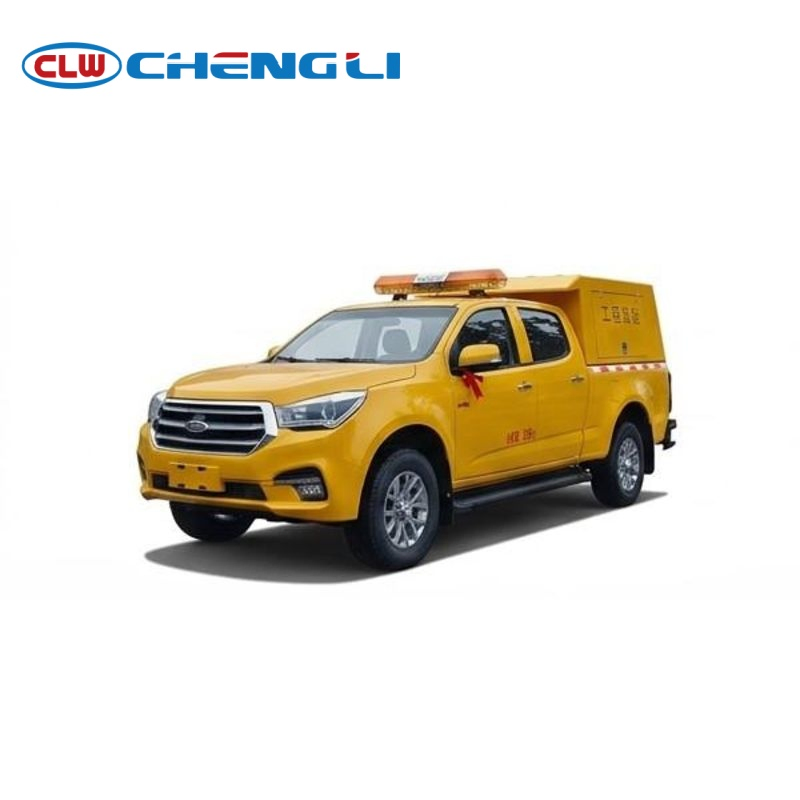
| CLW 4x2 pickup generator and drainage truck | 3,300 kg | 5,660 × 1,885 mm | 5 | Generator set, drainage equipment |
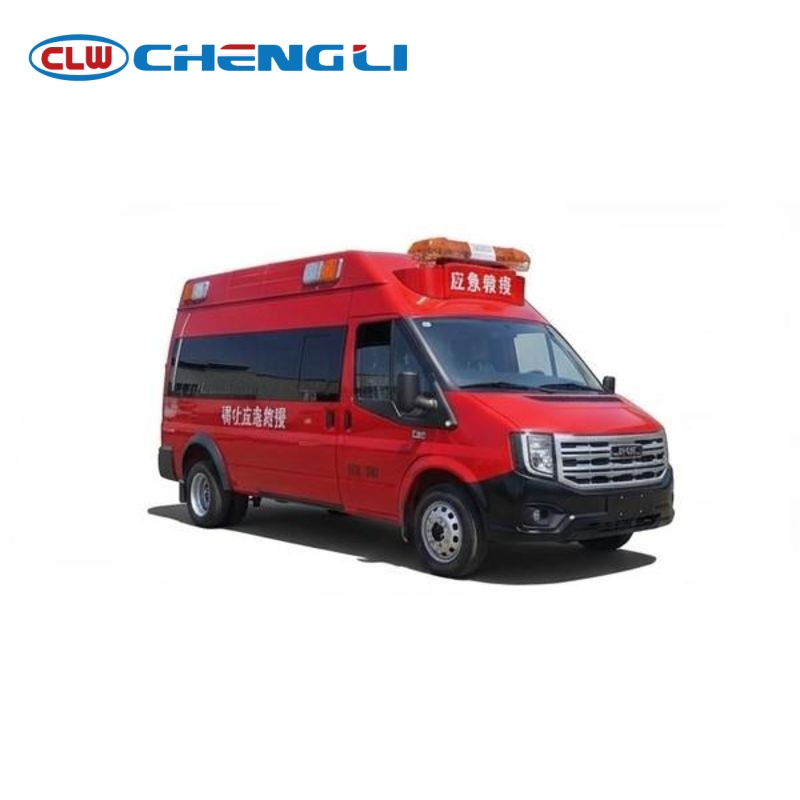
| JMC 4x2 rescue van | 4,250 kg | 5,998 × 2,098 mm | 6–9 | Air compressor, generator, cutter, welder |
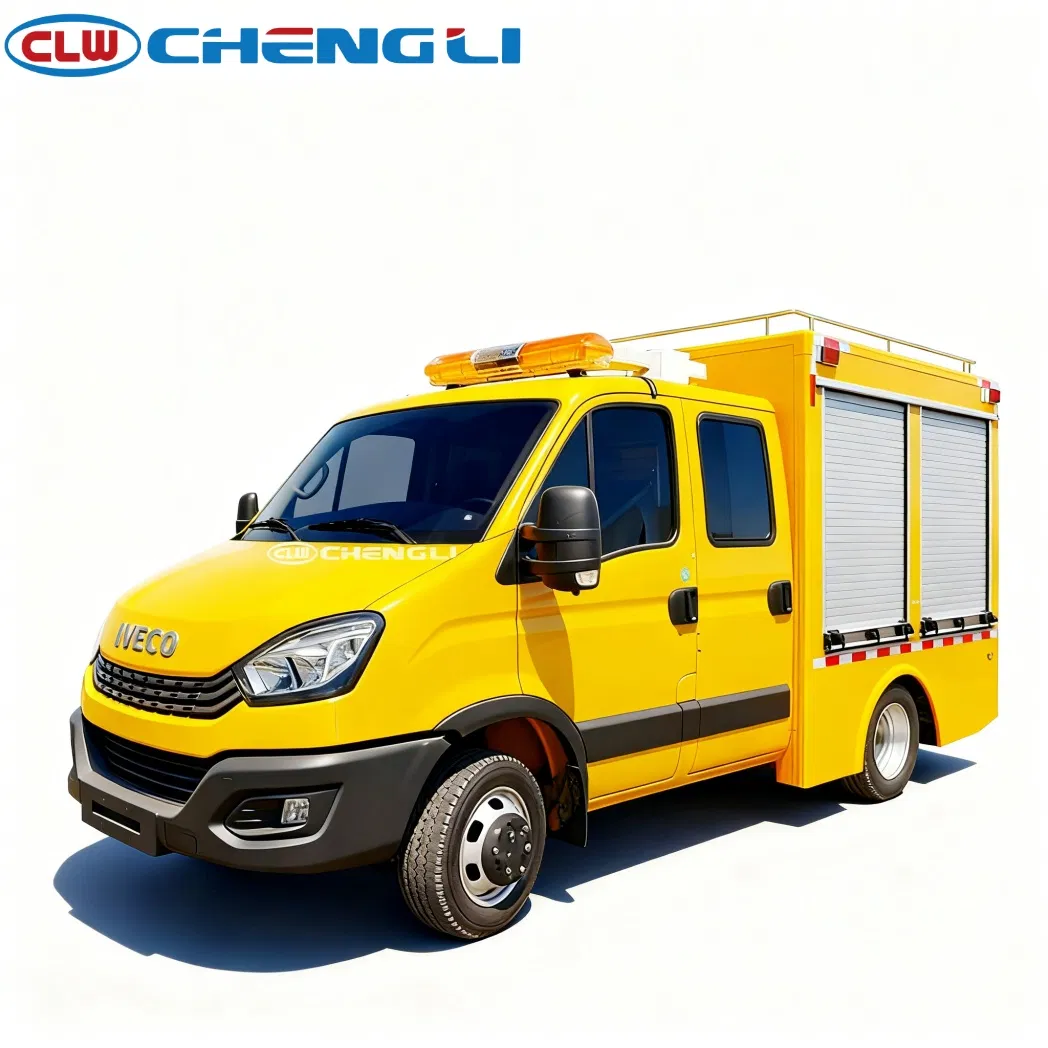
| Iveco 4x2 double-cab drainage vehicle | 4,490 kg | 5,995 × 2,200 mm | 6 | Drainage pump, generator set, control cabinet |
| JMC 4x2 5.9 t lighting truck | 5,890 kg | 5,990 × 2,060 mm | 2 | Lighting, power distribution, rescue tools |
| Dongfeng 4x2 12 t lighting truck | 12,000 kg | 8,350 × 2,550 mm | 2 | Generator, floodlight, power cabinet, crane, winch |
Lighting and power at the scene
Night accidents, collapsed structures and storm damage all need light before anything else. A lighting truck carries a generator set, floodlights and a power distribution system, so the crew can light the scene and run electric tools from one vehicle instead of towing a separate generator. Our Dongfeng 12 t rescue lighting truck with crane and winch adds lifting and pulling to the lighting package, with a choice of 145 kW or 147 kW Euro 6 engines and wheelbases from 3,600 to 5,300 mm. The JMC 5.9 t lighting truck packs lighting, power distribution and rescue tools into a 5,990 mm body with a 20° approach angle for curbs and ramps.
When specifying, set generator output from the loads you will run at once: floodlights, power tools, pumps and any equipment plugged into the distribution cabinet. Then choose lamp type and mast height from the area you need to light and the obstacles around it.
Drainage rescue: pump flow, head and generator match
Drainage rescue trucks empty flooded underpasses, basements and underground garages. Our Iveco 4x2 double-cab drainage rescue vehicle carries a drainage pump, a generator set and a control cabinet behind aluminum rolling shutters, with a six-seat double cab so the crew travels with the kit. The CLW pickup does a similar job at 3,300 kg GVW and 1,885 mm wide, small enough for alleys and garage ramps that a truck cannot use.
Two pump figures matter. Flow, usually in m³/h, sets how fast the water level falls. Head, in meters, is the height the pump must lift water from the lowest point to the discharge, plus losses in the hose. A pump's flow drops as head rises, so a basement 6 m below street level needs a pump rated for its flow at that head, not at zero lift. The generator must then start and run the pump motor with margin, since motor starting current is several times its running current.
Tools, lifting and repair equipment
Repair calls need workshop tools more than lights. The JMC 4x2 rescue van with compressor, generator and welder carries an air compressor, generator, cutting machine and welding machine in an enclosed body, with seating for six to nine people and a manual gearbox with power take-off. It suits water-main and pipeline repairs, power-line restoration and emergency work inside plants.
Lifting is the next step up. A crane and winch let one crew move wreckage, fallen trees or debris without waiting for a separate machine; confirm crane capacity at the working radius you need and winch pull against the heaviest object you expect to recover. Our fire and emergency services solutions show how rescue trucks work alongside fire trucks and support vehicles.
Weight margin: why the full kit is specified at order
On a rescue truck, the fitted equipment counts in the curb weight, so the gap between curb weight and gross vehicle weight is what remains for crew and anything added later. Our Dongfeng 12 t lighting truck weighs 11,880 kg against a 12,000 kg GVW, and the JMC 5.9 t lighting truck weighs 5,500 kg against 5,890 kg. That leaves 120 kg and 390 kg respectively.
The lesson is simple: list every tool, hose, cable reel and spare you plan to carry before the truck is built, so the chassis and equipment are sized together. Adding a heavier pump or a second generator after delivery can push the truck over its rating.
How to specify a rescue truck
- Typical calls: night accidents, floods, utility repairs or structural rescue, ranked by how often they happen.
- Equipment list: generator output, pump flow and head, lamp type and mast height, crane capacity and winch pull.
- Full kit weight: every tool, hose and cable reel you will carry, checked against the GVW.
- Crew size: two seats, a double cab for five or six, or a van for up to nine.
- Access: the narrowest street, lowest garage entrance and steepest ramp the truck must reach.
- Market details: emission level from Euro 2 to Euro 6, left- or right-hand drive and local warning-light rules.
FAQ
What is the difference between a rescue truck and a fire truck?
A fire truck is built around water or foam: tanks, pumps and monitors for firefighting. A rescue truck is built around tools and power: lighting, generators, drainage pumps, cutting and lifting gear. Many services run both, and some fire trucks carry rescue equipment. Our guide to fire truck types covers the firefighting side.
What is a light rescue truck?
It is a small, fast rescue vehicle that carries lighting, power and hand tools rather than heavy lifting gear. Light rescue trucks are usually built on vans, pickups or light trucks and reach the scene quickly through traffic. In our range, the CLW pickup, the JMC and Iveco vans and the JMC 5.9 t lighting truck fit this description.
How powerful should the generator on a rescue truck be?
Add up everything that will run at the same time, including lights, pumps, power tools and chargers, then add a margin for motor starting current. Electric motors draw several times their running current as they start, so pumps and compressors set the size more than lights do. Tell us your equipment list and we will size the generator with it.
Can a drainage rescue truck pump sewage?
Only if the pump is specified for it. Flood water carries mud, leaves and debris, so drainage pumps for rescue work are chosen for solids handling as well as flow and head. Raw sewage and sludge are better handled by a vacuum truck with a sealed tank. State the water you expect to move so the pump type can be matched.
Start with the calls you answer most often, list the full equipment kit with its weight, then choose the chassis that carries it and the crew. Compare current builds in our emergency rescue vehicle range, then send your equipment list, crew size and destination market through our contact page, and our engineers will propose a configuration.