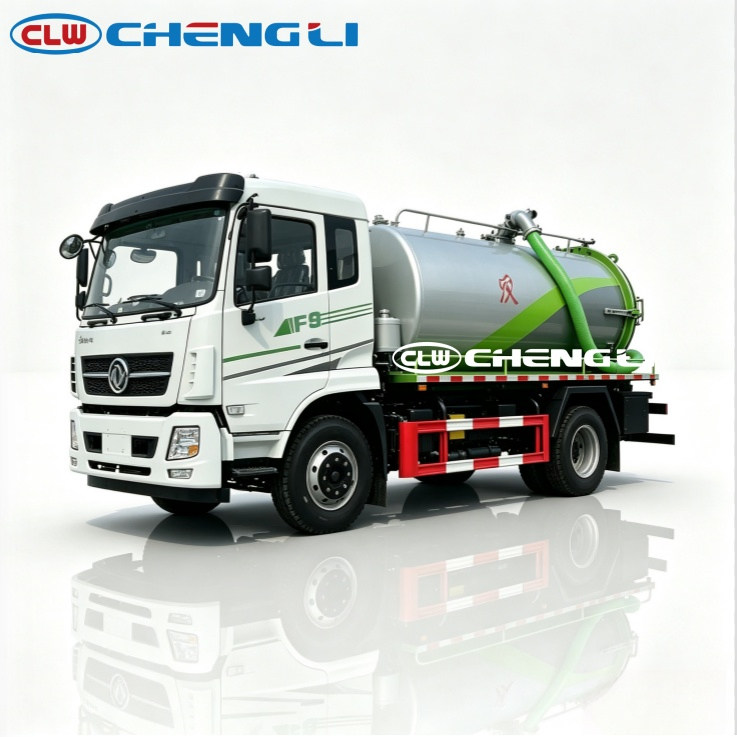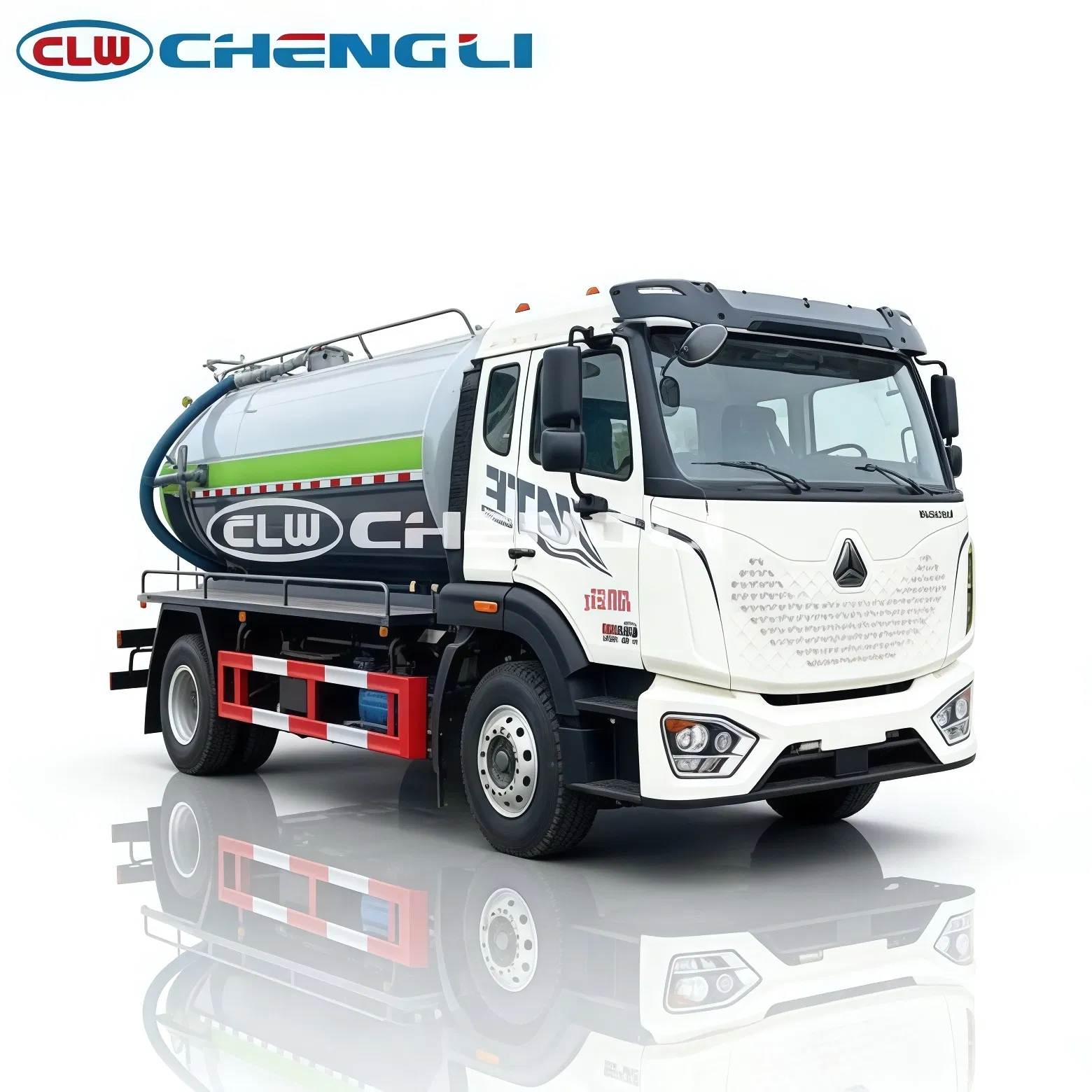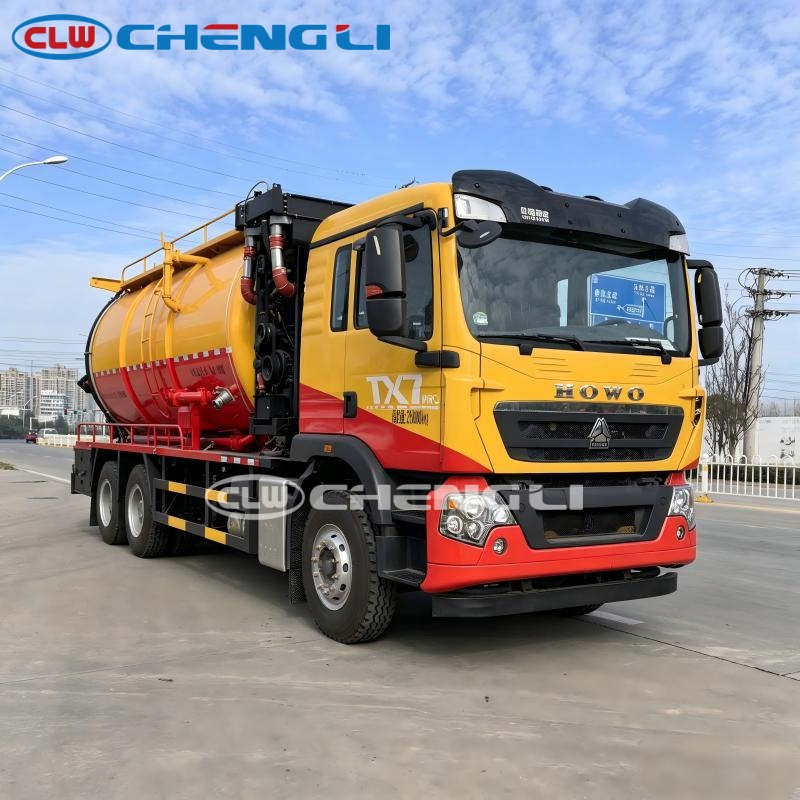
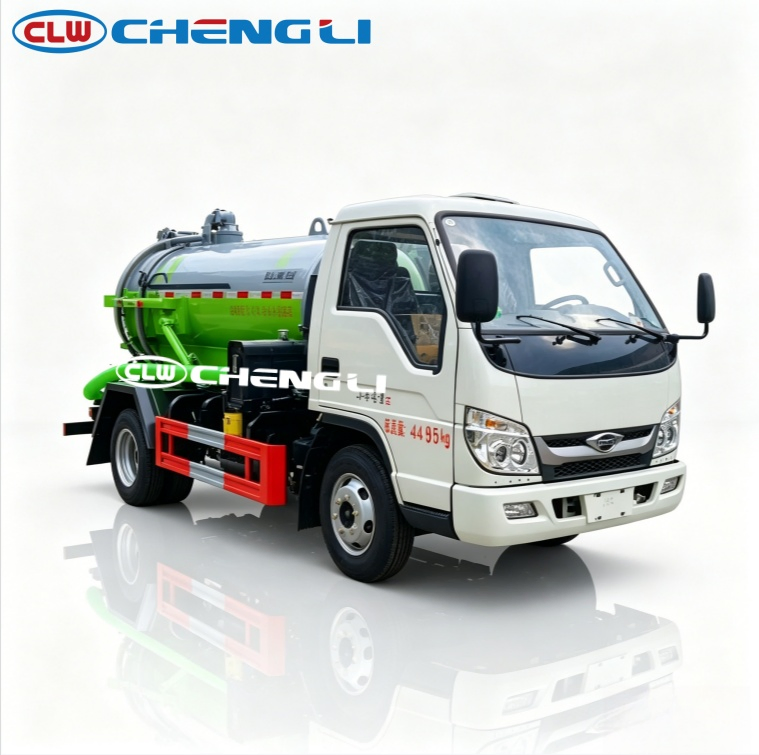
If you are starting or growing a pit-emptying business, the truck is your largest purchase and the one you will live with longest. The trouble begins with the name. Suppliers list a "vacuum sewage truck" or "sewage suction truck"; customers ask for an exhauster, a septic tanker, a honey sucker or a cesspit emptier. This guide uses the names buyers use and ties them to the trucks we build.
Septic tanker, exhauster, vacuum truck: one vehicle, three names
- Exhauster is the everyday word in Kenya and Uganda for a truck that empties septic tanks and pit latrines.
- Septic tanker or septic truck is common in Nigeria, Ghana and the Philippines.
- Vacuum truck or vacuum sewage truck is the factory name, because a vacuum pump does the work.
All three are in our vacuum and sewage trucks category. A note on searching: "septic tanker" also brings up fixed septic tanks for houses. We build the truck, not the underground tank.
How a septic tanker empties a pit or tank
The truck does not pump sewage through the pump. The vacuum pump draws air out of the steel tank. Once the pressure inside is lower than the air outside, the atmosphere pushes the waste up the suction hose and into the tank. Because the waste never passes through the pump, rags, sand and sludge do not destroy it.
Four parts protect the pump and the operator, and they should be named in any quotation: an anti-overflow valve that stops liquid reaching the pump when the tank is full, a pressure gauge, a sight glass that shows the level, and working and warning lights. To empty the tank, the operator opens the rear valve and lets the load run out by gravity, or reverses the pump to pressurize the tank and push the load out. Trucks with a tank lifting system and a rear door tip the tank to clear settled sludge.
Tank sizes from 2 m³ to 17 m³ and the jobs they suit
One cubic meter is 1,000 liters, so a "10,000 liter exhauster" is a 10 m³ truck. These are the sizes in our range.
| Tank | Truck | Gross weight | Typical work |
|---|---|---|---|
| 2.2 m³ | Foton 4x2 mini vacuum truck, 1,980 mm wide | 4,495 kg | Narrow lanes, informal settlements, single household pits |
| 5 m³ | Dongfeng 4x2 suction truck | 4,495 kg | Town rounds with short trips to the disposal point |
| 11 m³ | Dongfeng 4x2 septic tank cleaning truck | 16,000 kg | Estates, schools, hotels, several households per trip |
| 12 m³ | Shacman Delong 4x2, 6 mm tank, SK-15 pump | 18,000 kg | Commercial contracts, markets, institutions |
| 13.8 m³ | HOWO 4x2, 8 mm tank, 2BE204 pump | 18,000 kg | Large septic tanks, long hauls to the treatment works |
| 17 m³ plus 5 m³ clean water | HOWO 6x4, 350 hp, 2BE258 pump | 25,000 kg | Municipal work, industrial pits, suction with washing |
Two rules decide the size. First, access: a truck that cannot reach the pit earns nothing, which is why operators in dense areas keep a mini truck even when they own a big one. Second, distance to the disposal point: the further you drive to empty, the more a larger tank pays back.
Tank volume is not the same as legal payload
Septic waste weighs about as much as water, roughly one tonne per cubic meter, and thick sludge weighs more. Compare that with the rated payload on the specification sheet. Our 13.8 m³ HOWO lists a rated payload of 8,640 kg, and the 5 m³ Dongfeng lists a tank far larger than its rated payload allows it to carry full. Where axle loads are checked, plan your loads on the payload, not on the tank volume, and ask the supplier for both figures.
Vacuum pump, hose length and suction depth
Three figures tell you what the suction side can do.
- Pump type. The trucks listed above use water-ring vacuum pumps (models SK-9, SK-12, SK-15, 2BE204 and 2BE258). They tolerate damp, dirty air well and need their sealing water checked daily.
- Pump flow. This is how fast the pump removes air, and so how quickly the tank reaches working vacuum. Our 4 m³ Dongfeng Duolika is offered with a 420 m³/h pump or a 720 m³/h pump. A bigger tank needs a bigger pump, or each job takes longer.
- Suction depth. The Duolika lists a suction depth of at least 9 m. That is close to the physical limit: the atmosphere can only push liquid up about 10 m, whatever the pump. Be careful with any claim far above this. For deep pits, what matters is the vertical lift, not the hose length.
Hose length is your reach along the ground. A longer hose lets you park on the road and work behind a house, but every extra meter and every bend slows the flow. State the longest run you expect, and ask for the hose diameter and the number of lengths supplied.
Suction only, or suction with jetting?
A plain exhauster only sucks. A combination truck also carries clean water and a high-pressure pump, so it can break up hard sludge and wash a sewer line before sucking out the debris. Our 17 m³ HOWO carries 5 m³ of clean water and a 350 L/min high-pressure pump. Several smaller models list the high-pressure system, water pump and hose reel as options.
For household pits and septic tanks, suction alone does the job. For blocked sewers and drains, read our comparison of the vacuum truck, sewer jetting truck and combination unit before you decide.
What sets the price of a septic tanker
We quote every truck FOB for its exact configuration. The reference prices published for the vacuum and sewage trucks in our range run from US$12,000 to US$68,000:
| Model | Tank | Drive | Reference price |
|---|---|---|---|
| Dongfeng Duolika low-profile sewer jetting truck | 4 m³ | 4x2 | US$12,000 |
| Dongfeng manure suction truck | 5 m³ | 4x2 | US$17,000 |
| Foton mini vacuum sewage truck | 2.2 m³ | 4x2 | US$19,000 |
| Hongyan vacuum tanker with 5 m³ water tank | 17 m³ | 6x4 | US$21,000 |
| Dongfeng septic tank cleaning truck | 11 m³ | 4x2 | US$23,000 |
| Shacman Delong vacuum sewage truck | 12 m³ | 4x2 | US$23,000 |
| HOWO sewage suction truck | 13.8 m³ | 4x2 | US$25,000 |
| Dongfeng Kinland combined jetting and vacuum truck | 15 m³ | 8x4 | US$25,000 |
| HOWO vacuum sewage truck | 17 m³ | 6x4 | US$33,000 |
| Shacman Delong combined sewer cleaning truck | 11.5 m³ | 6x4 | US$37,000 |
| HOWO sewer jetting truck with 8.2 m³ water tank | 10.36 m³ | 6x4 | US$68,000 |
The list is not ordered by tank size: the smallest tank is not the cheapest truck, and the dearest one carries a jetting system and a second tank. Each figure is the starting price of that listing's configuration. These are the lines that move a quotation, largest first:
- Chassis. Axle count and gross weight come first: a 4,495 kg mini truck, an 18,000 kg 4x2 and a 25,000 kg 6x4 are three different price classes. Brand, engine power and emission standard follow.
- Tank. Volume, plate thickness (6 mm and 8 mm tanks are both in our range) and the coating inside. Thicker plate lasts longer against corrosive waste and costs more.
- Vacuum pump. Larger pump models cost more and shorten every job.
- Tank lifting and rear door. Useful for sludge, an extra hydraulic system to pay for.
- Jetting equipment. A clean-water tank, high-pressure pump and hose reel add a second machine to the truck.
- Steering side and options. Confirm right-hand drive for Kenya, Uganda and Tanzania model by model.
Running an exhauster business: costs beyond the truck
A buyer comparing truck prices should also budget for the costs that decide whether the round is profitable:
- Sea freight, import duty, clearing and registration on top of the FOB price.
- Disposal fees at the treatment works or approved discharge point, and the fuel to get there.
- The licences your environment authority and local government require for carrying waste. Check these before you order, because some specify how the truck must be equipped and marked.
- Suction hoses, couplings and seals, which wear faster than anything else on the truck.
- Protective equipment and washing-down water for the crew.
What to send for a quotation
- What you will empty: household pits, septic tanks, grease traps, industrial sumps.
- Tank size wanted, in liters or cubic meters, and the narrowest road on your round.
- Deepest pit and longest hose run.
- Suction only, or suction with high-pressure washing.
- Destination port and steering side.
Common questions
How many liters does an exhauster truck carry?
Our range runs from 2,200 liters to 17,000 liters. On a heavy two-axle 4x2 chassis the sizes are 11,000, 12,000 and 13,800 liters.
Can a septic tanker empty a pit latrine?
It can remove the liquid and soft sludge. Dry, compacted pits with rubbish in them need water added and stirred first, or manual work. A truck with a washing system helps here.
How deep can it suck?
Plan for about 9 m of vertical lift at most. Deeper pits are emptied in stages or with a submersible pump feeding the truck.
Is a bigger pump always better?
It fills the tank faster, which matters when you are paid per trip. On a mini truck a very large pump adds cost and weight for little gain. Match the pump to the tank.
Carbon steel or stainless steel tank?
The trucks in our range use Q235 carbon steel with an anti-corrosion coating, which is the normal choice for sewage. Tell us if you carry aggressive industrial waste and we will look at the material again.