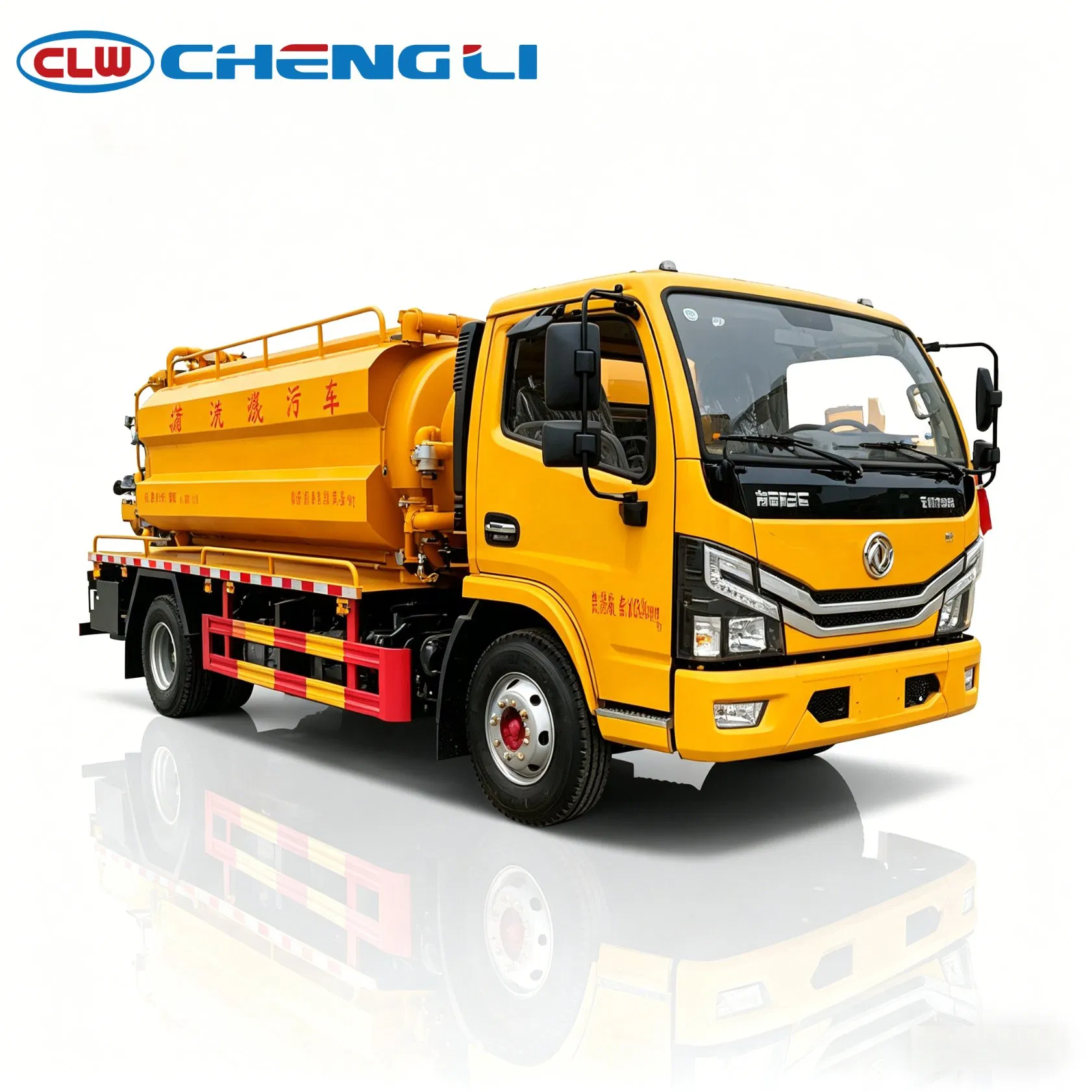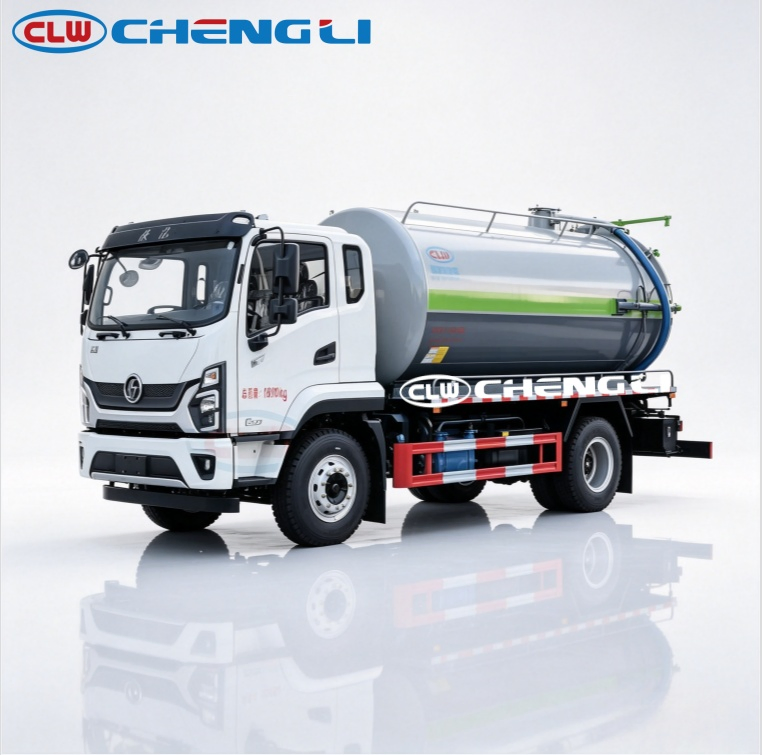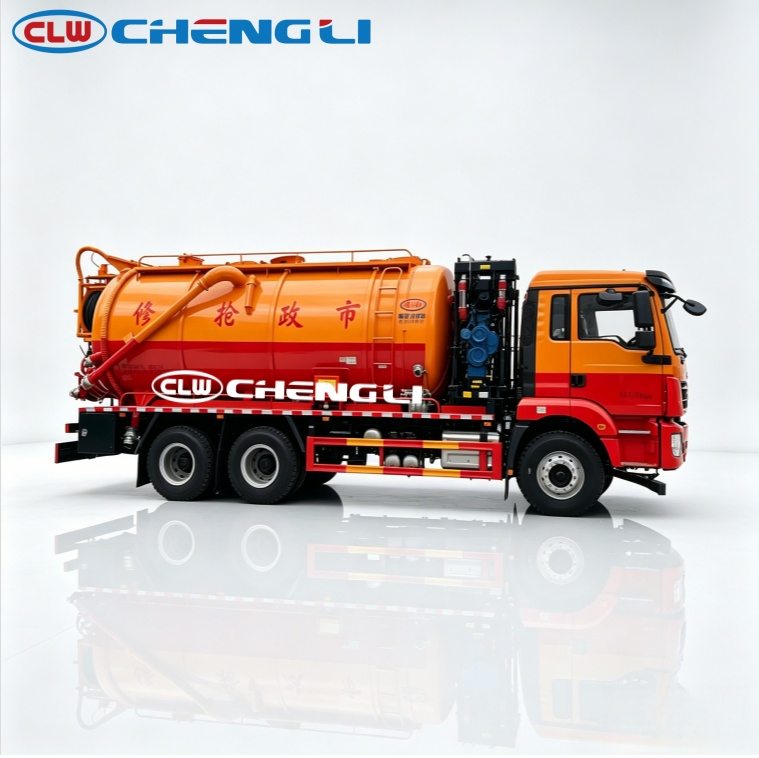
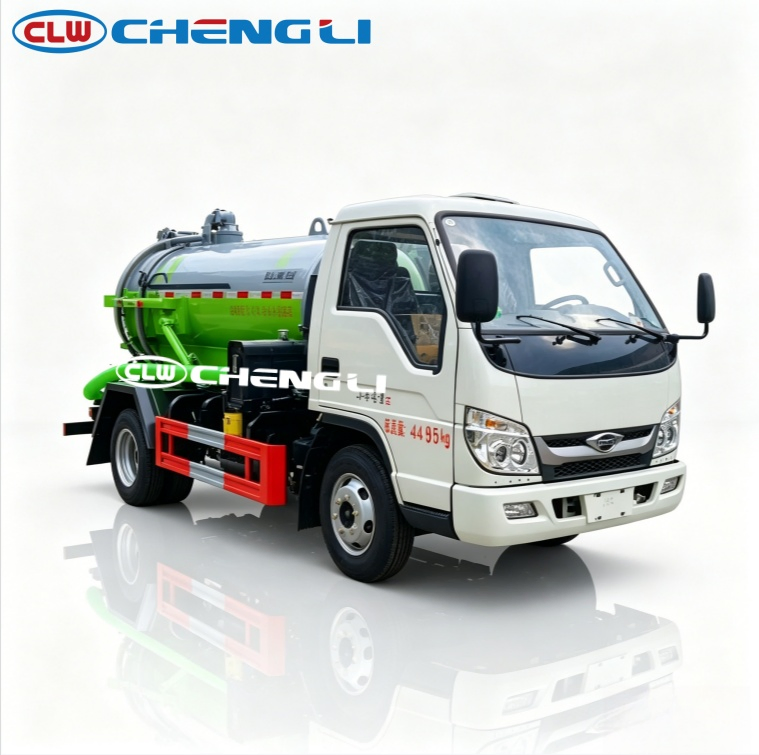
Suction removes, jetting loosens, and a combination unit does both from one chassis. A vacuum truck uses a vacuum pump to draw sewage, sludge and septic waste into a tank. A sewer jetting truck drives high-pressure water through a hose and nozzle to break blockages and flush pipes. A combination sewer cleaner carries both systems, so one crew clears a line and removes the debris in one visit.
Vacuum truck, jetting truck or combination unit: who does what
The names overlap. Septic tank truck, suction sewage truck and vacuum tanker all mean a tank, a vacuum pump and a suction hose. A sewer jetter is a water tank, a high-pressure plunger pump and a hose reel. A combination sewer cleaner, or jet-vac, carries both on one chassis.
| Item | Vacuum (suction) truck | Sewer jetting truck | Combination unit |
|---|---|---|---|
| Main job | Removes liquid and sludge | Loosens and flushes pipe deposits | Loosens, flushes and removes |
| Core equipment | Vacuum pump, sealed tank, suction hose | High-pressure water pump, water tank, hose reel, nozzles | Both, with a divided tank |
| Figures to compare | Usable tank volume, airflow, maximum vacuum | Pressure, flow, water volume, hose length | All of these, plus how the chassis powers both pumps |
| Typical jobs | Septic tanks, cesspits, grease traps, wet-well pump-outs | Grease, silt and root blockages, routine line flushing | Planned sewer maintenance, storm drains, culverts |
| Main limit | Cannot break a hard blockage | Leaves debris in the manhole for someone else to lift | Heavier and more complex; water and sludge share the payload |
Choose a suction truck for mostly septic and pump-out work; it is simpler and carries more waste per trip. Choose a jetter if another crew already removes the debris. A combination unit pays off when one crew must do both. For the rest of a city fleet, see our municipal sanitation overview and the guide to garbage truck types.
How a vacuum truck works, and why suction stops near 10 m
A vacuum truck lowers the air pressure in its tank and lets atmospheric pressure push liquid up the hose. At sea level that pressure is about 101 kPa, enough to hold up a water column of roughly 10.3 m (101.3 kPa ÷ 9.81 kPa per meter of water). That is the ceiling for vertical lift with a perfect vacuum, which no truck pump reaches.
Real lift is lower because pump vacuum is below 101 kPa, sludge is denser than water and hose friction uses part of the pressure difference. For example, a pump holding 85 kPa of vacuum can in theory lift water about 8.7 m and 1.2 kg/L sludge about 7.2 m, before hose losses. At 2,000 m altitude the atmosphere is about 79.5 kPa, so the ceiling for water falls to roughly 8.1 m.
Reading vacuum pump figures
Maximum vacuum, in kPa, percent or inches of mercury (1 inHg = 3.386 kPa), sets how high and how far the pump can pull. Airflow, in m³/h or CFM (1 CFM = 1.699 m³/h), sets how fast the tank reaches working vacuum and how well suction holds when the nozzle gulps air. Sliding-vane pumps are common on liquid-waste trucks; high-airflow blowers handle dry or mixed material but need more power. Most are driven by a chassis PTO.
A float shut-off and a moisture trap keep liquid out of the pump. Unloading is by gravity, by pressurizing the tank with the pump reversed, or by tipping the tank through a full-opening rear door for thick sludge.
How a sewer jetting truck works: pressure cuts, flow carries
A jetter nozzle has rear-facing jets that drive the hose up the pipe and scour the wall; as the hose is reeled back, the water carries loosened material to the manhole. Pressure cuts and propels. Flow carries. A high-pressure, low-flow pump cleans a small pipe well but will not move sand out of a large one.
Convert figures before comparing quotes: 1 MPa = 10 bar ≈ 145 psi, and 1 US gpm = 3.785 L/min. Hydraulic power at the pump is pressure (MPa) × flow (L/min) ÷ 60, in kW. For reference, the plunger pump on our 18 t electric washing and sweeping truck runs at 10 MPa and 115 L/min, about 19 kW, and empties its 4.2 m³ clean-water tank in roughly 36 minutes of continuous spraying. Sewer jetters usually run higher flow; for example, 15 MPa at 200 L/min needs 50 kW before drive losses and uses 6,000 L of water in 30 minutes.
Hose length sets reach: measure your longest manhole-to-manhole run and add margin, since a longer hose delivers less pressure at the nozzle.
Combination sewer cleaner: one chassis, two systems
A combination unit divides its tank into sludge and clean-water sections, sometimes with a movable divider. The crew jets the line from the downstream manhole and vacuums the debris as the returning water brings it back. Some designs filter and reuse water from the sludge side, extending working time at extra cost and maintenance.
Running both pumps at once can exceed what one PTO supplies, so many units use a split-shaft drive or an auxiliary engine. Our washing and dry-wet road sweepers apply the same logic on the street surface: the CLW5188 dry-wet sweeper has a 210 hp auxiliary engine for its cleaning system, an 11 m³ dust tank and a 6.5 m³ water tank. Payload is shared too. Every liter of clean water carried to site is sludge capacity you cannot use until that water is spent.
How to read tank volume against payload
Tank volume is the figure most often misread. Check whether it is geometric or usable volume, since a vacuum tank needs headspace below the float shut-off. Then convert to weight: water and thin septic waste weigh about 1 kg/L, while sludge with sand and grit is heavier; 1.2 kg/L is used below as an example.
Payload, not tank size, decides what you can legally carry. The table uses two of our road maintenance chassis, with their current bodies, to show the arithmetic. A vacuum body has its own weight, so confirm the final payload at quotation.
| Chassis example | GVW | Rated payload | Water-like sewage (1.0 kg/L) | Example sludge (1.2 kg/L) |
|---|---|---|---|---|
| Two-axle Dongfeng D9 road maintenance truck | 18,000 kg | 7,370 kg | about 7.4 m³ | about 6.1 m³ |
| HOWO 6x4 snow plow spreader truck | 25,000 kg | 10,370 kg | about 10.4 m³ | about 8.6 m³ |
For a combination unit, add both sections together, and size for the densest load you pump regularly.
What to confirm before ordering
- The waste you handle and its density: septic waste, grease, storm-drain silt or industrial sludge.
- Usable tank volume, tank material (carbon or stainless steel) and, for combination units, the water-to-sludge split.
- Vacuum pump maximum vacuum, airflow in m³/h and drive method (PTO or auxiliary engine).
- Your deepest suction lift, longest horizontal hose run and site altitude.
- Jetting pump pressure and flow, water tank volume, hose reel length and hose diameter.
- Discharge method: gravity, pressure discharge or tipping tank with a full-opening rear door.
- Chassis GVW, axle loads and the legal payload left once the body is fitted.
- The road, emissions and pressure-vessel standards your market requires, confirmed at quotation.
FAQ
Is a septic tank truck the same as a vacuum truck?
Mostly, yes. A septic tank truck is a vacuum truck set up for household septic tanks and cesspits, usually with a sliding-vane pump and a long suction hose. Vacuum trucks for industrial sludge or deep wet wells use stronger pumps, heavier tanks and sometimes tipping bodies. Compare pump and tank figures rather than names.
Can a suction sewage truck clear a blocked sewer by itself?
Usually not. Suction removes whatever can flow to the hose, but a grease plug, root mass or compacted silt needs water pressure or rodding to break it first. Crews without a jetter pair the suction truck with a separate jetting truck or manual rods, then vacuum the loosened debris before it settles again.
Is a vacuum road sweeper a vacuum truck?
No. A suction sweeper uses a fan that moves a large volume of air at low vacuum, enough to lift litter and dust from the road into a hopper. A vacuum truck uses a pump that moves less air at much deeper vacuum, enough to pull liquid several meters up a hose. Neither does the other's job well. For sweeper sizing, see our road sweeper truck guide.
How far can a vacuum truck pull waste horizontally?
Much farther than it can lift. Horizontal distance is limited by hose friction, not atmospheric pressure, so a long level run can work where the same length vertically would fail. Friction rises with hose length, smaller diameter and thicker material, so long runs call for a larger hose and enough pump airflow.
Can a combination unit work as a plain vacuum truck?
Yes. With a movable divider, the crew can give most of the tank to sludge on pump-out days. The unit still carries the jetting pump, hose reel and water plumbing, so it hauls less waste per trip than a dedicated suction truck on the same chassis. Fleets doing mostly septic work carry more with a plain vacuum truck.
Choose suction for pump-outs, jetting for pipe blockages and a combination unit when one crew must do both. Check our vacuum and sewage truck category, then send your tank volume, pump requirements, line sizes and destination market through our contact page and our engineers will propose a configuration.