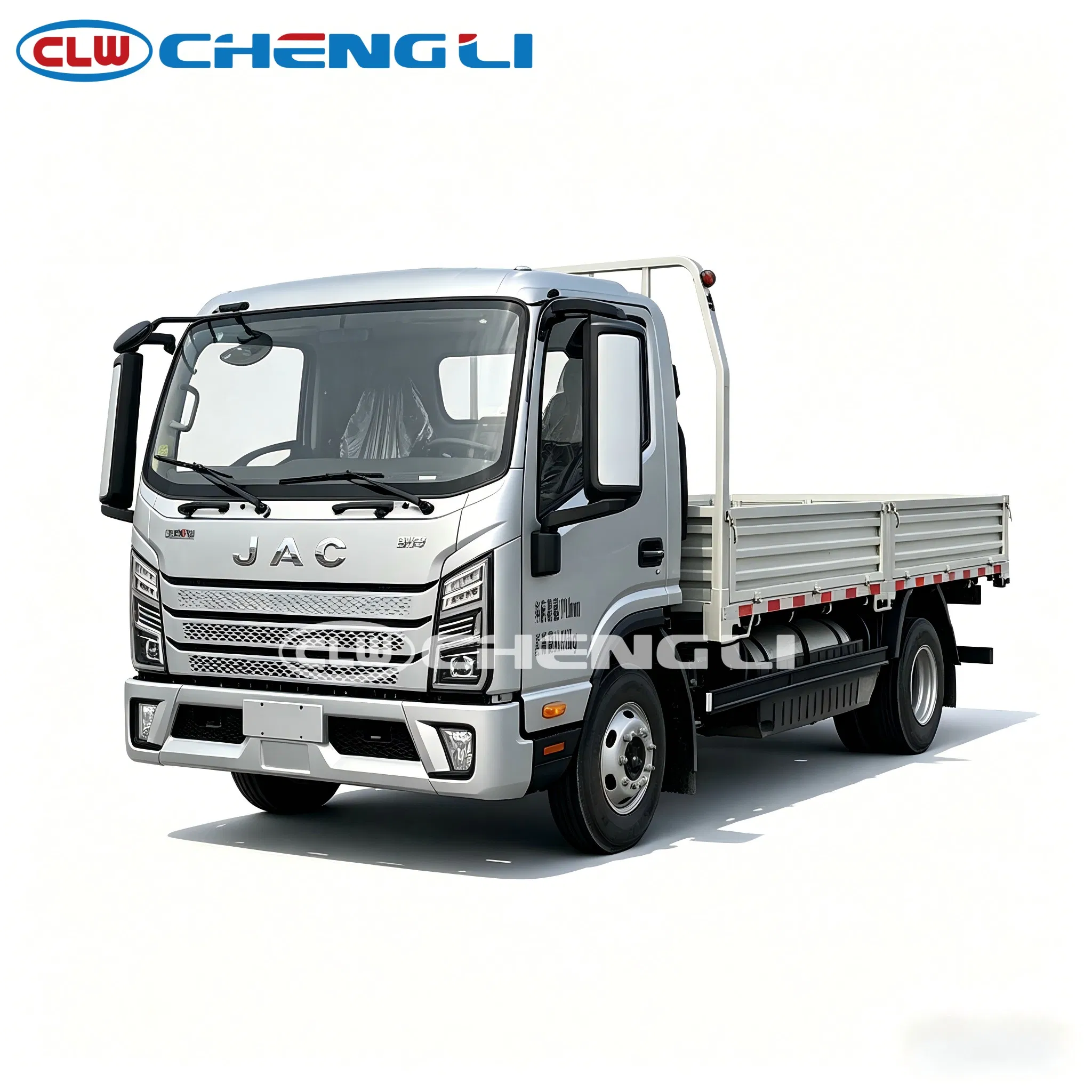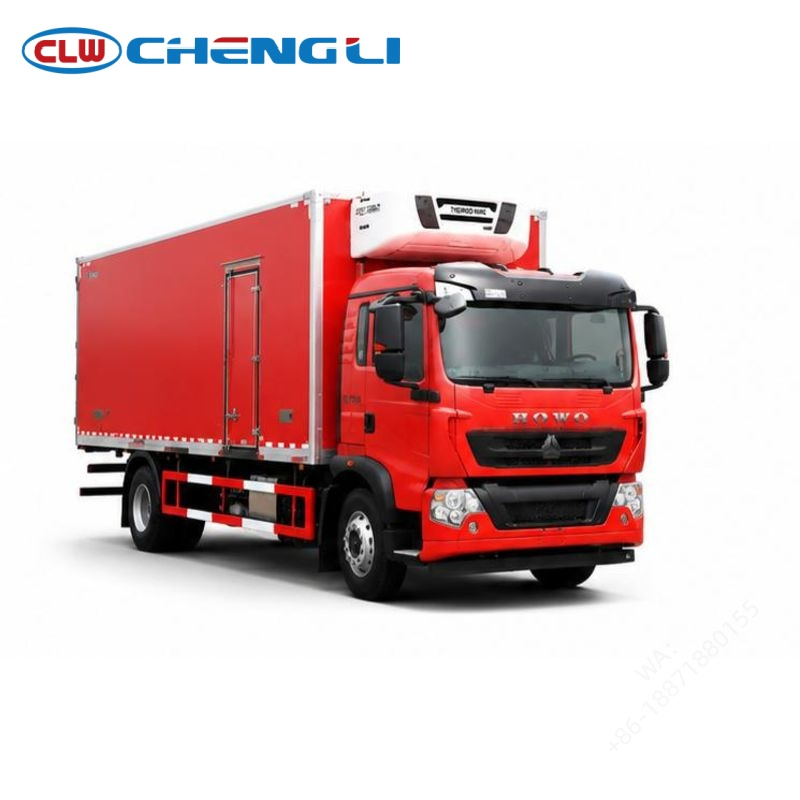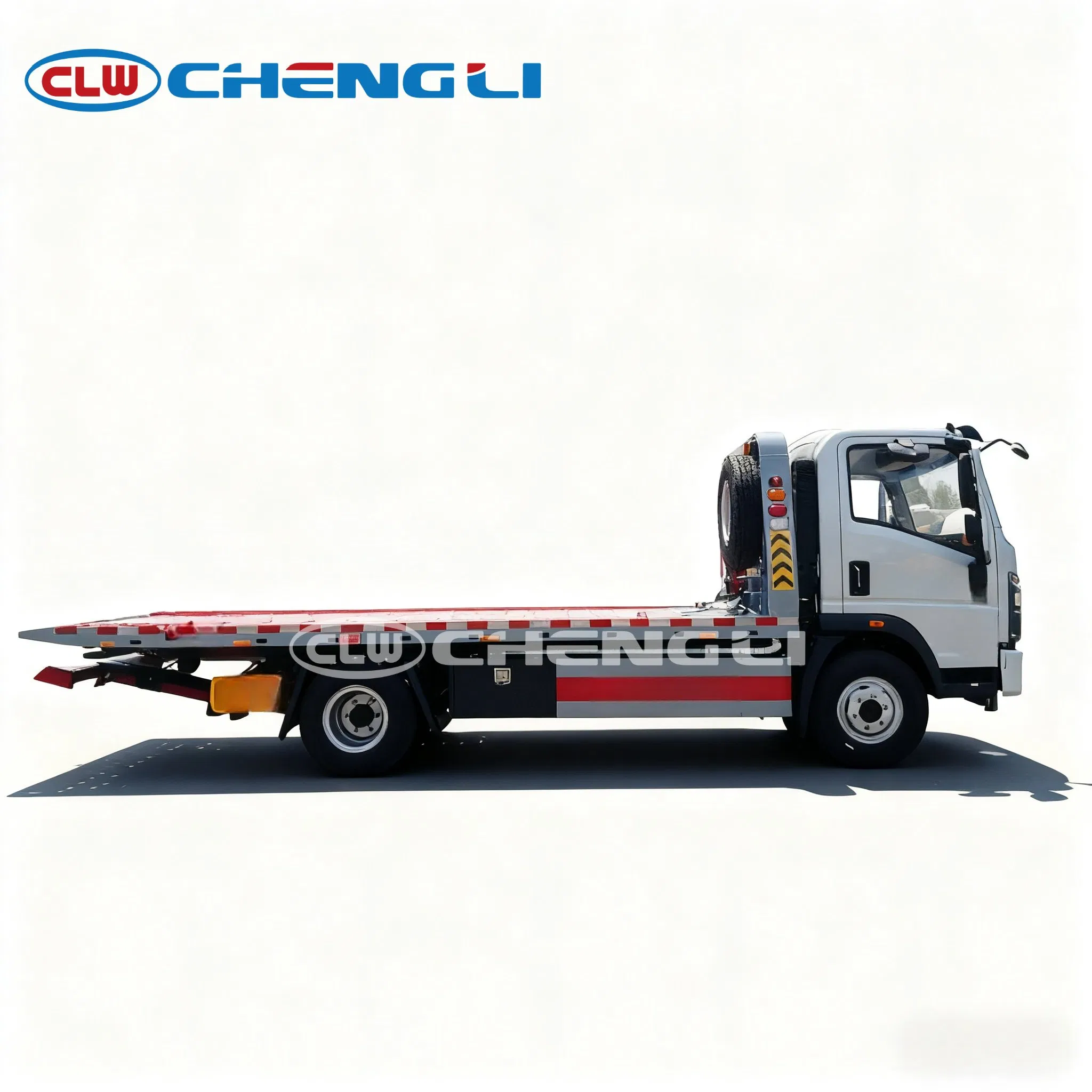
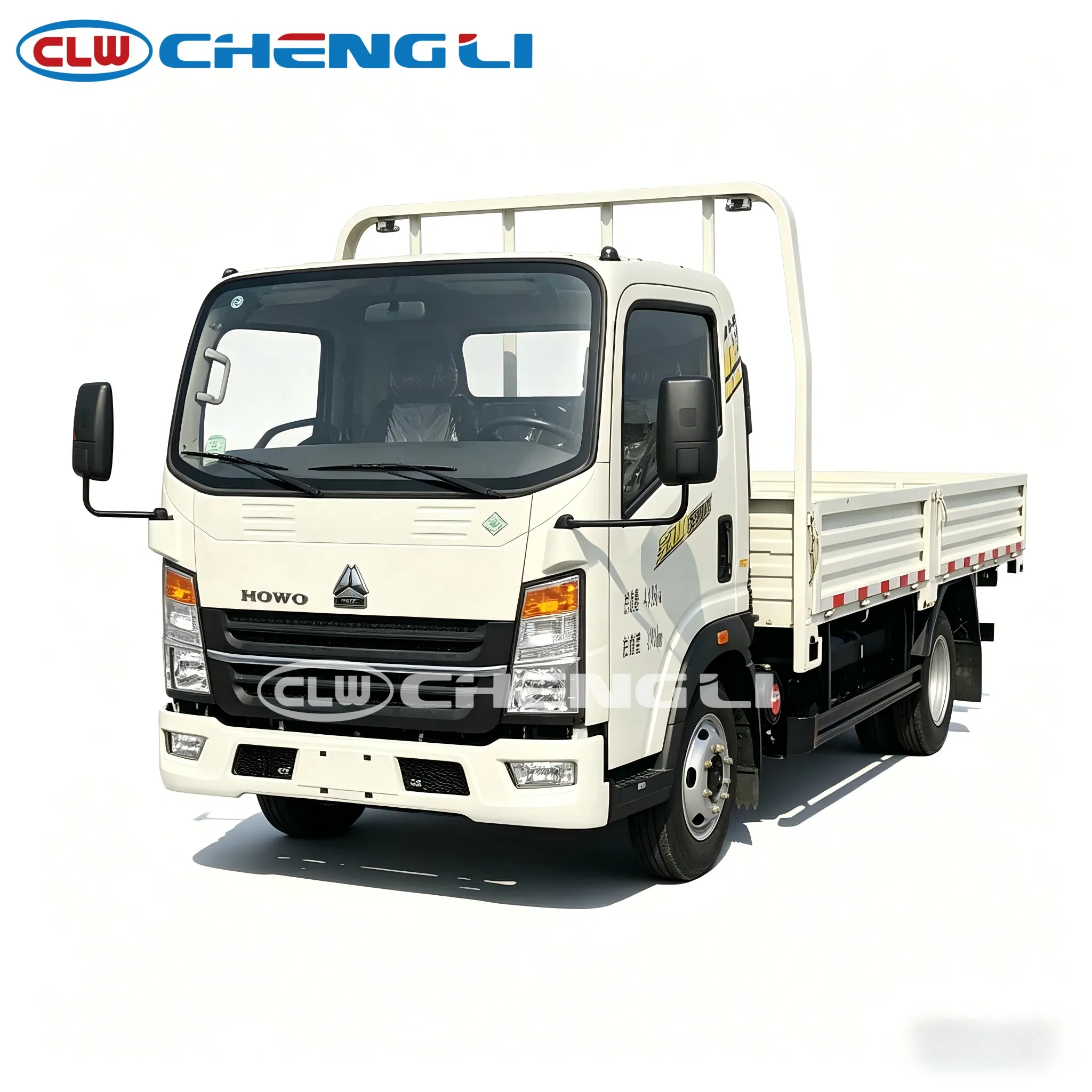
A box body keeps cargo dry and locked, a dropside opens on three sides for forklift loading, and a flatbed takes anything a crane or ramp can put on it. Choose by how the freight gets on and off the truck: weather-sensitive goods go in a box, pallets and building materials suit a dropside, and machinery or oversized items need a flatbed.
Box Truck vs Dropside vs Flatbed at a Glance
| Body | Loading method | Weather and theft protection | Body weight vs payload | Suited cargo |
|---|---|---|---|---|
| Box (van) body | Rear doors, optional side door; dock or pallet jack | Enclosed and lockable; insulated versions hold temperature | Heaviest body; 8.5 t payload on an 18,000 kg GVW | Parcels, retail goods, appliances, chilled food |
| Dropside | Sides and tailgate fold down; forklift from sides or rear, crane from above | Open unless a tarp and frame are added | Lightest body: 205 to 335 kg on a 4,495 kg GVW | Bagged cement, bricks, pallets, pipe, tools |
| Flatbed | Forklift from any side, crane, drive-on over ramps | None; tie-downs, chains and straps | Heavy deck, highest payload share: about 9.4 to 20.7 t | Excavators, rollers, steel, long or wide items |
How Each Body Loads and Unloads
Box truck: rear doors and a dock
A box body loads through its end doors: one opening, one direction. At a dock a pallet jack rolls straight in; elsewhere you need a tail lift, a forklift that reaches inside or hand unloading. Our HOWO 4x2 insulated box truck adds a side access door to its rear double doors for multi-drop work. Its 7,800 × 2,420 × 2,500 mm body holds 47 m³, and the 2,420 mm internal width takes two 1,200 mm pallets side by side. Our guide to box truck sizes and cargo volume covers pallet patterns in detail.
Dropside lorry: three hinged sides
Dropside lorry is the usual name in the UK, East Africa and Nigeria; dropside truck and drop-side cargo truck mean the same body. A dropside is a flat deck with low side boards and a tailgate that hinge down, so a forklift can load from either side without the truck backing up to anything. Our light dropsides have 4,050 to 4,180 mm decks with 400 or 500 mm side boards; the HOWO 1.8 t CNG dropside uses a 4,150 × 2,100 mm deck with 400 mm boards. A 2,100 mm deck fits two 1,000 mm pallets across, but not two 1,200 mm pallets.
Flatbed: forklift, crane or drive-on
A flatbed has no side boards at all. Cargo comes on from any side by forklift or crane, and machines drive on over rear ramps. Ramp choice matters as much as payload: our flatbeds offer aluminum fixed or folding ramps, single or dual hydraulic ramps, or double-action steel ladders, and the Dongfeng 6x2 offers platforms from 6,000 to 9,000 mm. Our 8x4 machinery carriers use 8 mm checkered steel deck plate.
Weather and Theft Protection
Only the box body protects cargo without extra equipment. Walls, roof and lockable doors keep out rain, dust and casual theft, and the 47 m³ insulated HOWO body can be fitted with a refrigeration unit for chilled freight.
A dropside keeps loose items from sliding off but leaves the load exposed from above. In wet climates operators add a tarpaulin over a removable bow frame, which suits cement and fertilizer bags but adds strapping time at every stop. Plan on overnight parking in a secure yard.
A flatbed has no protection at all. Machinery and steel rarely need it, but everything must be chained or strapped at rated tie-down points. Specify the tie-down layout at order stage; the Dongfeng 6x2 comes with standard points and offers heavy-duty rotating points.
Body Weight and What It Costs in Payload
Every kilogram of body is a kilogram less cargo under the same GVW. The box carries walls and a roof; the dropside is essentially a deck with low rails; a machinery flatbed has a heavy reinforced deck but sits on chassis where payload takes the largest share of GVW. These figures come from our own trucks.
| Truck | Drive | GVW | Curb weight | Rated payload | Payload share of GVW |
|---|---|---|---|---|---|
| JAC 1.74 t CNG dropside | 4x2 | 4,495 kg | 2,565 kg | 1,740 kg | 39% |
| HOWO 1.8 t CNG dropside | 4x2 | 4,495 kg | 2,565 kg | 1,800 kg | 40% |
| Dongfeng 995 kg dropside | 4x4 | 3,505 kg | – | 995 kg | 28% |
| HOWO 8.5 t insulated box | 4x2 | 18,000 kg | – | 8,500 kg | 47% |
| HOWO 9,600 kg flatbed | 4x2 | 18,000 kg | 8,270 kg | 9,600 kg | 53% |
| FAW 9,460 kg flatbed | 4x2 | 16,000 kg | 6,410 kg | 9,460 kg | 59% |
The most direct comparison is at 18,000 kg GVW: the insulated box truck is rated 8.5 t and the HOWO flatbed 9,600 kg. Most of that 1.1 t gap comes from insulated walls, roof, doors and the refrigeration unit, although the two chassis are not identically equipped. On the light dropsides the body itself weighs only 205 kg (JAC, 2.5 mm side and floor panels) to 335 kg (HOWO, Q235A carbon steel), roughly 12% to 19% of rated payload.
The percentages are not body weight alone: cab and chassis are a larger fraction of a small GVW, and the Dongfeng's 4x4 drivetrain costs payload in exchange for traction. At the heavy end, our 8x4 flatbeds on a 31,000 kg GVW are rated 16,795 to 20,670 kg.
Which Cargo Suits Which Body
Choose a box truck for freight that is light for its size or must stay dry and locked: cartons, furniture, appliances, parcels and chilled food. The 47 m³ box reaches its 8.5 t rating at an average cargo density of about 180 kg/m³, so dense goods such as bagged cement use up the payload while most of the box is still empty.
Choose a dropside for dense, mixed loads handled by forklift or by hand at sites without docks: bricks, bagged materials, tiles, pipe, timber and contractor tools. The boards hold loose items, and the open top lets a crane lower items straight in.
Choose a flatbed for machinery, steel and anything too long, wide or heavy for side boards to help, from the FAW 4x2 flatbed with rear ramps up to 8x4 excavator carriers. For site fleets, see our construction and mining industry page.
What to Confirm Before Ordering a Cargo Body
- The heaviest single item and how it is loaded: pallet jack, forklift, crane or drive-on.
- Internal box or clear deck dimensions against your pallet footprint, for example 1,200 × 1,000 mm or 1,200 × 800 mm.
- Side board height and panel thickness on a dropside, and whether you need a tarp frame.
- Door layout on a box: rear doors, side door, tail lift and interior tie rails.
- Ramp type and load rating on a flatbed, plus the number and rating of tie-down points.
- Curb weight and rated payload of the completed vehicle, as they will appear on the registration documents.
- Fuel and emission version: diesel or CNG, Euro 2 to Euro 6 on our models.
FAQ
What is a dropside lorry used for?
A dropside lorry, or dropside truck, carries general freight on an open deck with hinged side boards and a tailgate. It is the everyday body for builders' merchants, farm suppliers, municipal depots and equipment rental yards because it loads from three directions and the boards hold loose items in place. Our light dropsides are rated from 995 kg to 1.8 t on decks just over 4 m long, with CNG or diesel power.
Flatbed vs box truck: which is better for pallets?
A box truck is better when the pallets need protection and you deliver to docks, because the goods stay dry and nothing has to be strapped row by row. A flatbed is better when pallets are heavy, weatherproof and unloaded by forklift at unprepared sites, since a forklift can pick from any side. Shrink-wrapped building materials often go on flatbeds; retail stock almost always goes in a box.
Can a dropside be fitted with a cover or converted later?
A tarpaulin with a removable bow frame is the usual retrofit, and it adds little weight. A full conversion to a box or refrigerated body is a different matter: it changes curb weight, center of gravity and sometimes the vehicle category, so in many markets the truck must be re-inspected and its payload re-rated. If you expect to need an enclosed body within a few years, order it from the factory.
What other cargo truck body types are there?
Beyond box, dropside and flatbed, common cargo truck body types include refrigerated vans, stake or fence bodies with tall rails for produce and livestock, curtain-side bodies, tippers and tankers. We build refrigerated trucks, livestock trucks and fuel tankers as separate ranges. We do not currently list curtain-side bodies or dump trucks, so for tipping work ask us what can be proposed for your load.
Is a 4x4 dropside worth the lower payload?
Only if the route needs it. Our Dongfeng 4x4 dropside is rated 995 kg, while the 4x2 CNG dropsides of similar deck length carry 1.74 to 1.8 t. For farm tracks, mining camps and wet-season roads, reaching the site matters more than the extra 750 kg or so. On paved roads, the 4x2 carries more per trip and has fewer driveline parts to maintain.
Start from the load: how it is lifted, what it weighs, how much space it takes and whether it must stay dry. Browse our dropside cargo trucks for open-deck options, then send us your cargo, route and chassis preference and our engineers will match a body and payload to it.