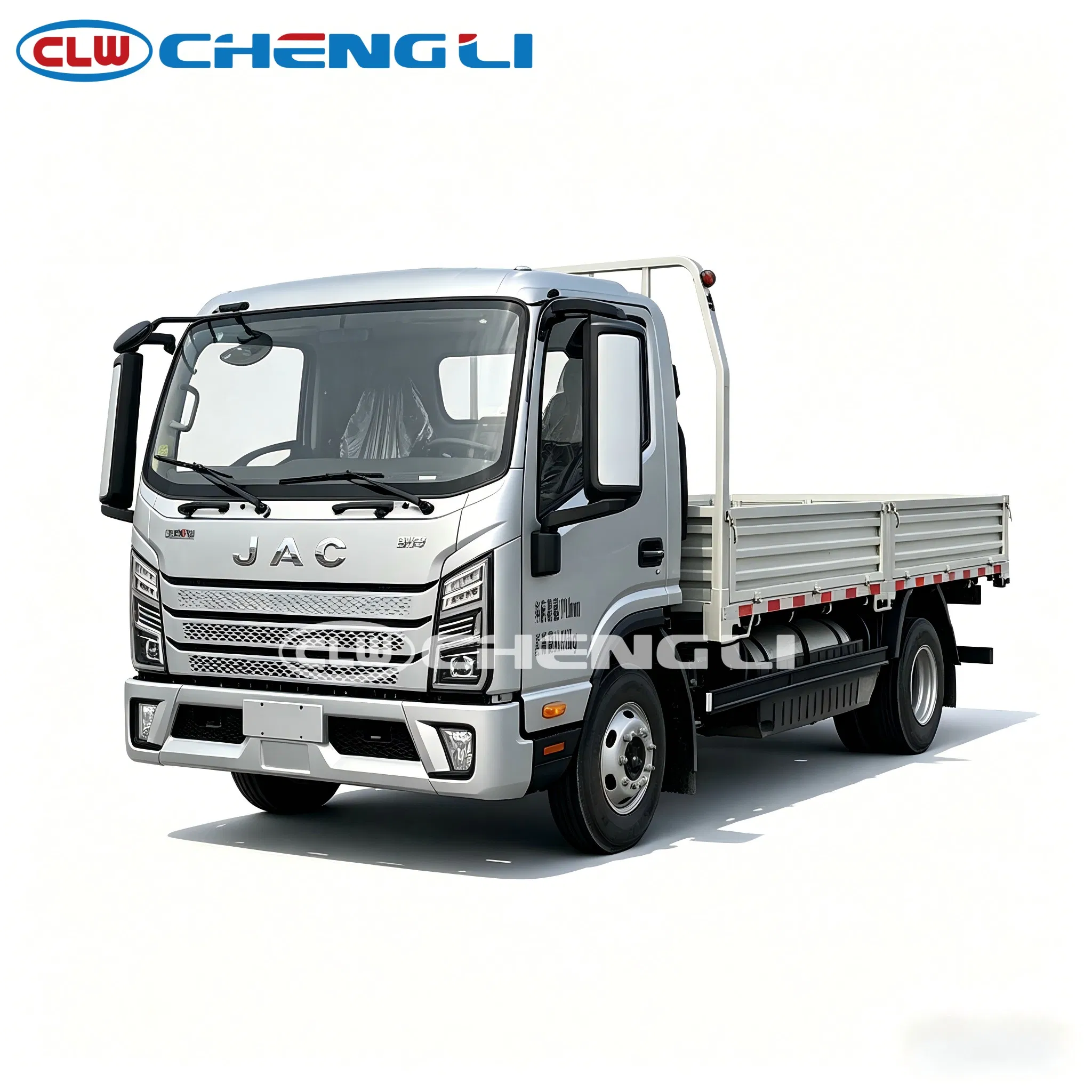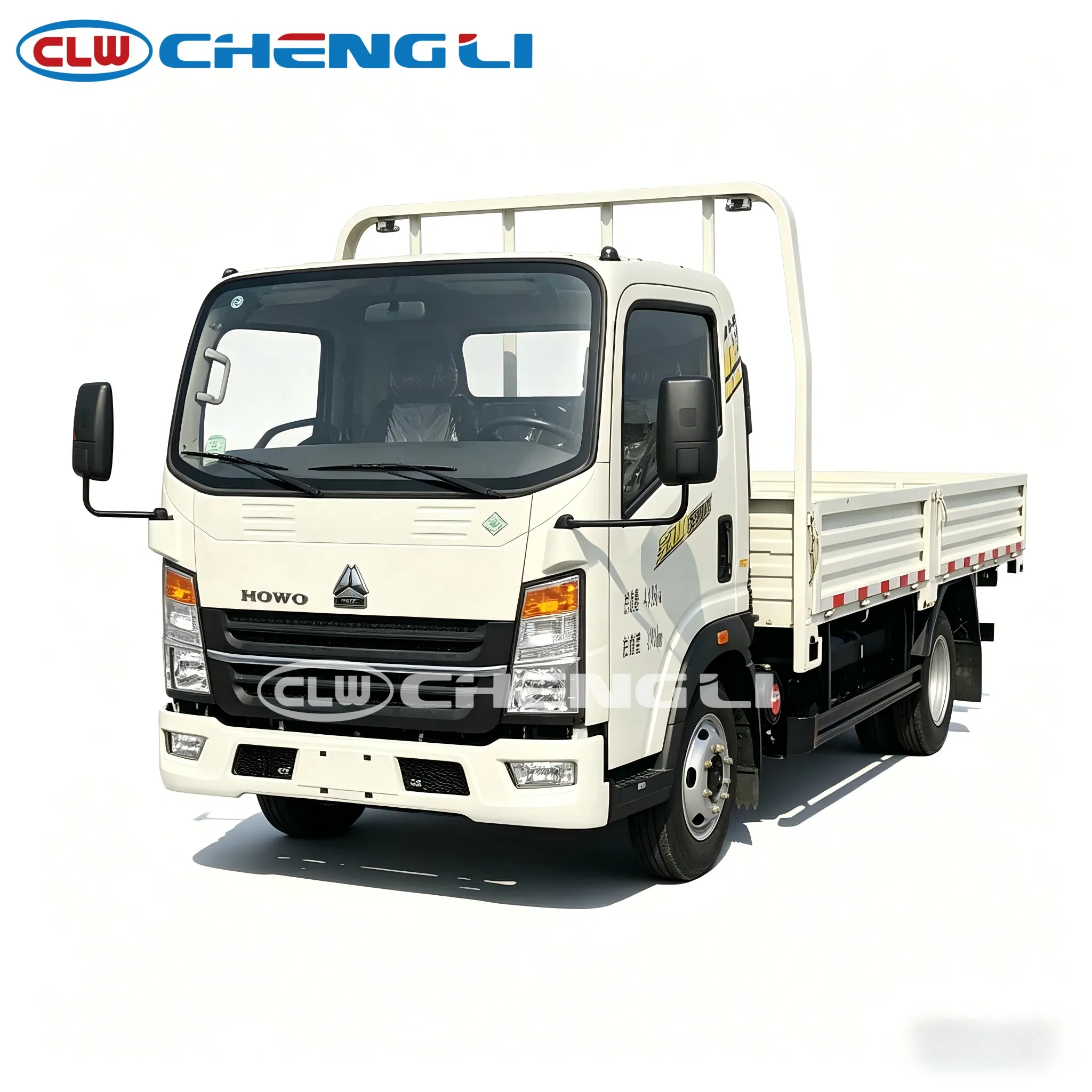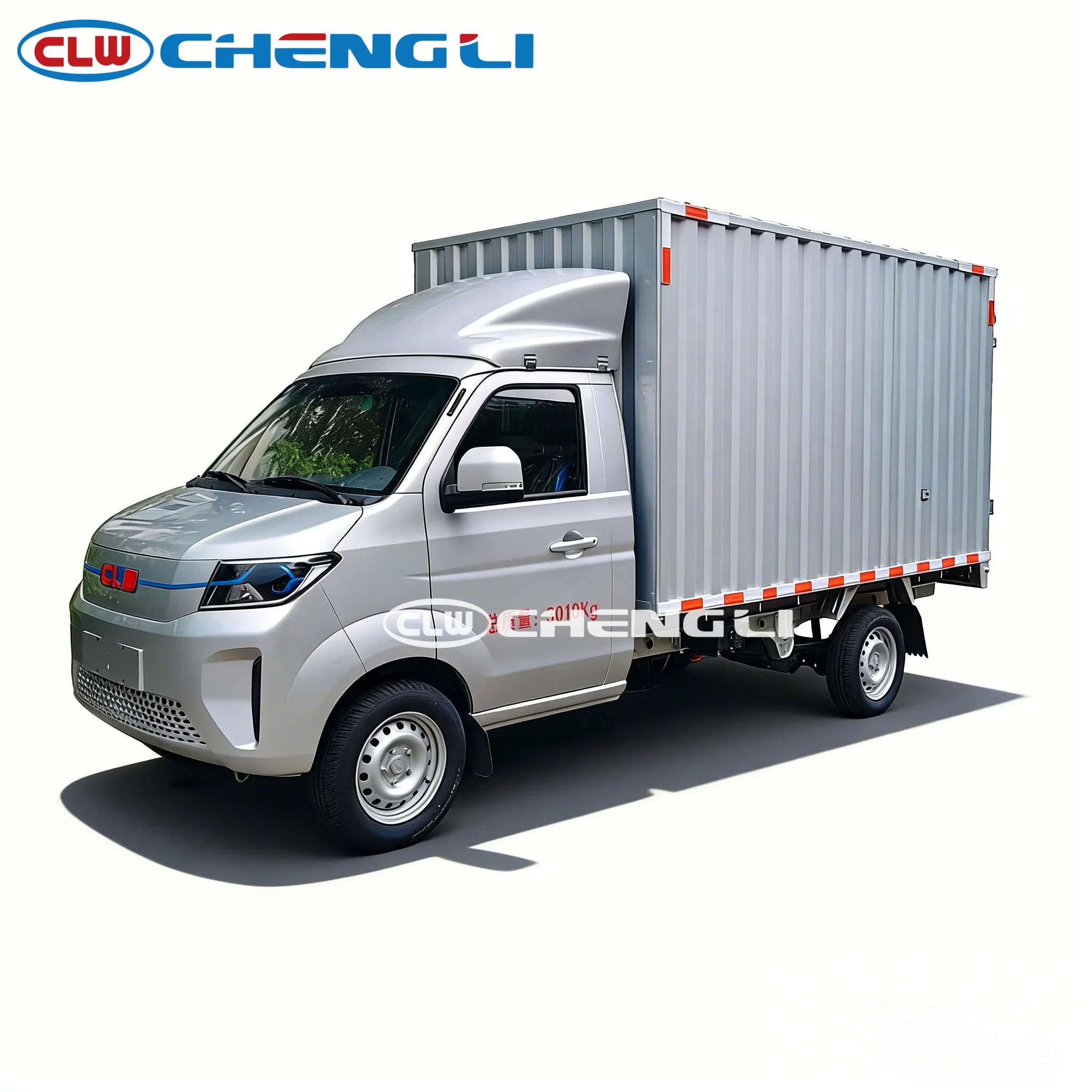
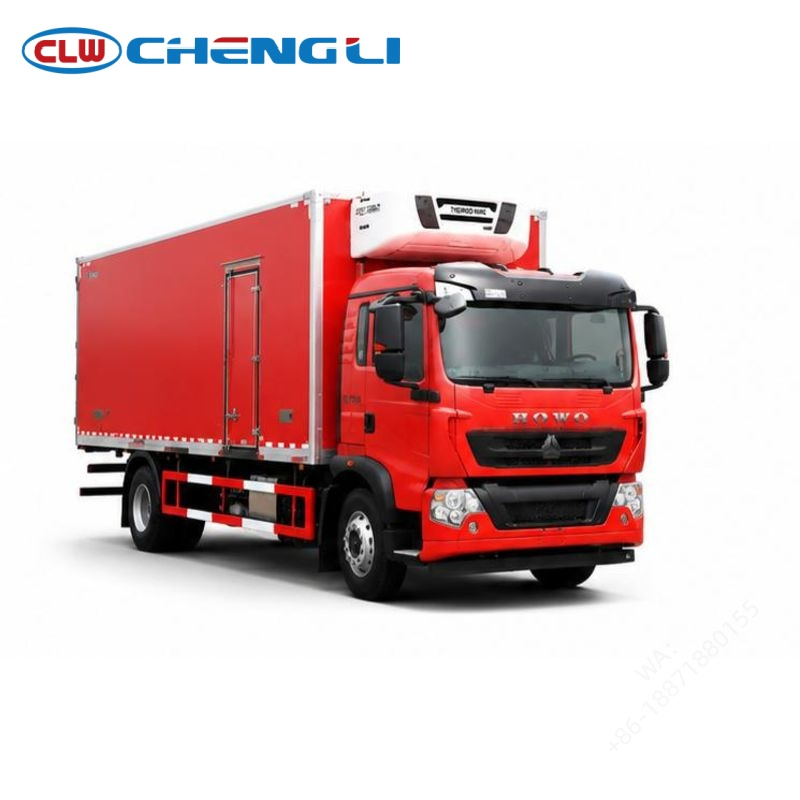
This guide covers the cargo box on commercial box trucks bought for delivery fleets, not rental moving trucks: internal length, width and height, the volume they create and the payload the chassis can legally carry. Our current HOWO 4x2 box truck has a 7,800 × 2,420 × 2,500 mm insulated box, 47 m³ of cargo space and an 8.5 t rated payload.
How Box Truck Size Is Measured
A box truck has three size figures that buyers often mix up. Overall vehicle dimensions decide whether the truck fits your roads, gates and loading bays. Cargo box dimensions decide what goes inside. Rated payload decides how much of that space you can actually fill with heavy goods. A long box on a light chassis looks efficient on paper and runs overweight in service.
For the box itself, confirm whether a quoted figure is internal or external. The difference matters most on insulated and refrigerated bodies, where wall, floor and roof panels take space from every side. For example, 80 mm panels on both side walls take 160 mm off the usable width, and the floor and roof take a similar amount off the height. Ask for internal length, internal width between the wall faces, internal height at the door and at the center, and the door aperture, which is usually smaller than the box cross-section.
Volume is simply length × width × height. The HOWO box works out to 7.8 × 2.42 × 2.5 = 47.2 m³, which we round to 47 m³ (about 1,660 ft³). In US terms the box is roughly 25.6 ft long, 7.9 ft wide and 8.2 ft high.
Box Truck Dimensions and Payload in Our Current Range
We currently offer one box truck, the HOWO 4x2 insulated box truck with a 7.8 m body, plus three light dropside trucks that cover the small end of the cargo-truck range. Dropside volume is measured to the top of the side boards.
| Vehicle | Body | Cargo space L × W × H (mm) | Volume | Rated payload | Payload per m³ |
|---|---|---|---|---|---|
| HOWO 4x2 | Insulated box | 7,800 × 2,420 × 2,500 | 47 m³ | 8.5 t | about 180 kg |
| JAC 4x2 CNG | Dropside, 500 mm boards | 4,180 × 2,100 × 500 | 4.4 m³ | 1.74 t | about 395 kg |
| HOWO 4x2 CNG | Dropside, 400 mm boards | 4,150 × 2,100 × 400 | 3.5 m³ | 1.8 t | about 515 kg |
The HOWO box figure is the maximum configuration, on a chassis with 10,080 mm or 10,280 mm overall length options, an 18,000 kg (about 39,700 lb) gross vehicle weight and axle ratings of 6,500 kg front and 11,500 kg rear. Engine options run from 245 hp to 360 hp. The box is insulated and comes with a refrigeration unit, so confirm the internal dimensions against the final panel specification before you plan pallet patterns.
Volume or Payload: Which Limit Do You Reach First?
Divide rated payload by box volume and you get the cargo density at which the box is full and the truck is at its payload at the same moment. For the HOWO box truck that point is about 180 kg/m³ (8,500 kg ÷ 47 m³). Light goods such as bakery trays, flowers or mixed parcels fill the box before they reach 8.5 t. Dense goods such as bottled water or frozen meat blocks reach 8.5 t with floor space left over.
This changes what you should buy. A fleet hauling light, bulky goods benefits from every extra millimeter of box length and height. A fleet hauling dense goods gains nothing from a bigger box and may be better served by a shorter body, which weighs less and adds payload margin. Light trucks sit at a higher ratio: the JAC 4x2 CNG dropside with a 4,180 mm deck reaches 1.74 t at about 395 kg/m³ of deck volume, so dense building materials suit it better than bulky cartons.
Every kilogram of body, tail lift or refrigeration equipment comes off what you can carry. The 335 kg steel body on the HOWO dropside and the 205 kg body on the JAC show how much body weight varies at a 4 m deck length; an insulated box weighs considerably more.
How Many Pallets Fit in a Cargo Box?
Pallet count is often a better sizing tool than cubic meters, because pallets leave gaps you cannot use. Taking the 7,800 × 2,420 mm floor as an internal figure:
- 1,200 × 800 mm (EUR) pallets: three across at 2,400 mm, six rows deep, 18 pallets in total.
- 1,200 × 1,000 mm pallets: two across at 2,400 mm with the 1,000 mm side along the box, seven rows, 14 pallets.
- 48 × 40 in (1,219 × 1,016 mm) pallets: two across on the long side need 2,438 mm and do not fit; turned the other way, two across and six rows give 12 pallets in a simple pattern.
Three EUR pallets across leave only 20 mm of side clearance, so that pattern depends on the 2,420 mm being measured between the inner wall faces and on straight, undamaged pallets. Height works the same way: 2,500 mm takes two stacked 1,100 mm pallet loads only if the evaporator and any roof ducts do not cut headroom where the stack sits.
Box vs Dropside vs Flatbed: Choosing the Cargo Body
| Body | Loading | Weather and theft protection | Body weight | Best for |
|---|---|---|---|---|
| Box | Rear doors, plus a side door on our HOWO box; pallet jack or dock | Fully enclosed and lockable; insulated version holds temperature | Heaviest of the three | Packaged, palletized, high-value and temperature-sensitive goods |
| Dropside | Sides and rear with boards lowered; forklift or crane from the side | None unless a tarpaulin is added | Light: 205–335 kg on our 4 m decks | Building materials, tools, long or awkward items |
| Flatbed | Any side, ramps or crane | None | Depends on deck strength | Machinery and heavy equipment |
The box body is the right choice when goods must stay dry, secure or at temperature, as in cold-chain food distribution. A dropside cargo truck offers an open deck and side access for farm and site deliveries where enclosure matters less. For machinery, a flatbed gives up all enclosure for deck strength and open access; our box vs dropside vs flatbed comparison covers the payload trade-offs.
What to Confirm Before Ordering a Box Truck
- Internal box length, width and height between inner faces, plus the rear and side door openings.
- Dry freight or insulated box, and for insulated bodies the panel thickness and the temperature range of the refrigeration unit.
- Completed-vehicle curb weight with body, refrigeration unit and any tail lift, so real payload is known rather than assumed.
- Overall length and height against your legal limits and depot doors; the HOWO stands 3,990 mm overall.
- Your pallet size and loading pattern, checked against internal width at floor level.
- Floor surface, tie-down points and any load-restraint rails the cargo needs.
- Engine, emission version and tire option for your routes, given the 245–360 hp range and Euro 2–6 choices.
- The standard your market requires for cargo bodies or refrigerated transport, confirmed at quotation.
FAQ
How do I convert cargo box volume to cubic feet?
Multiply cubic meters by 35.31. Our 47 m³ insulated box equals about 1,660 ft³, and the 4.4 m³ JAC deck volume equals about 155 ft³. Going the other way, one cubic foot is 0.0283 m³. Always convert from internal dimensions, since an external figure can overstate usable space by several percent on an insulated body.
What light truck box sizes are available?
We do not currently offer a light-duty box truck; our 1–2 t trucks are dropsides with 4,050–4,180 mm decks and 1,860–2,100 mm widths. If you need an enclosed light body, work from payload first. For example, a 4.2 × 2.0 × 2.0 m box holds 16.8 m³, and a 1.8 t payload spread over it allows only about 107 kg/m³ of cargo.
Does an insulated box hold less than a dry box of the same size?
Yes, at the same external size. Insulated panels are much thicker than dry-freight panels, so internal width and height shrink, and door seals and thicker frames narrow the opening. The panels and refrigeration unit also add weight, which comes off payload. Compare insulated and dry boxes on internal volume and completed-vehicle payload, not on external dimensions.
Can the box length be changed on the same chassis?
Only within limits. Box length is tied to wheelbase and rear overhang; a longer box on the same wheelbase moves load behind the rear axle and can overload it while the front axle is light. The HOWO offers 10,080 mm and 10,280 mm overall lengths, with 7,800 mm as the largest box. Check rear axle load against its 11,500 kg rating for any change.
Does box height affect fuel consumption?
It does at highway speed, because a taller box adds frontal area and aerodynamic drag. Our HOWO box truck has a fuel consumption figure of 25.32–26.76 L/100 km with its full-height 2,500 mm box. If your cargo never stacks above a certain height, specifying a lower box saves some fuel and body weight, and it may clear low bridges, depot doors and underground loading bays more easily.
Choose box size from the cargo, not the other way around: work out the pallet pattern and cargo density, then match them to internal dimensions and rated payload. Browse our box trucks for fleet delivery, then send us your cargo type, pallet size and destination market and our team will propose a box and chassis configuration.