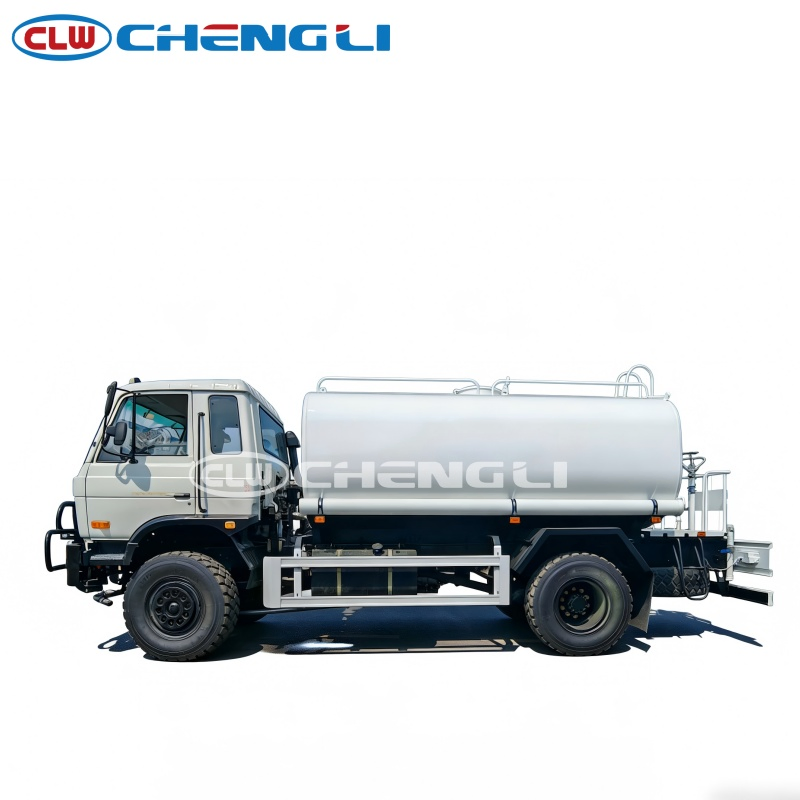
Ask for a water bowser in Nairobi, Kampala or Lusaka and you will be shown a truck with a tank on its back. Ask for the same thing on a British building site and you may get a small tank on a two-wheel trailer. In Lagos or Accra the truck is simply a water tanker. The names overlap, and that causes confusion when a buyer and a supplier are in different countries. This guide sets out what each name covers, where the sprinkler truck fits in, and which size suits which job.
One point first, so nobody wastes time: we build truck-mounted water bowsers. We do not supply towed bowsers or plastic storage tanks.
What is a water bowser?
A bowser is a mobile tank that carries a liquid and can hand it out at the other end. The word began with fuel and is still used for fuel bowsers. For water it has two common forms:
- Towed bowser: a tank on a trailer, pulled by a pickup, tractor or site vehicle. It usually holds from a few hundred liters to about 2,000 liters and is parked where the water is needed.
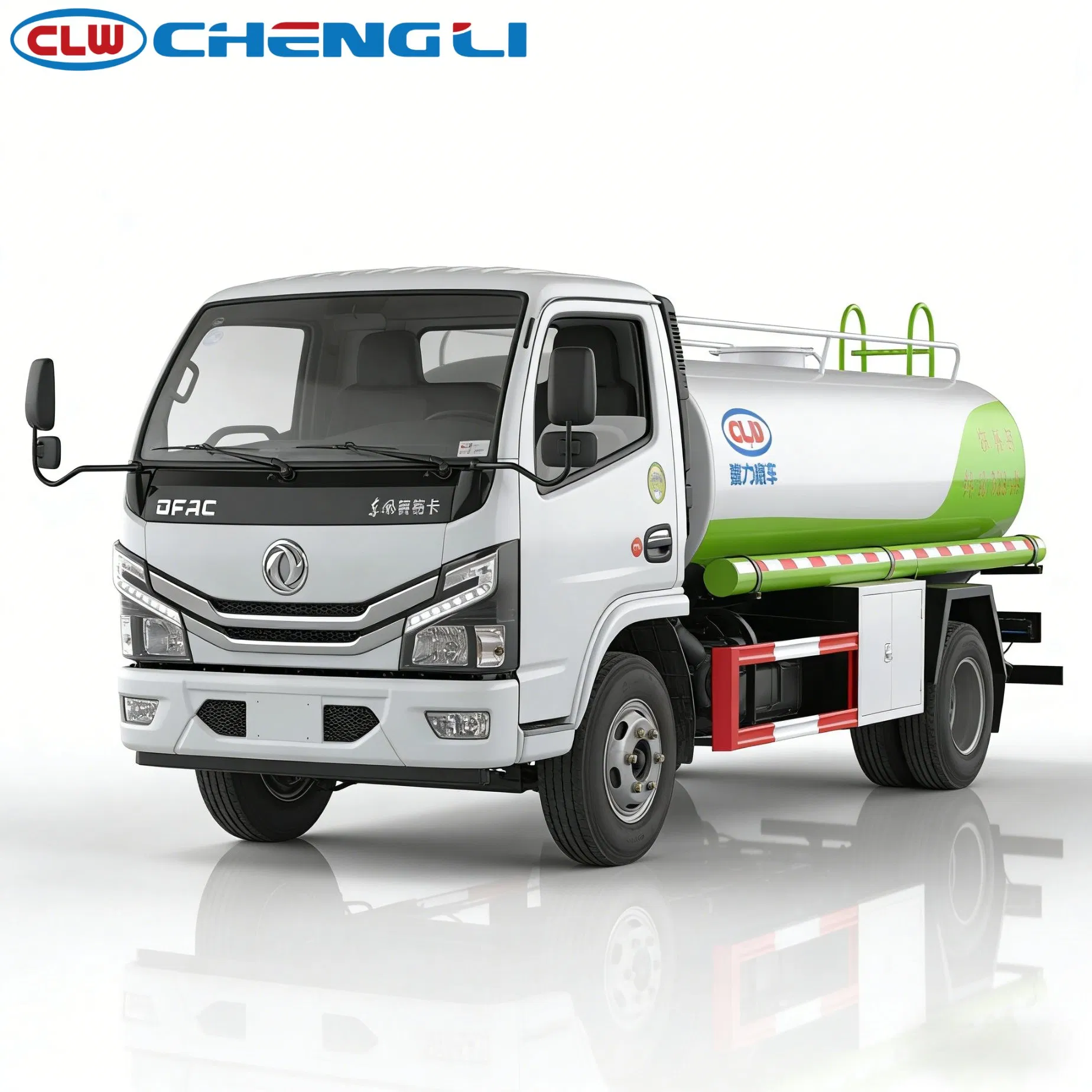
- Truck-mounted bowser: a tank fixed to a truck chassis, with a pump driven by the truck's engine. This is the vehicle sold in East and Southern Africa as a water bowser and elsewhere as a water tanker truck.
So when a tender in Kenya asks for a "10,000 L water bowser", it is asking for a 10,000 L water tanker truck. The two names describe one product.
Bowser, tanker or sprinkler truck: the differences
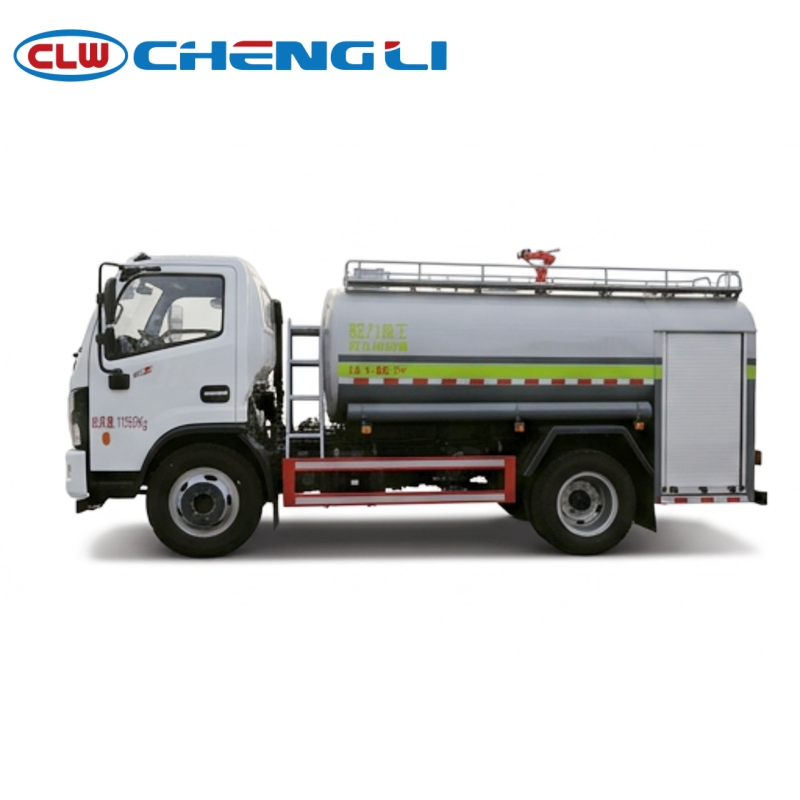
The third vehicle that carries water is the sprinkler truck. It looks similar from a distance, but it is built to spread water over a surface, not to deliver it into another tank.
| Towed bowser | Water bowser / water tanker truck | Water sprinkler truck | |
|---|---|---|---|
| Built on | Trailer | Truck chassis | Truck chassis |
| Volume | Usually up to about 2,000 L | 5,000 L to 20,000 L in our range | About 2 m³ to 15 m³ in our range |
| Main job | Hold water at one spot | Carry water from the source to the user | Wet roads, sites and green areas |
| How water leaves | Tap, small pump or gravity | Pump and hose, gravity outlets; a cannon on some models | Front and rear nozzles, side sprays, water cannon, fog cannon on some models |
| Tank on our models | Not supplied | 304 stainless steel, food grade available | Mostly carbon steel with anti-rust treatment |
The jobs overlap at the edges. A water tanker fitted with a rear spray bar can damp down a haul road, and a sprinkler truck with a pump outlet can fill a site tank. The tank material is where they part ways. Our water tankers are built in stainless steel so that they can carry drinking water. Most of our water sprinkler trucks use carbon steel tanks, which are right for dust control and road washing and wrong for drinking water.
Typical sizes and what they are used for
One liter of water weighs one kilogram, so the tank size also tells you how heavy the truck has to be. These are the sizes we publish and the work each one usually does.
| Size | Truck | Typical work |
|---|---|---|
| 5,000 L | Dongfeng 4x2 water tanker, 11,990 kg gross weight | Deliveries to homes, schools, hotels and small building sites in town |
| 8,000 L | Dongfeng 4x4 water tanker, 170 hp, 14,000 kg gross weight | Village supply, relief work and sites reached by mud or sand tracks |
| 10,000 L | Dongfeng 4x2 water tanker | Daily delivery rounds, construction camps, estates |
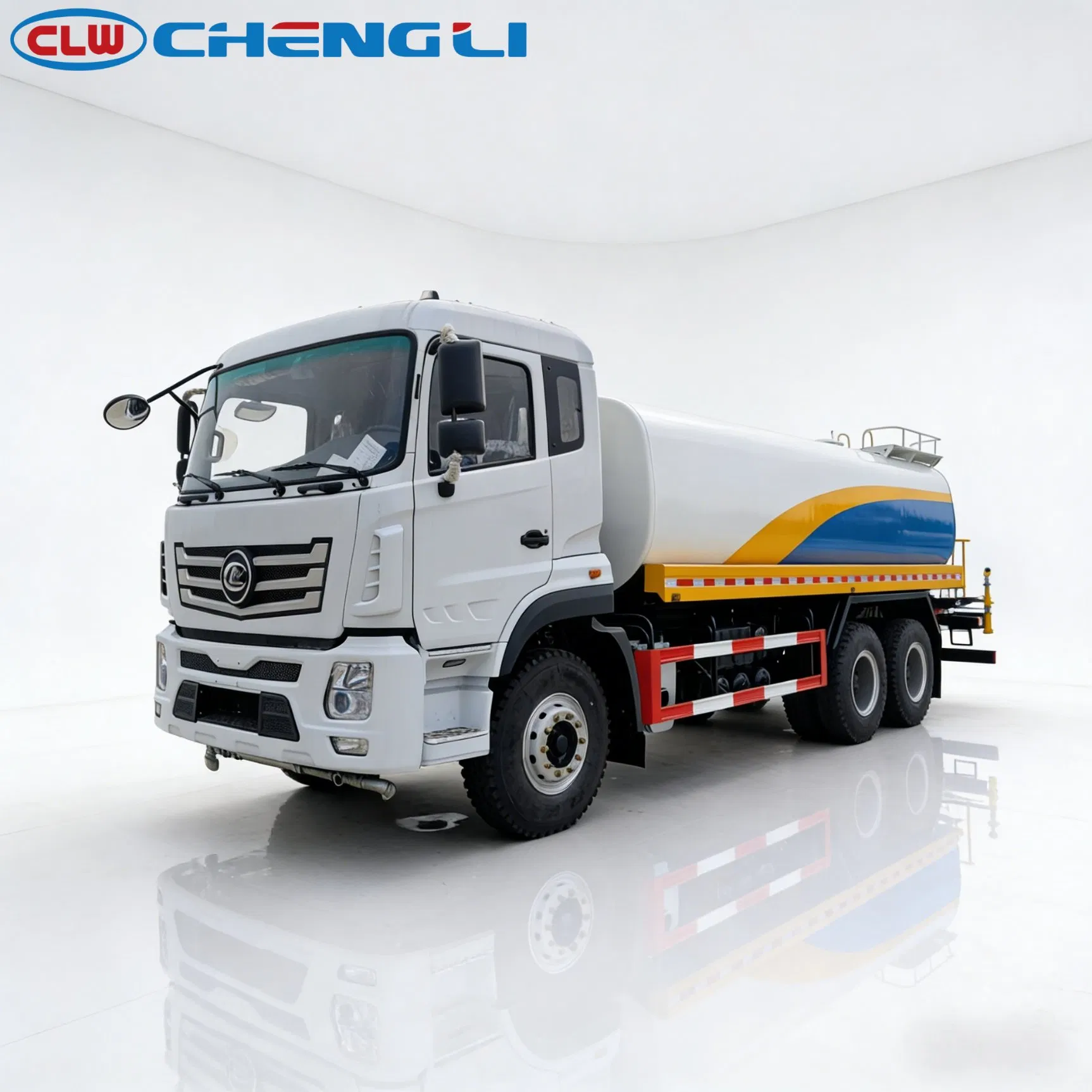
| 20,000 L | Dongfeng 6x4 water tanker, 245 hp, 25,000 kg gross weight | Bulk haulage on long routes, mines, large projects |
| 2 to 4 m³ sprinkler | Dongfeng 4x2 light sprinkler trucks | Narrow streets, landscaping, small yards |
| 7 to 11 m³ sprinkler | Dongfeng, FAW, HOWO and Foton 4x2 sprinkler trucks | Road works and municipal washing; the 7 m³ Dongfeng lists a 12–16 m spray width |
| 13 to 15 m³ sprinkler | 18-tonne 4x2 chassis | Haul roads, quarries, long municipal routes |
A bigger bowser is not always the better one. A 20,000 L truck that cannot turn into the customer's gate earns less than a 5,000 L truck that makes six drops a day.
Drinking water or site water?
Decide this before anything else, because it fixes the tank and every part the water touches.
Drinking water
Choose a stainless steel tank with a stainless pump, valves and pipework. Our 5,000 L tanker lists all three in 304 stainless steel, and the 10,000 L model adds argon-arc welded seams and a passivated interior. The 4x4 model can also be ordered in 316 stainless. Ask how the tank is cleaned: the size and position of the manhole and the drain point matter more in daily use than they do on a specification sheet.
Site, road and irrigation water
A carbon steel tank with anti-rust treatment does the job at a lower cost. Our 11.1 m³ Foton sprinkler truck, for example, uses a Q235 carbon steel tank. Spend the saving on the fittings that do the work: spray bars, a cannon, a longer hose.
Do not plan to switch one truck between the two. A tank that has carried river or borehole water for a site should not deliver drinking water the next day.
Water bowser prices: what a quotation should include
We quote each bowser for its exact configuration, so you will not find a price list here. What you should find in any quotation, ours or a competitor's, is every one of these lines:
- Chassis brand and model, drive (4x2, 4x4 or 6x4), engine power and emission standard.
- Tank volume, material, plate thickness and internal treatment.
- Pump type and material, and what drives it.
- Fittings: hose length and diameter, reel, cannon, spray bars, meter.
- Left- or right-hand drive. Kenya, Uganda, Tanzania and Zambia need right-hand drive, so confirm it model by model.
- The Incoterm. A price seen at a dealer in Nairobi already contains sea freight, duty, clearing and the dealer's margin. An FOB price contains none of them.
If one of these lines is missing, two quotations cannot be compared. Our water tanker truck price guide explains how each line moves the total.
Which one should you order?
- You sell or supply water: a stainless water bowser, sized to your roads and your customers' storage tanks.
- You need water on a construction site: a carbon steel tanker with a pump and hose, or a sprinkler truck if most of the water goes on the ground.
- You control dust or wash roads: a sprinkler truck with the spray width and cannon range the route needs. Our article on water sprinkler truck uses covers the spray equipment.
- You need a few hundred liters at one spot: a towed bowser from a local supplier is the cheaper tool.
Common questions
Is a water bowser the same as a water tanker?
For truck-mounted units, yes. "Bowser" is the usual word in Kenya and its neighbors, "tanker" in West Africa. Only the towed trailer type is a different product.
How many liters does a water bowser hold?
Truck-mounted bowsers in our range hold 5,000, 8,000, 10,000 or 20,000 liters. Towed bowsers are far smaller.
Can a water bowser be used for dust suppression?
Yes, if it is ordered with a spray bar or cannon. If dust control is the main job, a sprinkler truck is the better choice because its nozzles and pump are designed for it.
Can a bowser fill itself from a dam or river?
Only with a self-priming pump and a suction hose. State the height between the water surface and the truck when you ask for a quotation, because that decides the pump.
Do you supply towed water bowsers?
No. Our smallest water-carrying vehicles are a 2 m³ sprinkler truck and a 5,000 L water tanker truck.