The US and Europe sort ambulances in different ways: the US federal KKK-A-1822 specification groups them by body form into Type I (truck cab with a modular box), Type II (van) and Type III (cutaway van with a modular box), while EN 1789 grades them by care level into Type A patient transport, Type B emergency and Type C mobile intensive care.
Why there are two ways to classify ambulances
The two systems answer different questions. KKK-A-1822 defines what the vehicle is built from and how the cab relates to the patient compartment. EN 1789 defines what level of care the crew can deliver inside it. The same van can be fitted out for patient transport or emergency work, so a tender should state both labels.
Type I, Type II and Type III ambulance body forms
KKK-A-1822 is a US federal purchase specification for ambulances. It defines three body types.
Type I: conventional cab with modular body
A Type I ambulance uses a conventional truck cab-chassis with a separate modular box body mounted behind the cab. It suits heavy equipment loads and larger crews, but the result is a longer, heavier and taller vehicle than a van. We do not currently list this type.
Type II: van-based ambulance
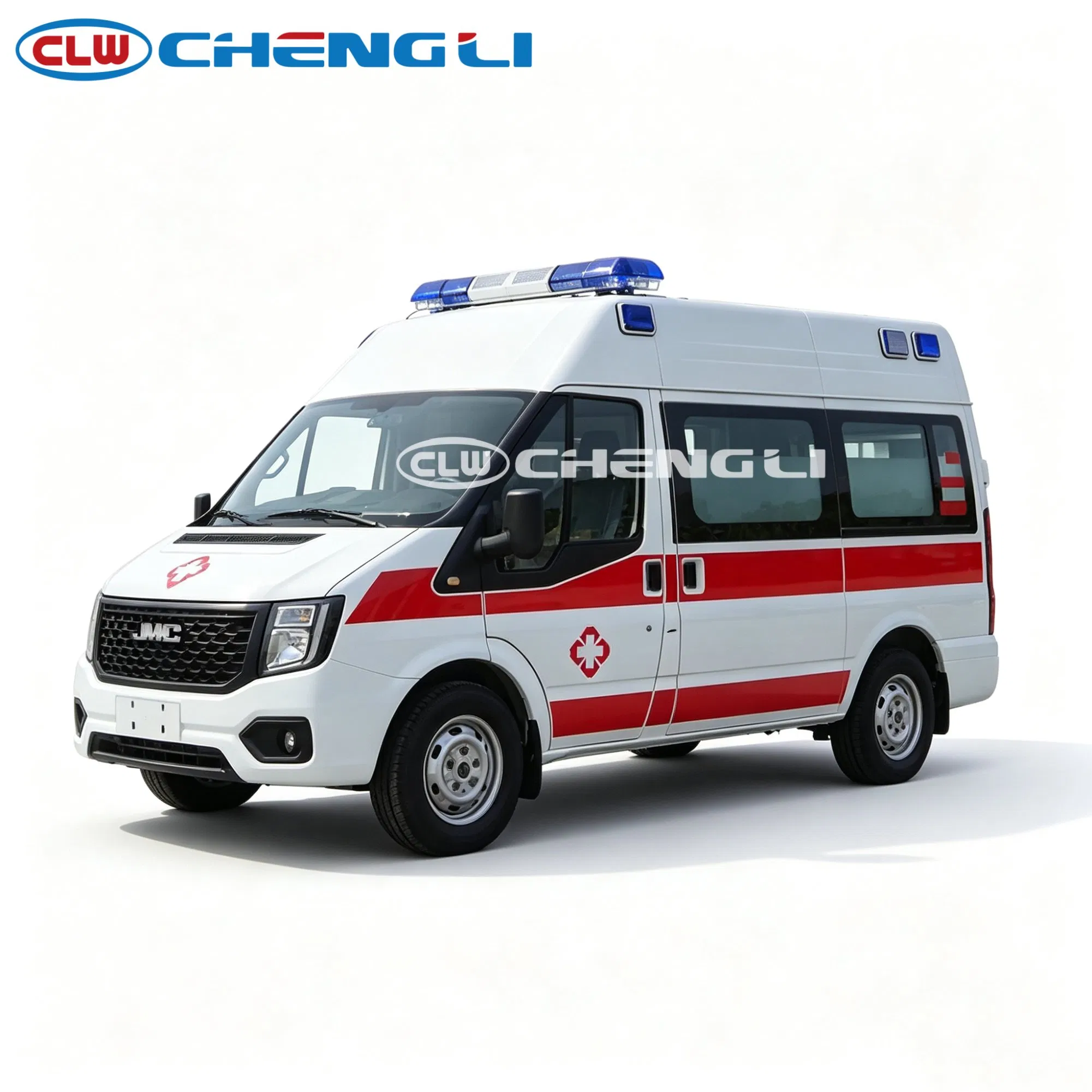
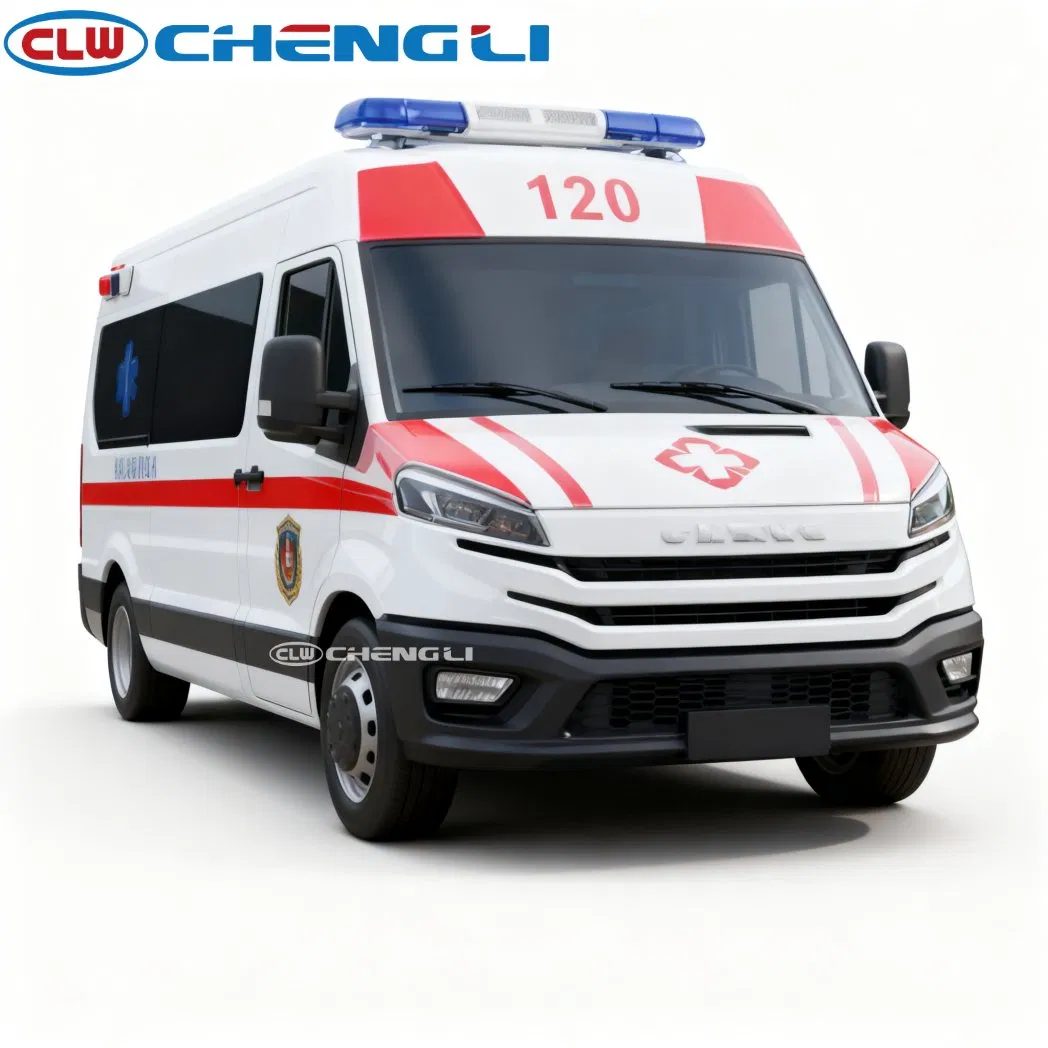
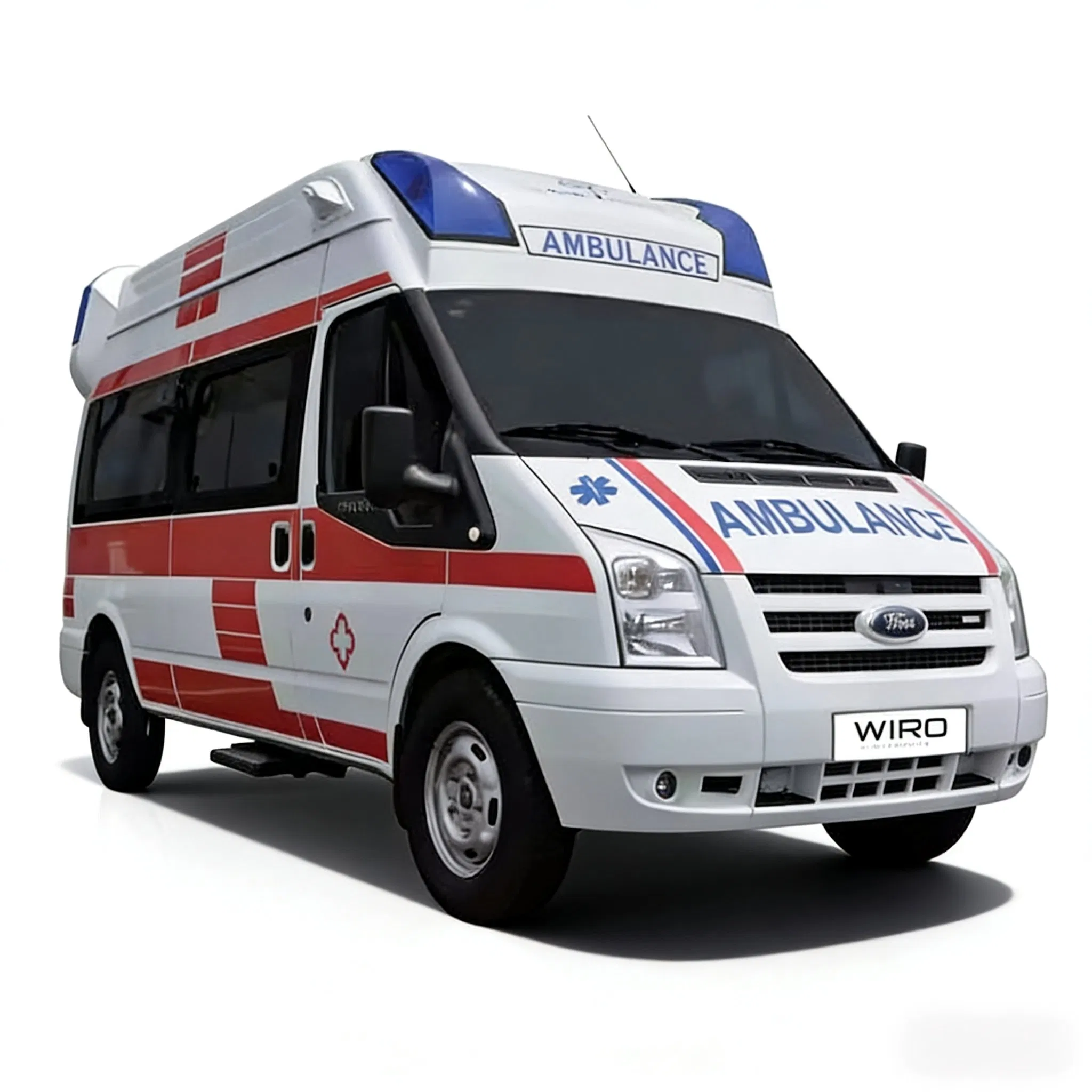
A Type II ambulance is built inside a standard van, usually with a raised roof. The cab and body are one integral structure, with no separate box on a chassis. Van ambulances are shorter, lighter and easier to park; the trade-off is a narrower patient compartment with less standing height and storage. Most of our ambulances are van conversions of this form, on Iveco Daily, JMC and Ford Transit V362 bases.
Type III: cutaway van with modular body
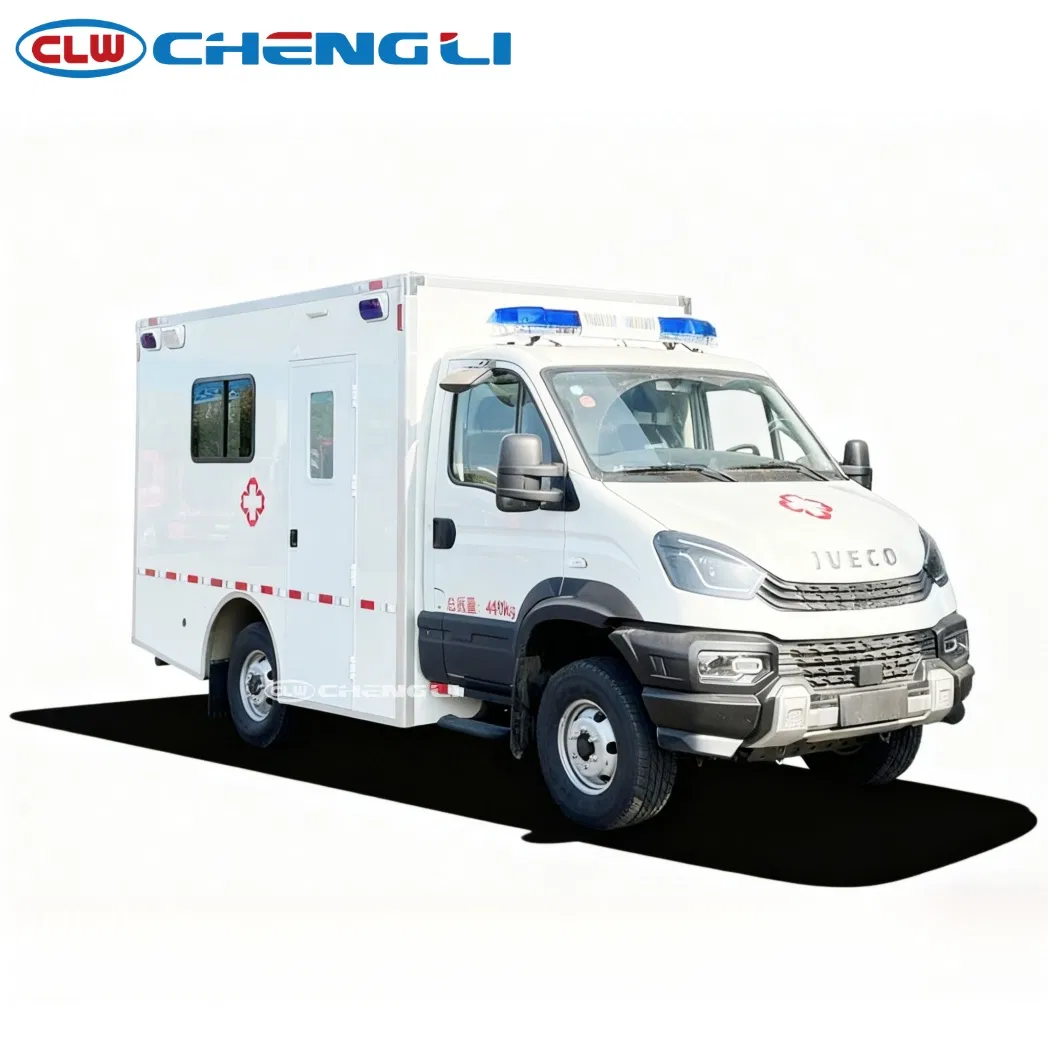
A Type III ambulance starts from a cutaway van cab-chassis: the van's front cab is kept and a modular box body is mounted behind it, with a walk-through opening between the two. In our range, the Iveco Eurocargo Thunder 4x4 box-body ambulance is closest to this form, with a separate box body behind the cab, 2,870 mm (about 9 ft 5 in) tall on a 3,365 mm wheelbase. Confirm the cab-to-body pass-through for the ordered build.
EN 1789 classes A, B and C
EN 1789 is the European standard for road ambulances and their medical equipment. Instead of body shape, it grades the vehicle by the care it is designed to provide:
- Type A, patient transport ambulance: for patients who are not expected to become emergency patients. A1 carries a single patient; A2 carries one or more patients on stretchers or chairs.
- Type B, emergency ambulance: for transport, basic treatment and monitoring of patients.
- Type C, mobile intensive care unit: for transport, advanced treatment and monitoring of patients.
The class applies to the complete vehicle: compartment, equipment, electrical supply and fixings together. A larger compartment leaves more room for Type C equipment and a second clinician at the stretcher. Specify the standard your health authority requires and confirm it at quotation.
Where our ambulances fit
Our current range has three 4x2 van conversions and two 4x4 Iveco builds with a taller compartment behind the driving cab. None is a Type I. The table compares the figures that decide which service each vehicle suits.
| Vehicle | Body | Drive | Length × height | Wheelbase | GVW minus curb weight |
|---|---|---|---|---|---|
| Iveco Daily A35 First-Aid | Van conversion | 4x2 | 4,875 × 2,370 mm | 2,800 mm | 1,070 kg |
| JMC 1.2 t Emergency | Van conversion | 4x2 | 5,100 × 2,610 mm | 2,933 mm | 1,200 kg rated payload |
| Ford Transit V362 ICU | Van conversion, polymer hard top | 4x2 | 5,341 × 2,460 mm | 3,300 mm | 955 kg |
| Iveco Ouba Patient Transport | Enclosed compartment behind cab | 4x4 | 5,916 × 2,700 mm | 3,310 mm | 455 kg |
| Iveco Eurocargo Thunder | Box body behind cab | 4x4 | 5,995 × 2,870 mm | 3,365 mm | 540 kg |
The van conversions run from 4,875 to 5,341 mm long (about 16.0 to 17.5 ft), while the 4x4 builds reach 5,916 to 5,995 mm (about 19.4 to 19.7 ft). The load margin also shrinks as the body grows: the 4x4 builds keep 455 to 540 kg between gross and curb weight, against 955 to 1,070 kg on the Ford and Iveco Daily vans. GVW is curb weight plus crew, patient and equipment, so that margin must cover everyone on board and every device you add. At about 80 kg per person, a crew of three and one patient already use around 320 kg.
Which ambulance type suits which service
City emergency response
Short turns, hospital ramps and tight parking favor a Type II van. The Iveco Daily A35 is our shortest at 4,875 mm, and the JMC 4x2 emergency ambulance with an auto-loading stretcher offers a 1,200 kg rated payload on a 5,100 mm body. See how ambulances fit a wider response fleet on our fire and emergency services page.
Rural and unsealed-road service
Where access roads are unpaved, drive type matters before body form. Both 4x4 builds sit on 3,310 to 3,365 mm wheelbases with larger light-truck tires, 255/85R16LT on the Ouba and LT265/75R16 on the Thunder. The trade-off is weight and speed. Curb weight rises to 3,400 and 3,950 kg, against 2,480 and 2,540 kg for the Iveco Daily and Ford Transit, and the Ouba tops out at 90 km/h, against 130 and 156 km/h for those two vans.
Interfacility transfer
Scheduled transfers between clinics map to EN 1789 Type A, and a van body is normally enough. Moving ventilated or monitored patients needs power, oxygen and room for a clinician beside the stretcher. The Ford Transit V362 ICU ambulance carries two 10 L oxygen cylinders, a ventilator and a 1,000 W inverter inside a 2,600 × 1,730 × 1,750 mm medical cabin. That equipment points toward the advanced-care end of the scale, but the class depends on the complete fit-out your authority approves.
Interior layout and equipment to specify
Tenders differ most inside the patient compartment. Check standing height first: the Ford Transit ICU medical cabin measures 1,750 mm (about 5 ft 9 in) in height, so compare it with your tallest crew member. Then look at stretcher loading. An auto-loading stretcher with a securing device, as on the JMC, reduces lifting; a stretcher pad on a guide plate, as on the Ford, is simpler.
How to specify: what to confirm before ordering
- The body form: van, cutaway with modular body or conventional cab with modular body, and whether a cab-to-patient walk-through is required.
- The care class your service operates and the standard your health authority requires, confirmed at quotation.
- Drive type, 4x2 or 4x4, set by the worst road the vehicle must reach, plus left- or right-hand drive and emission level.
- Stretcher type, number of patient positions, crew seats and seat orientation.
- Oxygen supply: number and size of cylinders, piping and outlet count.
- Electrical system: inverter rating, shore-power connection and the medical devices it must run.
- Warning lights, siren, exterior color and markings required in your market.
- Completed weight with crew, patient and full equipment, checked against GVW.
FAQ
What is the difference between a Type 2 and a Type 3 ambulance?
A Type 2 ambulance is a van whose cab and body are one integral structure, so it is compact and light but limited in width and standing height. A Type 3 ambulance keeps a cutaway van cab and mounts a separate modular box behind it, which adds interior room and storage. Choose Type 2 for tight city streets and short transfers, and Type 3 when the crew needs more working space around the stretcher.
Is a patient transport ambulance the same as an emergency ambulance?
No. Under EN 1789, a patient transport ambulance (Type A) moves patients who are not expected to become emergency cases, such as scheduled clinic transfers. An emergency ambulance (Type B) is designed for transport, basic treatment and monitoring. The body can be the same van; the difference lies in equipment, oxygen, power and crew layout. State which role you need so the fit-out matches it.
Can a van ambulance be upgraded from patient transport to emergency use later?
Sometimes, but plan it at order stage. Adding monitors, a ventilator or extra oxygen later means new mounting points, wiring and inverter capacity, and every item adds weight. On a van with 955 kg between GVW and curb weight, like our Ford Transit ICU, that margin goes quickly. Specify the final care level up front, even if some equipment is fitted later.
Does a 4x4 ambulance make sense for city work?
Usually not. Our 4x4 builds are 5,916 to 5,995 mm long and 2,700 to 2,870 mm tall, against 4,875 to 5,341 mm long and 2,370 to 2,610 mm tall for the 4x2 vans. They also keep less load margin, 455 to 540 kg. Longer and taller vehicles are harder to park at hospital entrances and in covered bays. Choose 4x4 only when part of the service area has unpaved, muddy or steep access roads.
Start with the care level your service delivers, then pick the smallest body form and drive type that carries that equipment within its weight margin: a 4x2 van for most city and transfer work, a 4x4 box body for rural access. Compare the current builds in our ambulance range, then send us your care class, road conditions and required standard and our engineers will propose a configuration.