Sewage trucks use three kinds of vacuum pump. Rotary vane pumps reach a deep vacuum in a compact, air-cooled unit and can usually pressurize the tank to unload it. Water-ring pumps run cool and tolerate wet, dirty air. Roots blowers move the largest volume of air. Every truck in our range that names its pump offers a water-ring unit, and one also offers a Roots option.
How a Vacuum Pump Moves Sewage Into the Tank
The pump never touches the waste. It draws air out of the sealed tank, and once the pressure inside falls below the air pressure outside, the atmosphere pushes sewage up the hose and into the tank.
It also sets a hard ceiling on suction lift. At sea level the atmosphere presses at about 101.3 kPa, which balances a column of water roughly 10.3 m high. No pump can lift water higher than that by suction alone. Hose friction, leaks and the time needed to fill the tank pull the practical figure down, which is why our Dongfeng Duolika 4 m³ sewer jetting truck and the Kinland 8x4 are both rated for a suction depth of at least 9 m.
Two site conditions lower the ceiling further. Thick sludge at about 1.2 kg/L can only be lifted about 8.6 m in theory. Altitude matters too: at around 2,000 m the air pressure is near 80 kPa, so the theoretical lift for water drops to roughly 8 m.
Rotary Vane vs Water Ring vs Roots: How the Pumps Differ
| Pump type | How it seals | Main strength | Main weakness | Daily care |
|---|---|---|---|---|
| Rotary vane | Sliding vanes and lubricating oil | Deep vacuum from a compact, light pump; usually reversible for pressure unloading | Damaged quickly if liquid or grit gets past the traps; heats up on long high-vacuum runs | Oil level and consumption, trap drains, vane wear |
| Water ring (liquid ring) | A rotating ring of water around an offset impeller | Runs cool; tolerates moist air and small liquid carryover | Heavier and needs more drive power for the same airflow; sealing water can freeze or scale | Sealing-water level, draining in frost, scale removal |
| Roots blower (lobe) | Two or three lobes running with tight clearances, no contact | Very high airflow for fast pickup of mixed debris | Needs good filtration ahead of it; noisy and hot when held at high vacuum | Filter and separator cleaning, temperature watch |
Rotary vane pumps are widely used on vacuum trucks in Europe and North America. We do not currently list a truck fitted with one. Roots blowers appear mostly on large combination units and industrial vacuum loaders, where airflow matters more than the last few percent of vacuum.
Water-Ring Pumps Fitted to Our Vacuum Trucks
Water-ring pumps suit the work most of our buyers do: septic tanks, pit latrines, drain sumps and wet sludge in hot climates, often with limited workshop support. The water ring cools the pump and washes out the fine dirt that reaches it, so a moment of carelessness with the overflow valve is less costly than on an oil-sealed pump.
| Truck | Tank | Vacuum pump | Airflow | Suction depth |
|---|---|---|---|---|
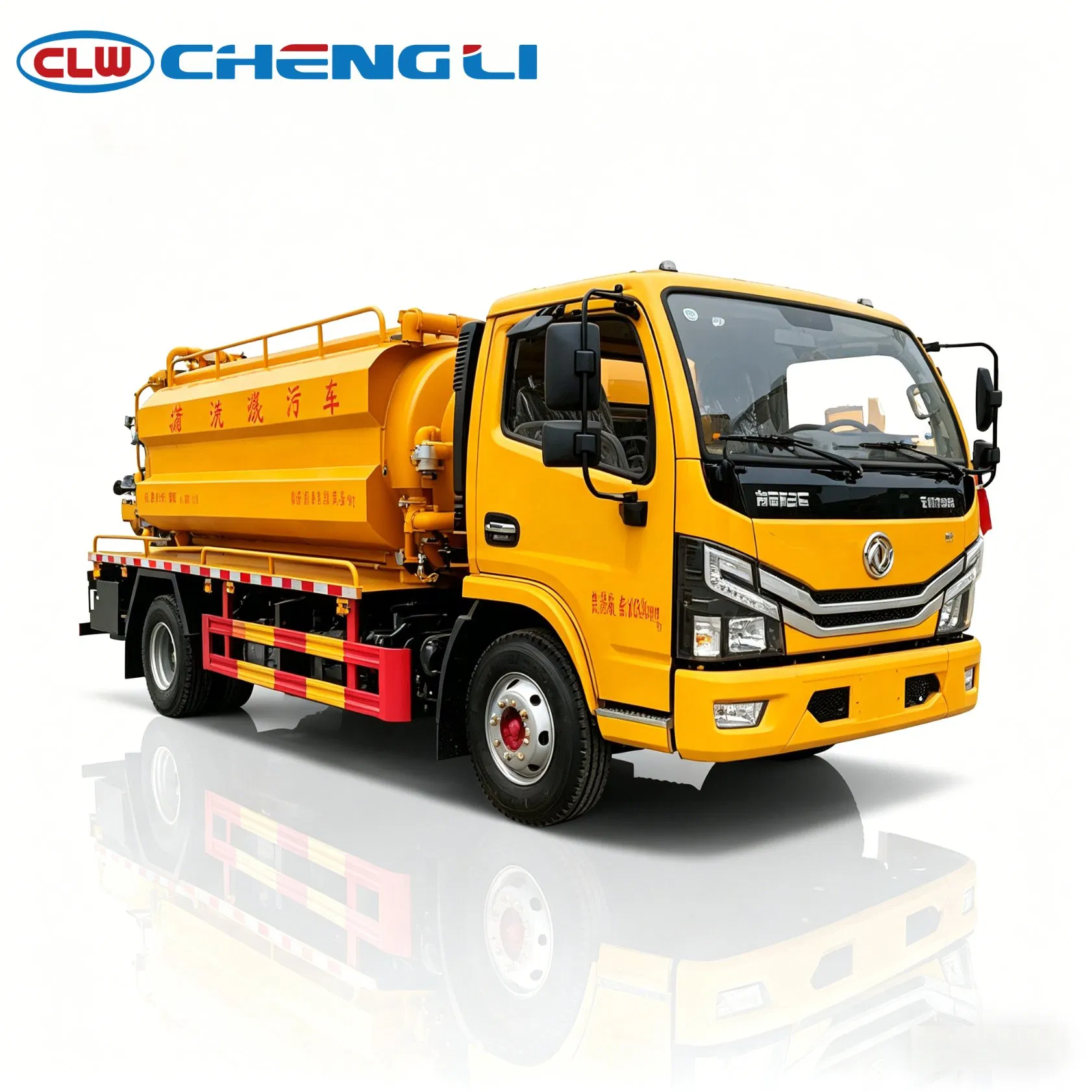
| Dongfeng Duolika 4x2 | 4 m³ sewage + 2 m³ clean water | SK-9 water-ring (SK-12 optional) | 420 m³/h (720 m³/h) | ≥ 9 m |
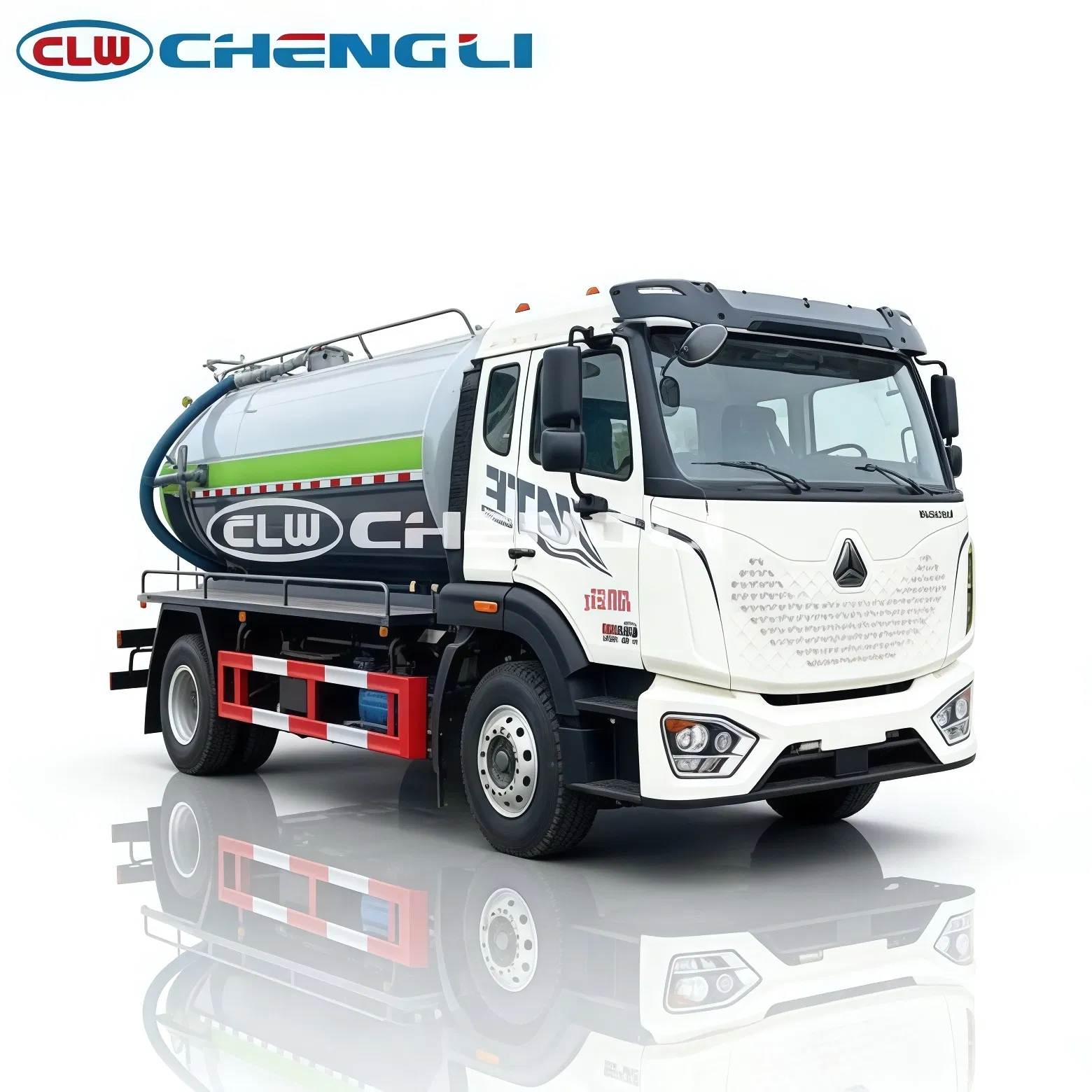
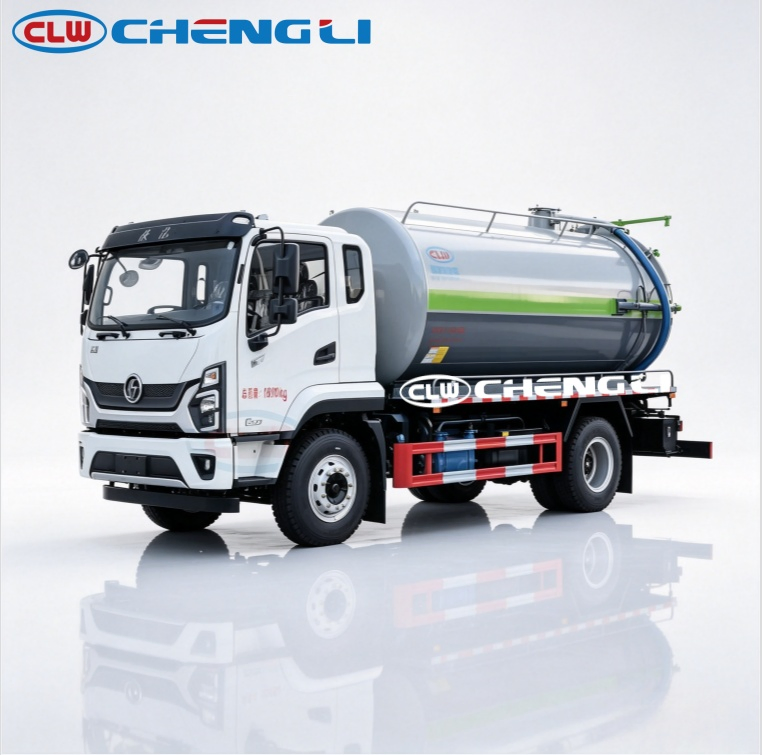
| Shacman Delong 4x2 | 12 m³ | SK-15 water-ring | Confirm at quotation | Confirm at quotation |
| HOWO 4x2 | 13.8 m³ | 2BE204 water-ring | Confirm at quotation | Confirm at quotation |
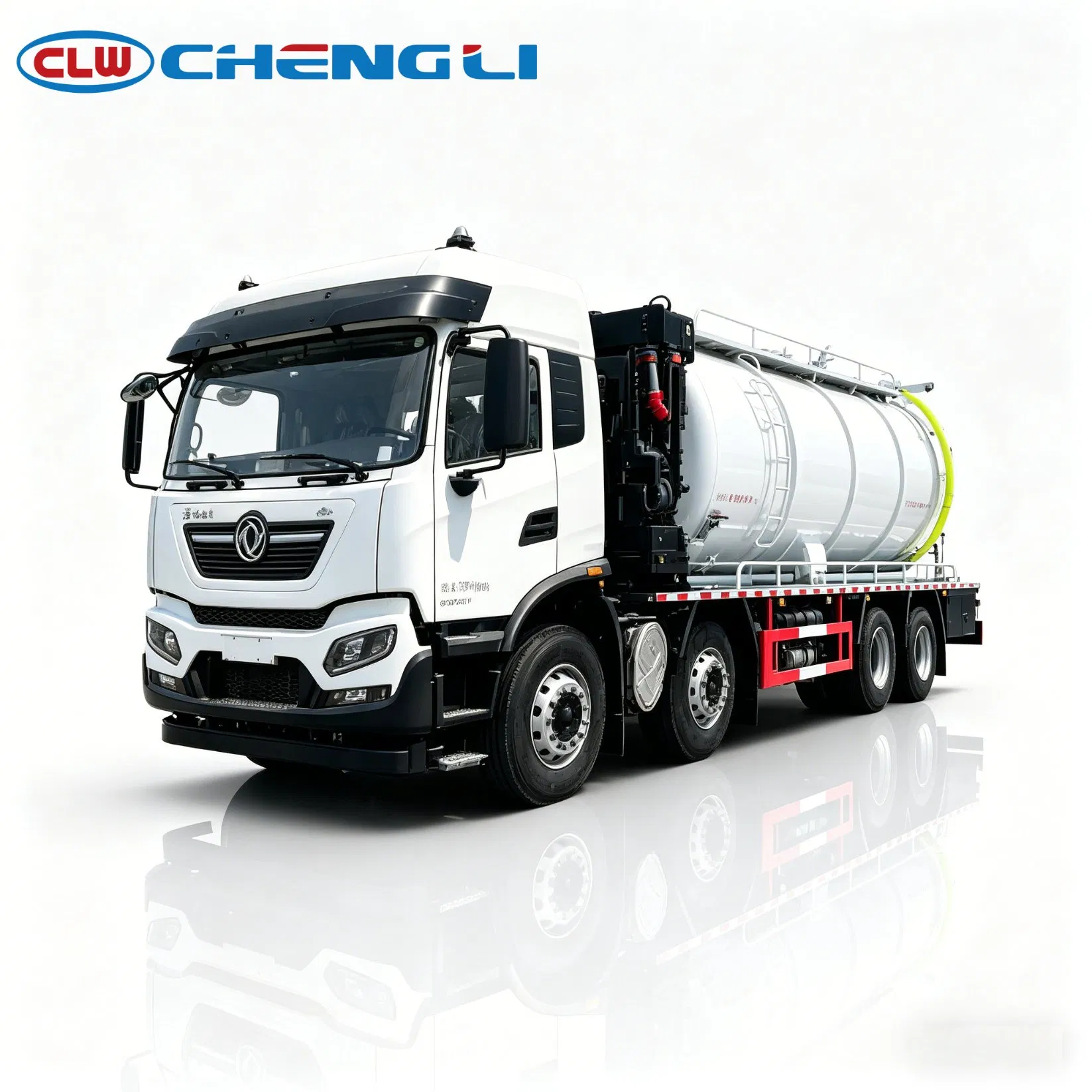
| Dongfeng Kinland 8x4 | 15 m³ sewage + 10 m³ clean water | 2BE3-50 water-ring or LC160 three-lobe Roots | ≥ 200 m³/h | ≥ 9 m |
| HOWO 6x4 | 17 m³ sewage + 5 m³ clean water | 2BE258 water-ring | Confirm at quotation | Confirm at quotation |
The Duolika shows the main trade-off in a single model: the same 4 m³ tank is offered with a 420 m³/h or a 720 m³/h pump. The larger pump pulls vacuum faster and recovers faster after each hose change, at the cost of more drive power. On the Dongfeng Kinland 8x4 combined jetting and vacuum truck, both pump options are rated to at least −0.098 MPa, and the 300 L/min jetting pump runs from a separate 160 hp or 180 hp auxiliary engine rather than the chassis engine.
Airflow, Vacuum Level and Fill Time
Two figures describe a vacuum pump, and suppliers in different markets quote them in different units.
- Airflow is how much air the pump removes, in m³/h, m³/min or CFM. It decides how quickly the tank reaches working vacuum.
- Vacuum level is how far below atmospheric pressure the pump can hold the tank, in MPa, kPa, percent or inches of mercury. It decides how high the pump can lift waste and how well it pulls thick sludge.
| Figure | Metric | Other units |
|---|---|---|
| Kinland pump airflow | 200 m³/h | about 3.3 m³/min, 118 CFM |
| Duolika SK-9 airflow | 420 m³/h | 7 m³/min, about 247 CFM |
| Duolika SK-12 airflow | 720 m³/h | 12 m³/min, about 424 CFM |
| Kinland rated vacuum | −0.098 MPa | −98 kPa, about 97% vacuum, about 28.9 inHg |
A rough way to compare pumps is the time needed to pull an empty tank down to working vacuum. For an ideal pump, that time equals tank volume divided by airflow, multiplied by a factor of about 0.92 for 60% vacuum. The 4 m³ Duolika tank reaches it in roughly 31 seconds with the SK-9 and 18 seconds with the SK-12. Real pumps lose airflow as the vacuum deepens and every joint leaks a little, so actual times are longer. The ratio still holds: the bigger pump cuts the wait by about 40%.
Which figure deserves more attention depends on the job. Deep pits and thick sludge need a pump that holds a high vacuum. Long hoses, frequent hose moves and short jobs on a busy route reward airflow.
Protecting the Pump: Overflow Valves, Separators and Daily Care
Most pump failures start with liquid or grit reaching the pump. A well-built truck has several barriers between the tank and the pump:
- A float-type anti-overflow valve that closes the air line when the tank is full.
- A water-gas separator that drops out moisture and foam before the pump.
- On oil-sealed pumps, an oil-gas separator that catches oil mist at the exhaust.
- A vacuum gauge and a relief valve, so the operator can see the tank pressure and the tank cannot be overloaded.
Daily care is short but cannot be skipped. On a water-ring pump, check the sealing-water level before work, drain the pump at the end of the day in freezing weather, and descale it where the water is hard. Drain the separators after every shift.
How to Specify the Vacuum Pump on a Sewage Truck
Confirm these points in writing before comparing quotations:
- Pump type, maker and model, with rated airflow at a stated vacuum level, not just open-inlet flow.
- Maximum vacuum in MPa or kPa, and the suction depth the build is rated for at your altitude.
- Your deepest pit, longest hose run and the suction hose diameter (the Kinland uses a 10 m DN100 hose).
- The waste you collect: thin septic liquid, sandy sludge, grease or industrial residue.
- How the tank is emptied: by gravity, by tipping the tank, or by pressurizing it with a reversible pump.
- The overflow valve, separators, gauge and relief valve fitted as standard.
- Climate: frost protection for a water-ring pump, cooling for hot-country work.
- First-year spare parts: seals, couplings, separator parts and, for vane pumps, a set of vanes.
FAQ
Which vacuum pump is best for a septic truck?
For household septic tanks and pit latrines, a water-ring pump is the simplest choice. It runs cool, accepts damp and dirty air, and needs no oil in the pumping chamber. A rotary vane pump suits operators who want a lighter truck, pressure unloading and a deeper vacuum, and who can keep the traps and oil in good order. Roots blowers make most sense on large combination units.
What size vacuum pump does a 10,000 liter tank need?
Size the pump on how quickly you want the tank ready. With the ideal estimate above, a 10 m³ tank reaches 60% vacuum in about 46 seconds at 720 m³/h and about 79 seconds at 420 m³/h. Real times are longer. If your route has many short jobs, the larger pump repays its extra drive power.
Can a water-ring pump unload the tank under pressure?
Many water-ring trucks empty by gravity through the rear valve or by tipping the tank, and several of our trucks have a tank lifting system for this. If you need to push the load uphill or into a raised inlet, ask whether the pump and valve set allow pressure discharge, and at what pressure.
Why does a vacuum truck lose suction?
The usual causes are air leaks at hose couplings, the manhole lid or a worn valve seat; a closed overflow float because the tank is full; a blocked separator; or low sealing water on a water-ring pump. On vane pumps, worn vanes and low oil reduce vacuum. Check the gauge with the hose capped to tell a leak from a pump fault.
Choose the pump from the waste, the pit depth and your site altitude, then match airflow to the tank and the pace of your route. Our vacuum and sewage truck range runs from small 4x2 suction trucks to the HOWO 4x2 13.8 m³ sewage suction truck and 8x4 combination units, and our municipal sanitation page covers fleet planning. If you also clear blocked sewers, compare a vacuum truck, sewer jetting truck and combination unit first. Send your tank size, deepest pit, altitude and waste type through our contact page, and our engineers will recommend a pump and tank configuration.