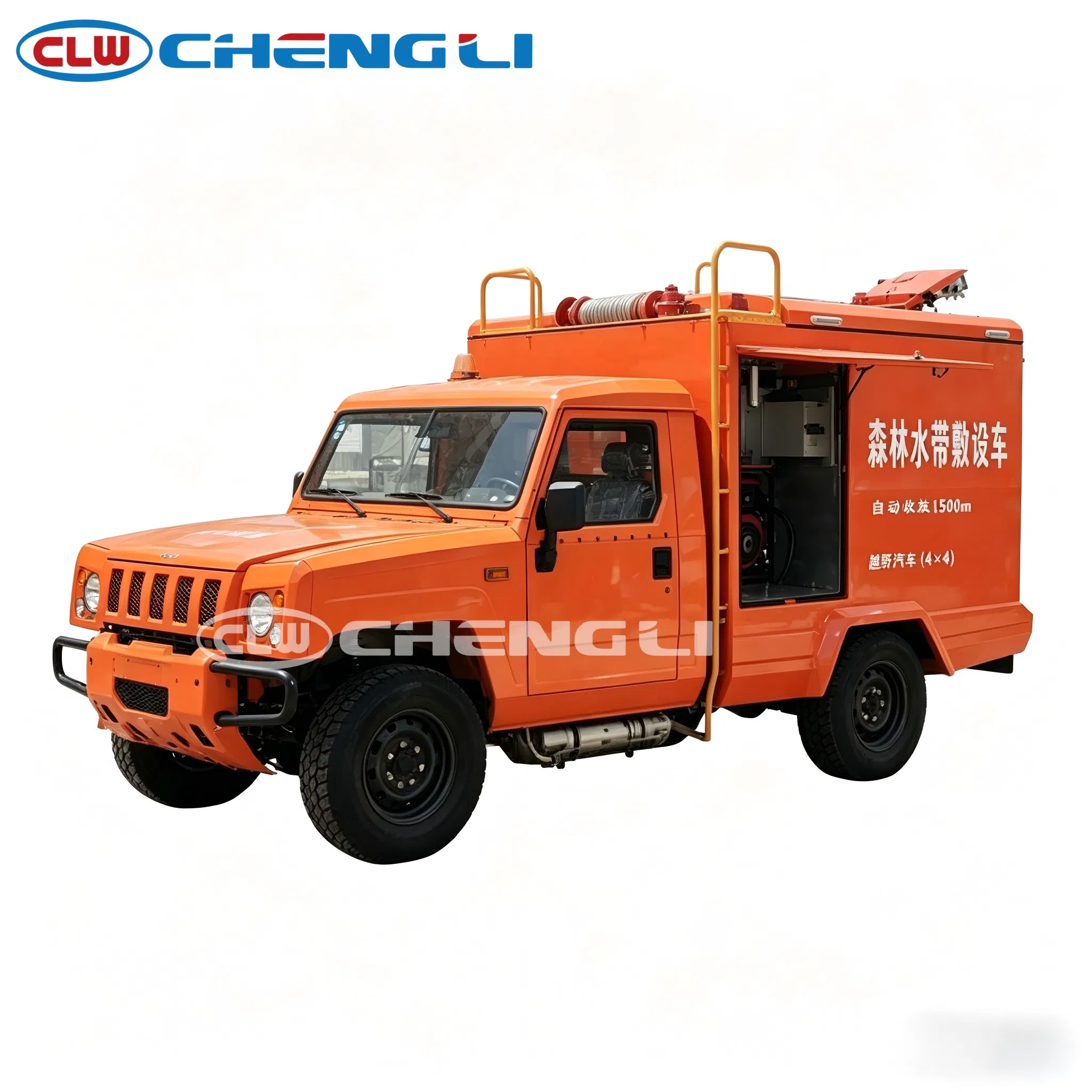
Forest hose deployment
Lays a hose line along an accessible forest track.
Fire Trucks
Built to lay 1,500 m of fire hose from onboard reels, this compact 4x4 carries supply lines along forest tracks to fire fronts that pumpers and tankers cannot reach, then helps recover the hose afterward.
From US $45,000
Review specifications and quotation.
THE VEHICLE
This 4x4 forest hose-laying truck carries 1,500 m of fire hose on reels inside an enclosed body and pays it out along an access track at walking-to-jogging pace, 5–8 km/h, helped by a hose traction device. It is meant for forest brigades that must bring water from a distant pond, river or tanker to a fire line that pumpers cannot reach, and it can also recover hose after the incident.
The two-axle, four-wheel-drive chassis uses a 2,360 mL diesel engine rated at 120 kW (163 PS) with a manual gearbox, a 3,035 mm wheelbase and 265/70R16LT 10PR tires. Overall size is 5,295 × 2,030 × 2,580 mm, gross vehicle weight is 3,600 kg with front and rear axle loads of 1,350 and 2,250 kg, and the single-row cab seats two. A 42° approach angle, 18° departure angle, short 775 mm front overhang and 120 km/h top speed help it move between fire lines on paved and forest roads. The reels sit behind side hatches and a rear roller door, with roof rails for access.
Typical work includes laying supply lines from water sources to forest fire fronts, building long hose runs for relay pumping and rewinding hose after mop-up. Hose diameter, coupling type and reel layout are matched to the brigade's pumps and hose standards when ordering, and emission levels from Euro 2 to Euro 6 are available.
TECHNICAL DATA
| Overall Dimensions (L×W×H) | 5,295 × 2,030 × 2,580 mm |
|---|---|
| Gross Vehicle Weight | 3,600 kg |
| Rated Payload | 130 kg |
| Seats | 2 |
| Approach/Departure Angle | 42° / 18° |
| Front/Rear Overhang | 775 / 1,310 mm |
| Drive Type | 4x4 |
|---|---|
| Axles | 2 |
| Axle Load (Front/Rear) | 1,350 / 2,250 kg |
| Wheelbase | 3,035 mm |
| Engine Power | 120 kW (163 PS) |
| Engine Displacement | 2,360 mL |
| Fuel Type | Diesel |
| Transmission | Manual |
| Tire Specification | 265/70R16LT 10PR |
| Tire Quantity | 4 |
| Emission Standard | Euro 2–6 (optional) |
| Total Hose Length | 1,500 m |
|---|---|
| Hose-Laying Speed | 5–8 km/h |
| Hose Traction Device | Fitted |
| Max Speed | 120 km/h |
|---|---|
| Fuel Consumption | 10.6 L/100 km |
CONFIGURATION
IN THE FIELD
Lays a hose line along an accessible forest track.
Positions a long hose run between a supply point and a fireground.
BEFORE YOU ORDER
The reels hold a total of 1,500 m of fire hose.
Hose is paid out at 5–8 km/h with the help of a hose traction device, so the line lies evenly along the track.
A 2,360 mL diesel rated at 120 kW (163 PS), manual gearbox and full 4x4 drive on 265/70R16LT tires.
No. It carries hose, not water; it lays supply lines from a water supply point or tanker to the fire line and helps recover the hose afterward.
EXPLORE THE RANGE
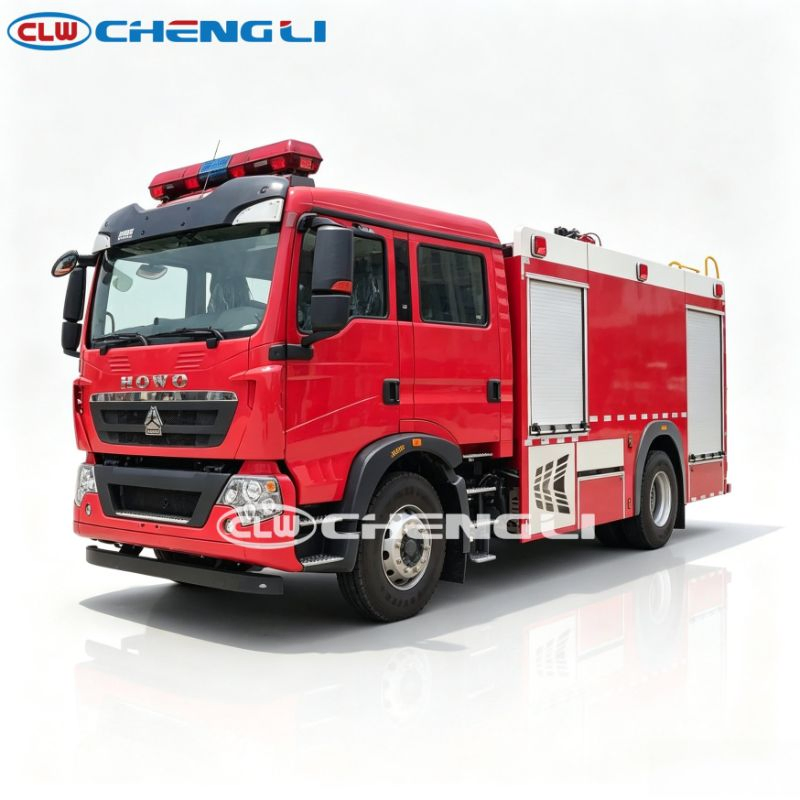
A Sinotruk HOWO 4x2 water fire truck carrying 8,150 L in a dedicated tank, with a six-person crew cab and pump and monitor equipment for municipal response.
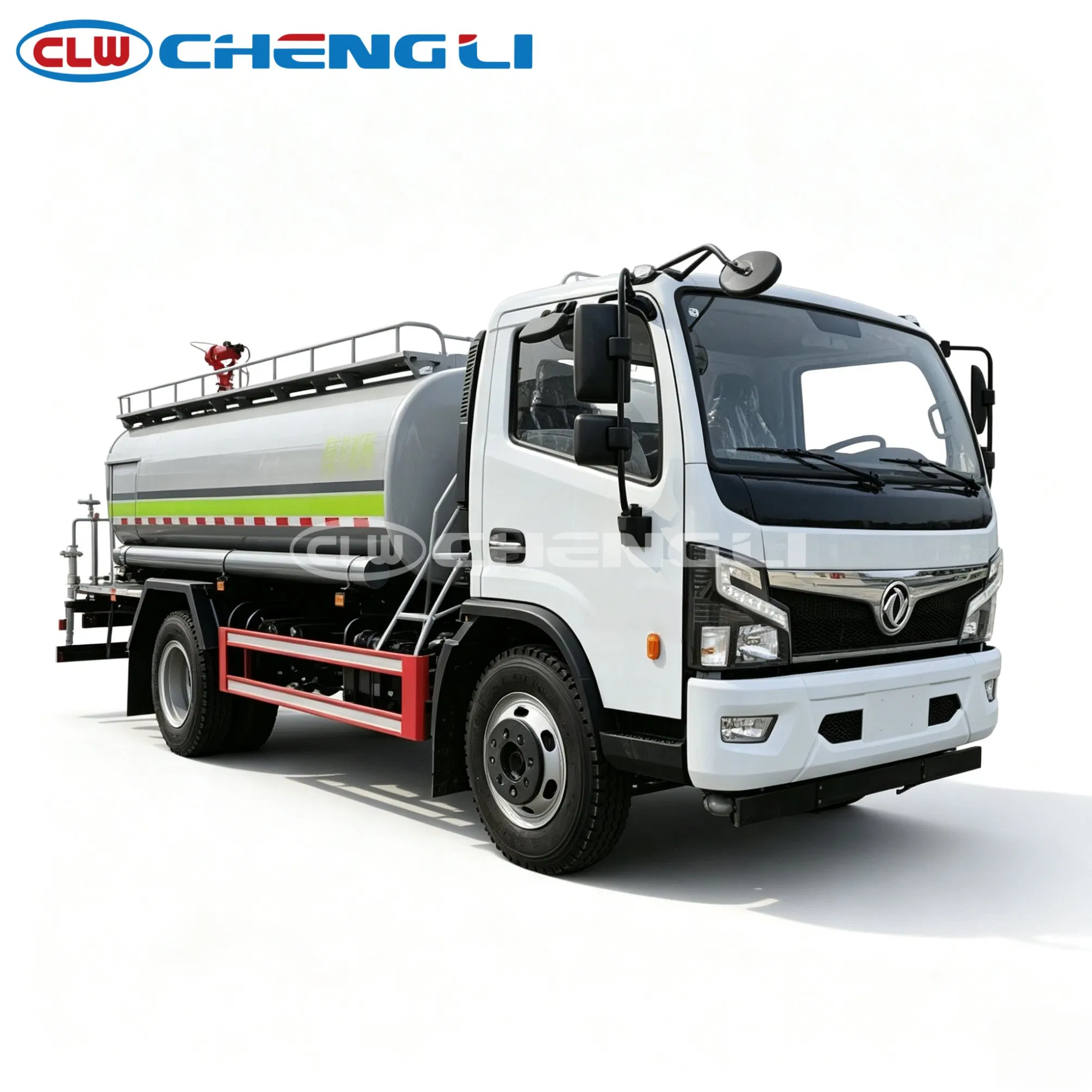
A Dongfeng 4x2 fire sprinkler truck with a dedicated 7,000 L water tank, rear-mounted low-pressure pump, roof monitor and road-watering outlets for dual-purpose fleet use.
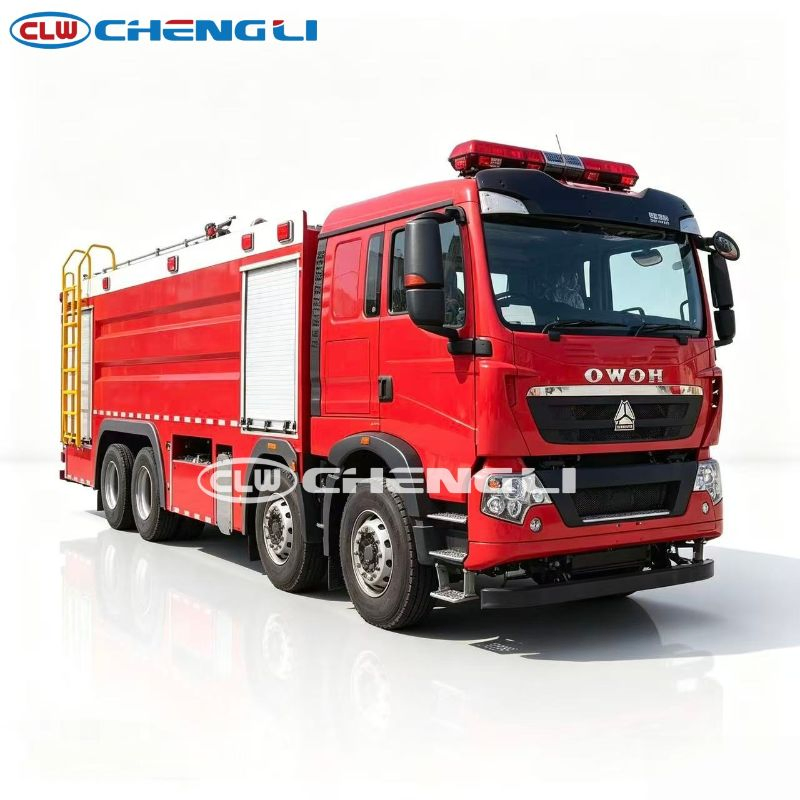
A Sinotruk HOWO 8x4 foam fire truck with separate 20,900 L water and 3,800 L foam tanks, four crew seats and two engine power options for industrial response.
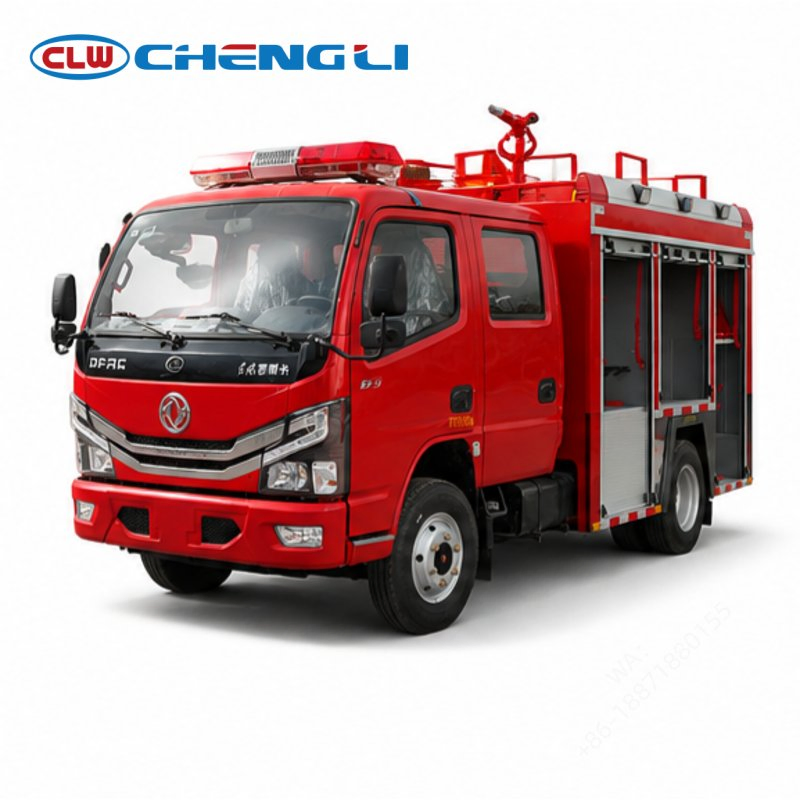
A compact Dongfeng 4x2 fire truck with a 2,500 L water tank, double-row crew cab, fire pump and roof monitor for community and rural response.
KNOW YOUR NEXT TRUCK
How pumpers, foam, dry powder, combined-agent and rescue fire trucks differ, with listed tank ranges from 850 L to 25,000 L and a guide to matching 4x2, 4x4, 6x4 or 8x4 chassis to the risk.
Water tank sizes for our fire trucks from light 4x2 pumpers to 8x4 tenders, how many seconds each tank lasts at rated pump flow, how foam tanks are proportioned, and the pump and payload details to confirm before you order.
A side-by-side look at water, foam and dry powder fire trucks: how each agent works, how European and US fire classes differ, and when a combined-agent truck makes more sense than a single-agent unit.
LET US BUILD YOUR NEXT TRUCK
Tell us your vehicle type, required capacity and destination country. Our team will help you discuss the right configuration.
[email protected] ↗+86 18871880125Selected vehicle: 4x4 1,500 m Wildland Hose-Laying Fire Truck