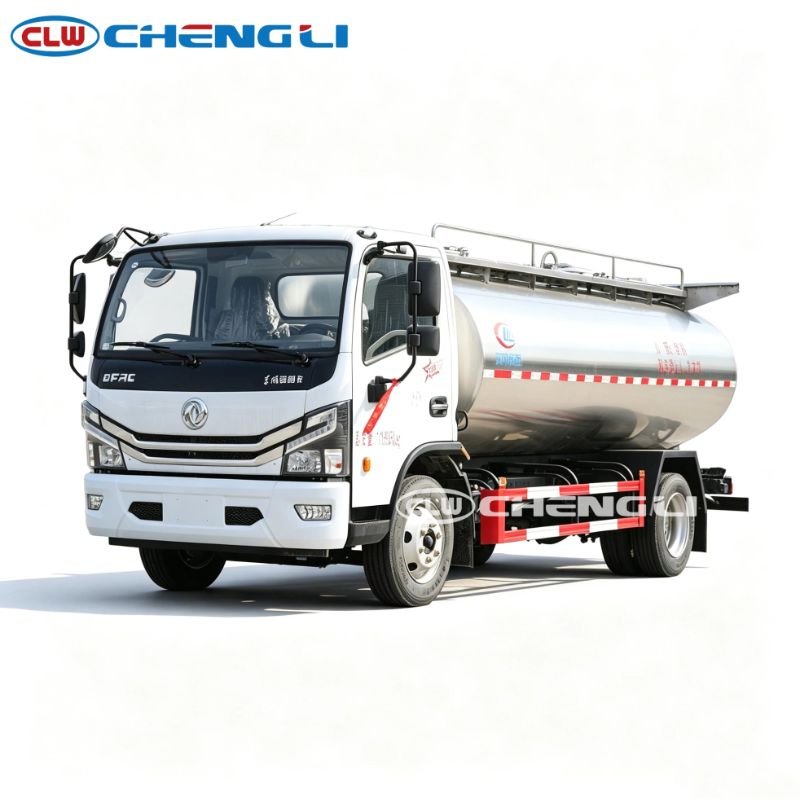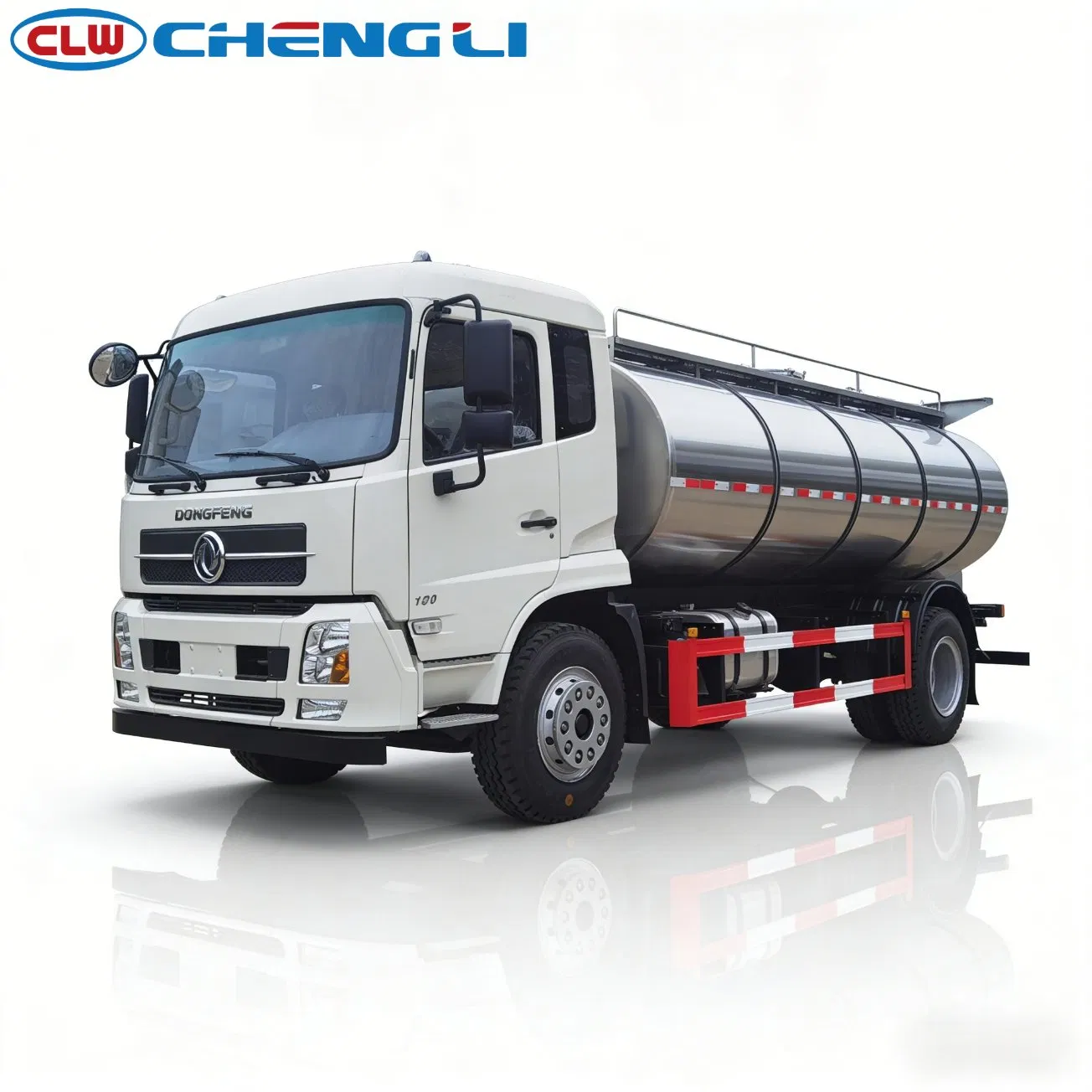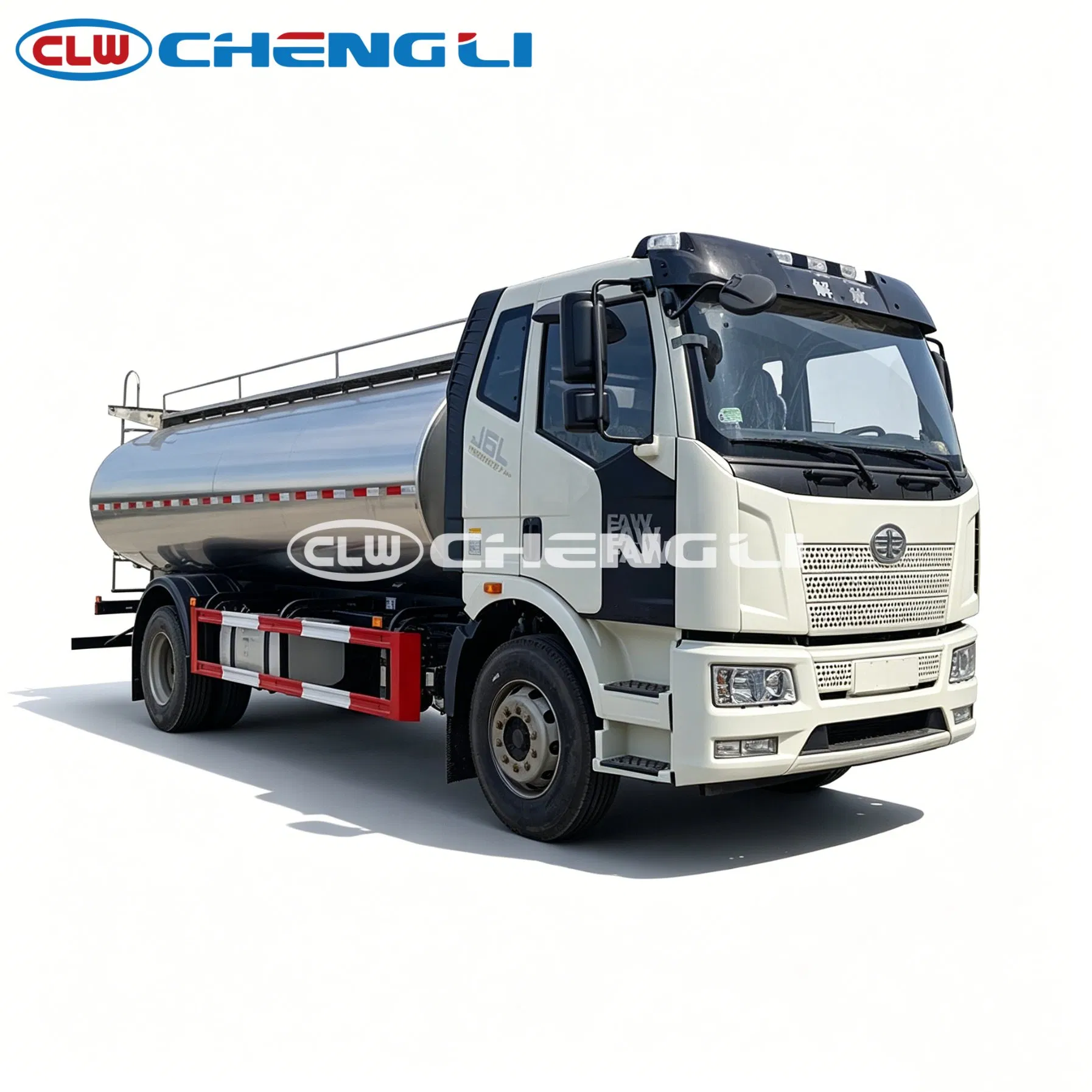
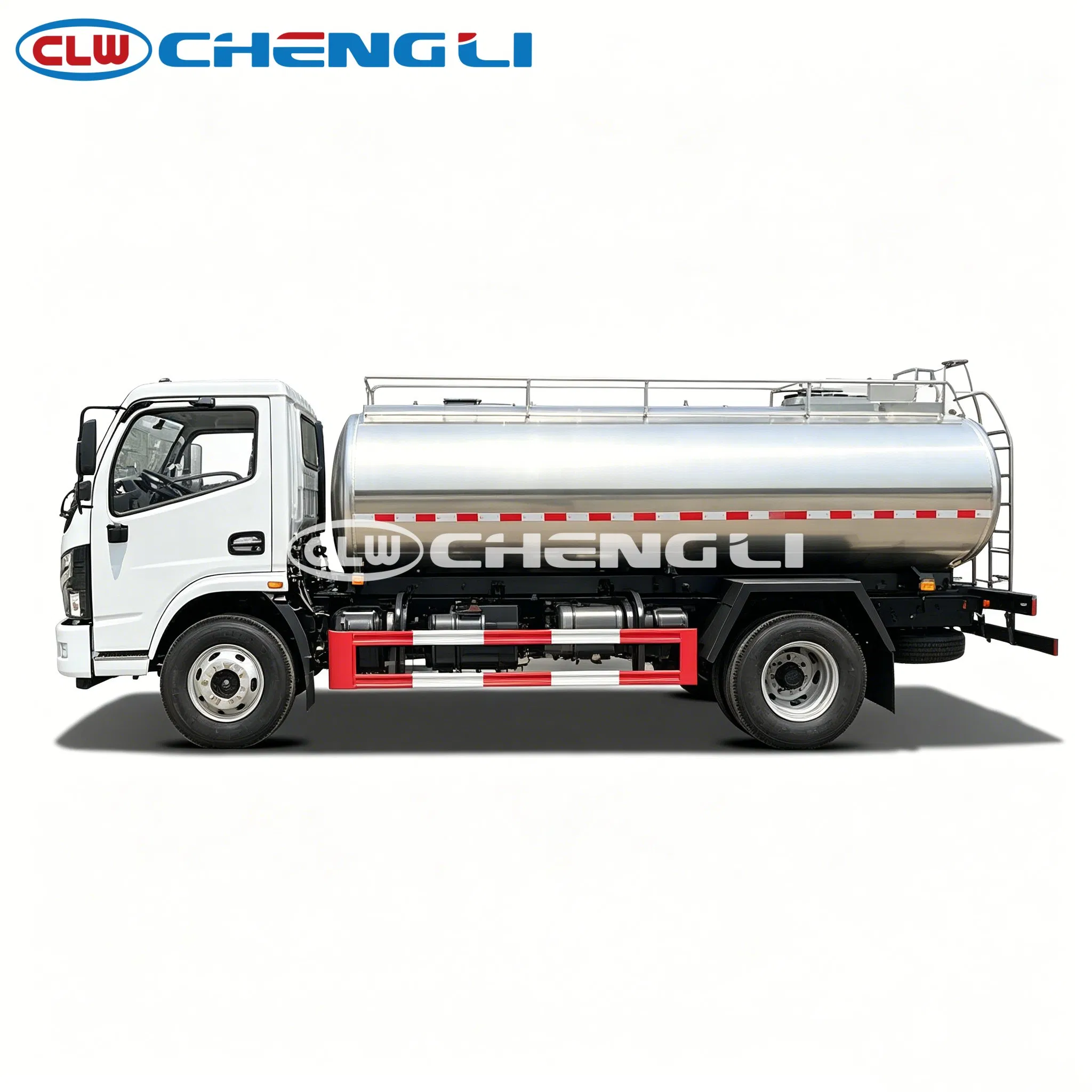
Most dairy routes have three stages, and each needs a different truck. Small 3,600–5,250 L 4x2 collectors work the farm gate and village collection points; 6,900–13,000 L two-axle trucks carry milk from chilling centers to the plant; 15,700–22,000 L three- and four-axle trucks and 32,200 L semi-trailers move bulk milk between plants. Buy for the stage, not for the largest tank.
Matching the Truck to the Route Stage
Where the milk starts decides the truck. Milk from smallholders arrives in cans and small volumes; milk from a chilling center or a large farm is already cooled and pumped in bulk. The table maps each stage to the sizes we build.
| Route stage | Typical pickup | Our tank sizes | Chassis | Equipment focus |
|---|---|---|---|---|
| Farm-gate collection | Cans or small farm tanks, many stops | 3,600–5,250 L | 4x2, 5,870–5,995 mm long | Hopper or pump with filter, optional flow meter |
| Collection center to plant | Chilled milk from a center or large farm | 6,900–13,000 L | 4x2, 6,900–10,000 mm long | Compartments, rear valve box, CIP |
| Bulk transfer | Plant to plant, long distances | 15,700–22,000 L | 6x4 and 8x4 | Maximum legal payload, CIP, sealing |
| Long-haul bulk | Plant to plant on good roads | 32,200 L | 3-axle semi-trailer | Tractor matching, 4 optional compartments |
A common pattern is two stages in one fleet: small collectors feed a chilling center, and a larger truck takes the cooled milk to the plant once or twice a day. Sizing each truck for its own stage usually beats buying one mid-size truck that is too big for the farm lanes and too small for the plant run.
Farm-Gate Collection: Small Milk Tankers and Loading Equipment
At the farm gate, the truck is a mobile reception point. A small milk tanker has to reach the farm, take milk in quickly and keep each supplier's milk clean. Our Dongfeng 4x2 5,000 L milk collector is 5,870 mm long and 2,000 mm wide on a 3,308 mm wheelbase, and carries the loading kit this stage needs: a SUS304 milk filter paired with the pump, a pressure-balancing breather valve with its own filter, and 80 mm polyurethane insulation. A flow meter, tank partitions and a refrigeration unit are optional.
The flow meter matters most where farmers are paid by volume at the truck. Without it, volume has to be measured at the farm or the center, which slows each stop. The refrigeration unit matters where farms have no milk coolers: insulation only slows warming, so warm milk collected after morning milking will not be cold at the plant without active cooling.
For the smallest lanes, our 3,600 L Dongfeng 4x2 is 5,995 × 2,000 × 2,350 mm on 7.00R16 light-truck tires, with an optional two-compartment tank and quick-connect transfer couplings. The Sinotruk HOWO 5,250 L 4x2 is a step up at 9,100 kg GVW and 5,085 kg rated payload.
Collection Center to Plant: Mid-Size Milk Tank Trucks
Once milk is chilled and pooled, the job becomes a shuttle: fill quickly, drive, unload, clean, return. Mid-size two-axle trucks fit here because they still pass through town streets and plant gates easily.
Check rated payload against tank volume at this size, because they often differ. Our Dongfeng Dolica D7 8,500 L milk tanker is rated for 6,600 kg, which is about 6,400 L of milk at roughly 1.03 kg/L. The FAW 10,900 L 4x2, at 18,000 kg GVW, is rated for 10,435 kg, or about 10,100 L of milk. Pick by the liters you can legally carry, then use the spare tank volume as headroom.
Equipment shifts from loading to unloading and cleaning. The Dolica groups its control valves in a rear operation box, fits independent 360° rotating CIP spray balls in each of its two compartments and uses a 51 mm discharge port that can be changed to match the plant's coupling. Our Dongfeng 13,000 L truck adds labeled compartments and a gas-spring rear valve box, so the unloading valves and cleaning connections sit together at the rear.
Bulk Transfer Between Plants: Three- and Four-Axle Trucks
Plant-to-plant transfers move large volumes over longer distances, often at night. Here payload per trip decides cost per liter. Our Dongfeng and FAW 6x4 trucks carry 15,700 L tanks; our FAW 8x4 17,700 L milk tank truck runs at 31,000 kg GVW with a 17,765 kg rated payload and a 463 hp engine, enough for about 17,200 L of milk. At 11,820 mm long and 3,680 mm high, it belongs on main roads and plant yards rather than farm lanes.
Beyond that, a semi-trailer takes over. Our 32,200 L insulated milk tank semi-trailer is rated for 32,200 kg at 40,000 kg GVW, with up to four optional compartments. It needs a tractor and good roads, and it only pays when both ends of the route can fill and empty it in one visit.
Sealing, Traceability and Plant Turnaround
Dairies need to know that the milk leaving a farm is the milk arriving at the plant. Lead seals are the simple answer: the Dolica has seal points at the manhole covers, unloading ports and valve boxes, and the 13,000 L truck has integrated seal points with an individual label on each compartment. Combine seals with sampling at each pickup and the plant can trace any quality problem back to a compartment and a supplier.
Turnaround at the plant decides how many loads a truck can run per day. With CIP spray balls fitted in each compartment and valves grouped at the rear, the truck can unload, rinse and clean in place with little manual work on top of the tank. For material, insulation and cleaning details, see our milk tanker guide.
What to Confirm Before Ordering
- The route stage the truck will serve, and the number of stops and liters per round.
- The narrowest lane, tightest turn and weakest bridge on the route, which set the maximum length and weight.
- How milk is received at pickup: cans poured into a hopper, a farm tank or a pump from a cooler.
- Whether suppliers are paid by volume at the truck, which calls for a flow meter.
- Whether milk arrives chilled, or whether the truck needs a refrigeration unit as well as insulation.
- Seal, label and sampling requirements set by the dairy.
- Discharge port size, coupling type and CIP connections used at the plant.
- Legal payload for your registration class, compared with the tank volume in liters of milk.
FAQ
What size milk collection truck do small farms need?
For routes with many small farms and narrow lanes, a 3,600–5,250 L 4x2 truck is usually right. It stops often, fits farm entrances and fills in one round. If the route collects more than one tank per round, add a second small truck or a chilling center before moving to a larger truck that cannot reach the farms.
Is a milk tanker lorry different from a milk tank truck?
No, the names describe the same vehicle. Lorry is the British and Commonwealth word, common in East Africa and South Asia; truck is the American term. Both describe an insulated stainless steel tank on a rigid chassis. A milk tank trailer is different: it has no engine and is pulled by a tractor head.
Can one truck collect milk from farms and deliver to the plant?
Yes, on short routes. A 6,900 L truck with three optional compartments can collect from several farms and drive straight to the plant if the lanes allow it. On longer routes the milk spends too long in the tank, and splitting collection and transfer between two trucks keeps quality and costs under control.
Does a milk collection truck need a refrigeration unit?
Only when the milk is loaded warm. Insulation keeps chilled milk cold for a route but does not cool it down. Where farms have their own coolers or deliver to a chilling center, insulation alone is usually enough. Where milk goes straight from milking into the truck, an optional refrigeration unit protects quality on the way to the plant.
Size the truck to its stage of the route, then add the equipment that stage needs. Compare builds across our milk tanker trucks and tell us your route length, number of farms and daily liters; our team will propose a tank size, chassis and equipment list for your dairy collection network.