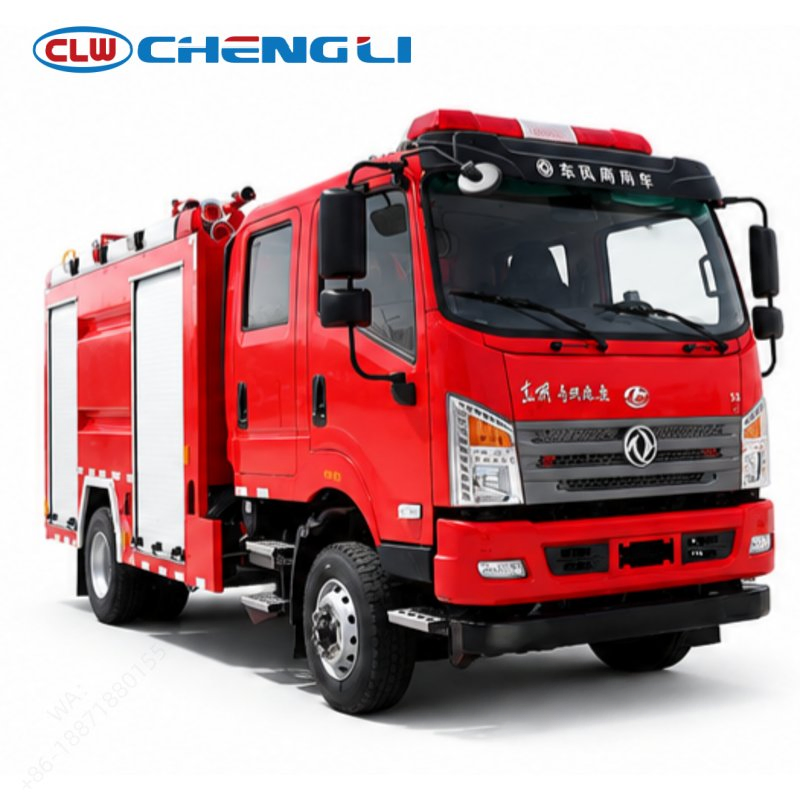
Choose steering position from the rules and operating practices of the destination market before you finalize a special truck chassis. A right-hand-drive vehicle and a left-hand-drive vehicle can carry the same working body, but cab layout, visibility, service parts and registration documents may differ. Confirm the exact steering configuration on the production specification, then inspect the completed truck against it.
Why does steering position matter on a special truck?
Steering position affects more than the driver's seat. A municipal crew may work at the curb, a fire crew may need to watch both sides of a narrow road, and a tanker driver may operate valves on one side of the vehicle. The chassis and the working body must be planned together. The first question is where the truck will be registered and driven. The second is where the operator must stand while loading, spraying, lifting or inspecting the body.
Left-hand drive (LHD) and right-hand drive (RHD) describe the position of the steering wheel when viewed from inside the cab. They do not specify which wheels are powered. A 4x2 or 4x4 drive designation answers a different question: how many wheel positions the vehicle has and how many are driven. Keep these fields separate on every quotation and drawing.
Markets may have different rules for steering position, imports, lights and mirrors. Driving side alone does not establish whether an individual truck can be registered. Ask the local importer or registration authority to confirm the applicable requirements before ordering. Make the approved steering position a written purchase specification rather than an assumption based on the destination country's usual traffic pattern.
Which steering choice fits the intended route?
Start with the normal side of traffic, then consider the work itself. A truck making repeated curbside collections needs a clear view of the crew and bins. A road washer may need visibility around parked vehicles and pedestrians. A fire truck needs the driver to position the vehicle while other crew members deploy equipment. The following table is a planning aid; it is not a statement of legal permission in any country.
| Operating question | What to check for LHD | What to check for RHD |
|---|---|---|
| Route and traffic | Driver view on the intended traffic side | Driver view on the intended traffic side |
| Curbside work | Cab, mirror and camera view of the work zone | Cab, mirror and camera view of the work zone |
| Body controls | Reach and visibility from the operator station | Reach and visibility from the operator station |
| Local registration | Importer confirms chassis and documents | Importer confirms chassis and documents |
| Parts support | Correct cab and steering parts identified | Correct cab and steering parts identified |
Where a market normally drives on the left, buyers often investigate RHD; where traffic keeps right, they often investigate LHD. That is only a starting point. Certain work sites, ports, private facilities and specialist vehicles may have separate operating rules. We recommend checking the exact vehicle type and registration route with a qualified local party.
Can the same working body be ordered on either steering layout?
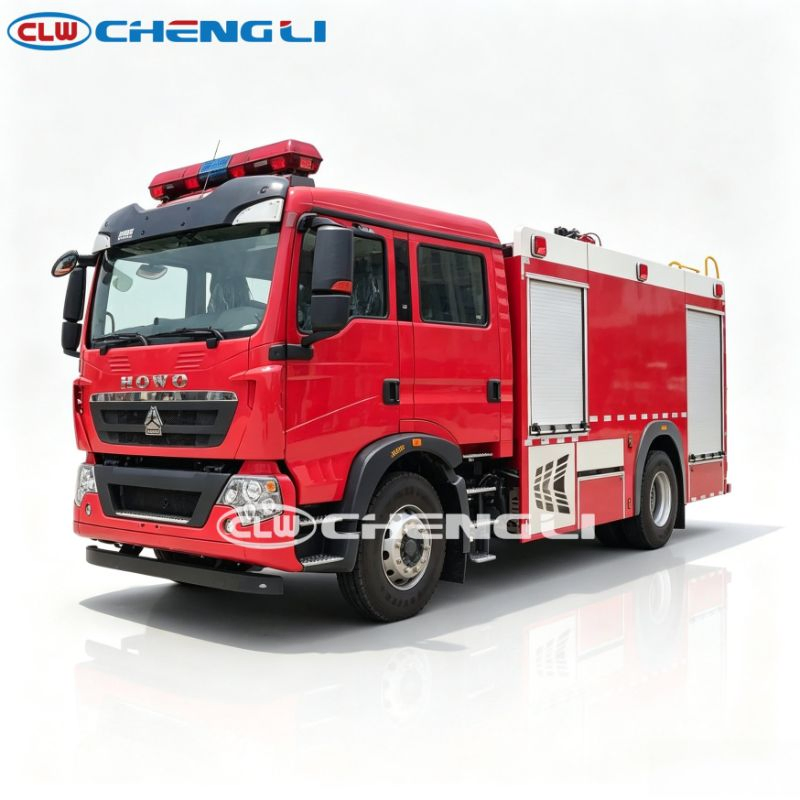
The body function can often be evaluated separately from the steering layout, but availability must be checked against the specific chassis and build. For example, our Dongfeng 4x4 fire truck with a 4,000 L water tank illustrates a compact all-wheel-drive fire body. Our HOWO 4x2 fire truck with an 8,150 L water tank illustrates a larger road-focused chassis. These product figures identify the body and drive configuration; they do not establish RHD availability.
Ask whether the desired steering version of the chassis supports the same wheelbase, gross vehicle weight, axle ratings, engine configuration and cab equipment. A change of chassis version can change body mounting space, electrical interfaces, spare wheel position or available payload. A tank or rescue body should be checked on the selected chassis rather than carried over from a different specification sheet.
Also confirm whether body controls, steps, handrails, warning labels and service access should be mirrored. A control panel that is convenient on one side may put an operator in traffic on the other. Mirroring every control is not always necessary; the important point is to agree where people will stand during normal use and maintenance.
What changes on the chassis and in the cab?
Request a cab drawing or photographs showing the steering wheel, dashboard, mirrors, wipers, pedals, doors and seating. The headlamp beam pattern and rear lighting arrangement should be confirmed for the target market. Check whether any camera display is positioned where the driver can use it without blocking the road view. A sales description that says only “export version” is not specific enough.
Check the chassis identification and parts information too. RHD and LHD variants can use different steering gears, dashboards, wiper assemblies, pedal brackets and mirror arms. Your maintenance team needs the parts references for the delivered version. The supplier should identify the exact chassis model on the final build specification and show the matching cab during inspection.
Door and seat layout matters for crews. On a fire or rescue truck, examine how personnel enter and leave the cab while carrying equipment. On a collection truck, examine the crew's route between the cab, bins and rear body. On a tanker, review access to the pump, valves and hose storage. These are practical safety and productivity questions even when the truck is used only within a depot.
How do you specify an export truck without a steering mistake?
Put LHD or RHD in the first page of the technical schedule, beside the chassis model and intended country of registration. Repeat it on the general arrangement drawing and the pre-shipment inspection checklist. Ask the supplier to mark any requested exceptions, such as a body control station on the opposite side from the driver's door. Keep the written schedule as the reference if a photograph, catalog image or earlier quotation shows another cab layout.
Use the fire truck range to compare body types and capacities, then request a build-specific confirmation of steering availability. Product photographs may represent one configuration only. A picture of a cab does not replace a written steering specification. If you also need import or service documentation, review our service and support information and ask what documents will be supplied for the exact vehicle.
What should you confirm before ordering?
- Write the destination market, intended registration type and required LHD or RHD position.
- Record the exact chassis model, wheelbase, drive type and permissible mass for that steering version.
- Agree the cab doors, crew seats, mirrors, cameras, wipers and headlamp configuration.
- Mark the side of every working control, step, hose reel and service access point on a drawing.
- Confirm that body capacity and rated payload apply to the selected chassis, not another variant.
- Ask the local importer to verify the registration and documentation requirements.
- Require pre-shipment photographs of the actual cab, chassis plate and operating stations.
During inspection, compare the physical vehicle with the approved schedule: the steering wheel should be on the specified side, the chassis plate should match the order, and the body controls should match the drawing. Test the view from the driver's seat with the body in its normal travel position. Record any change before the vehicle is released for shipment.
FAQ
Is a 4x4 truck necessarily right-hand drive?
No. The 4x4 notation identifies four wheel positions with four driven positions. LHD and RHD identify the steering wheel position. A 4x4 truck can be built in different steering configurations only when the selected chassis variant is available and approved for the intended build. Ask for both fields separately.
Can I choose steering position after the body has been built?
Steering position is a chassis choice that affects the cab, steering system and sometimes the body layout. Treat it as an early design decision. A late change can require a different chassis or new drawings. Confirm the chosen position on the order specification before manufacturing and check it again before shipment.
Does driving on the left automatically require RHD?
No universal answer applies to every vehicle and jurisdiction. The usual traffic side is a useful operational clue, but the permitted steering position and import route depend on local rules and the vehicle's intended registration. Have your importer or local authority confirm the requirement for this exact vehicle type.
What proof should I request before shipment?
Request photographs of the actual cab interior and exterior, the chassis identification, and the completed body controls. Compare them with the approved technical schedule. Also request the document list the importer needs for registration. A catalog photo of a similar truck is not evidence of the finished vehicle's steering layout.
Choose the steering layout from the destination market and operating route, then verify that the exact chassis and body are available in that configuration. Send us your vehicle duty, required steering position, destination and body requirements through the special truck inquiry page so we can confirm a build specification.