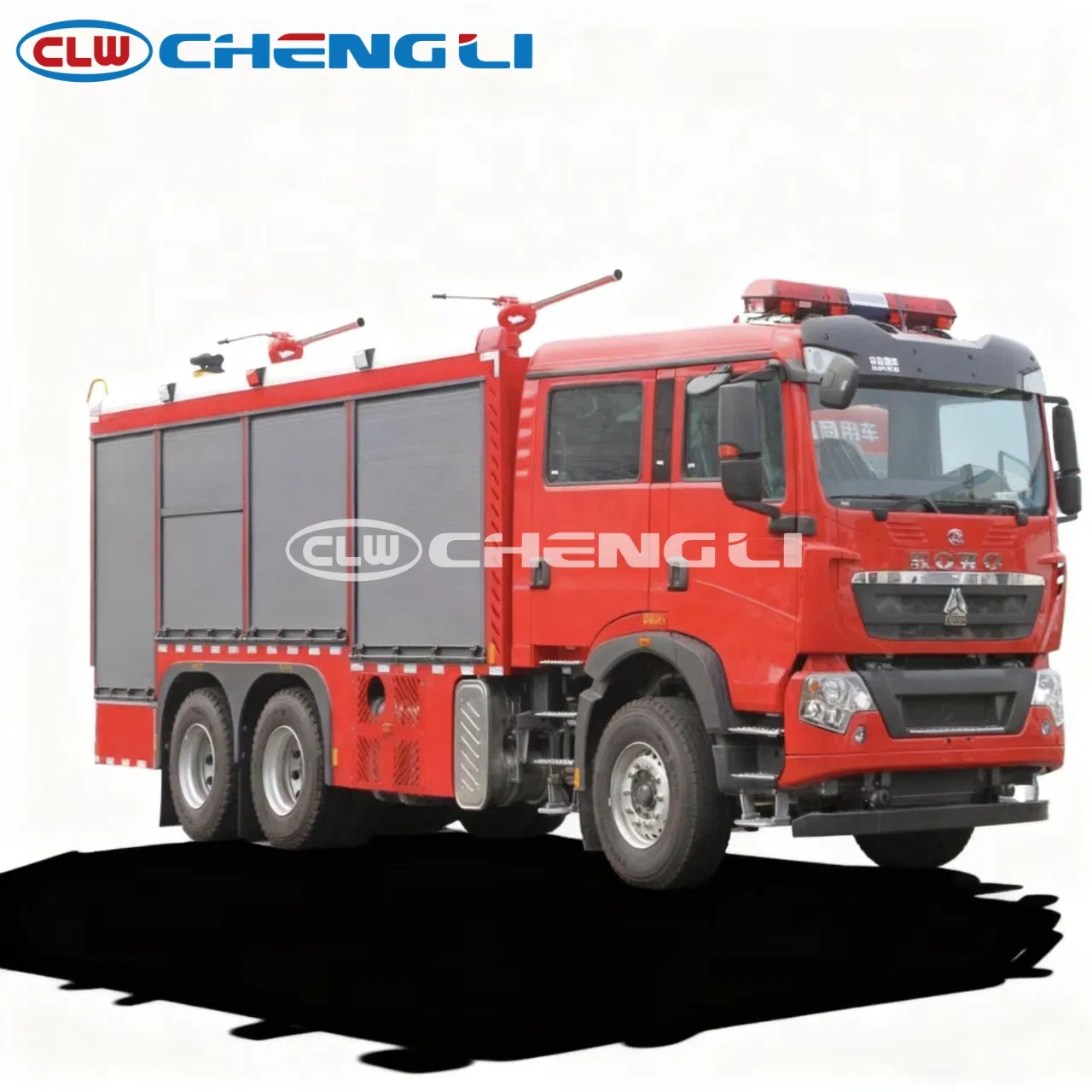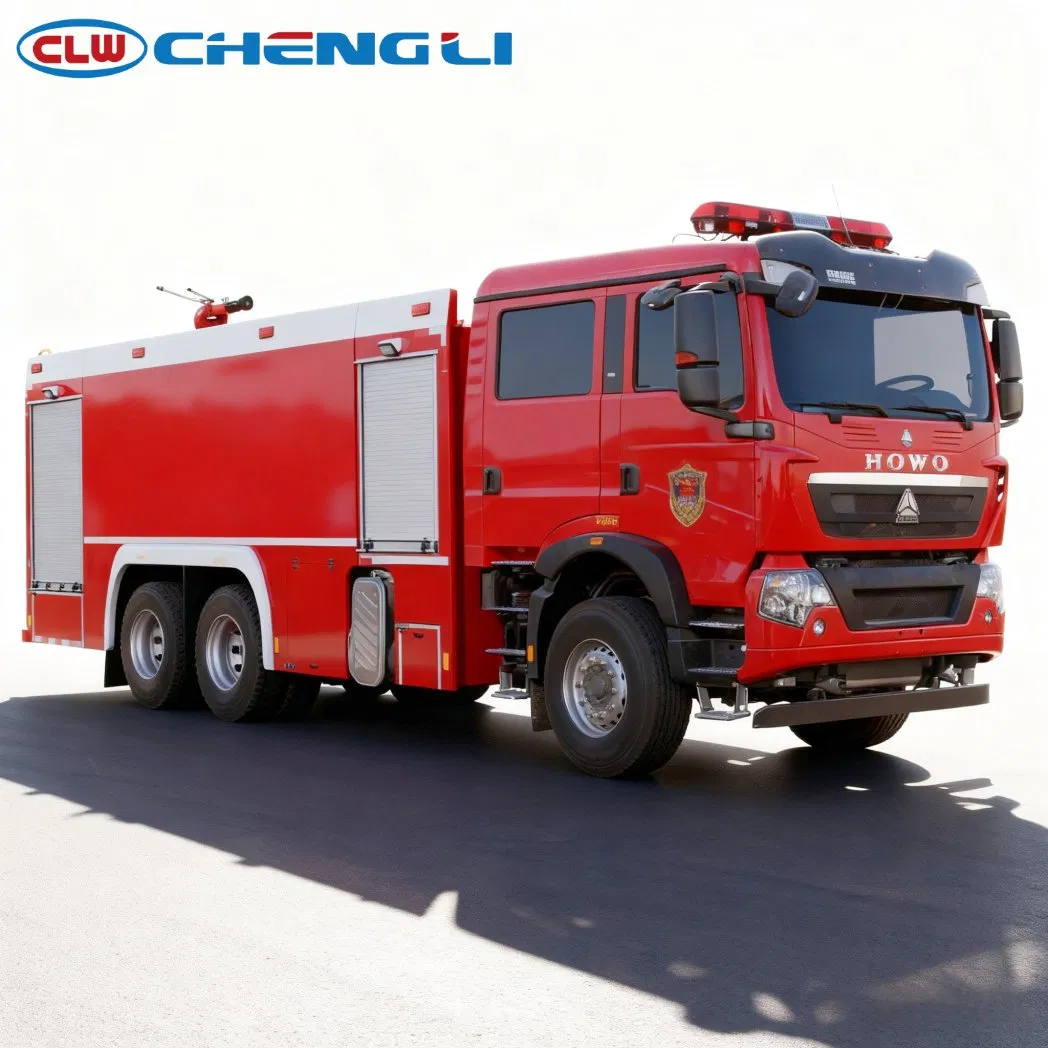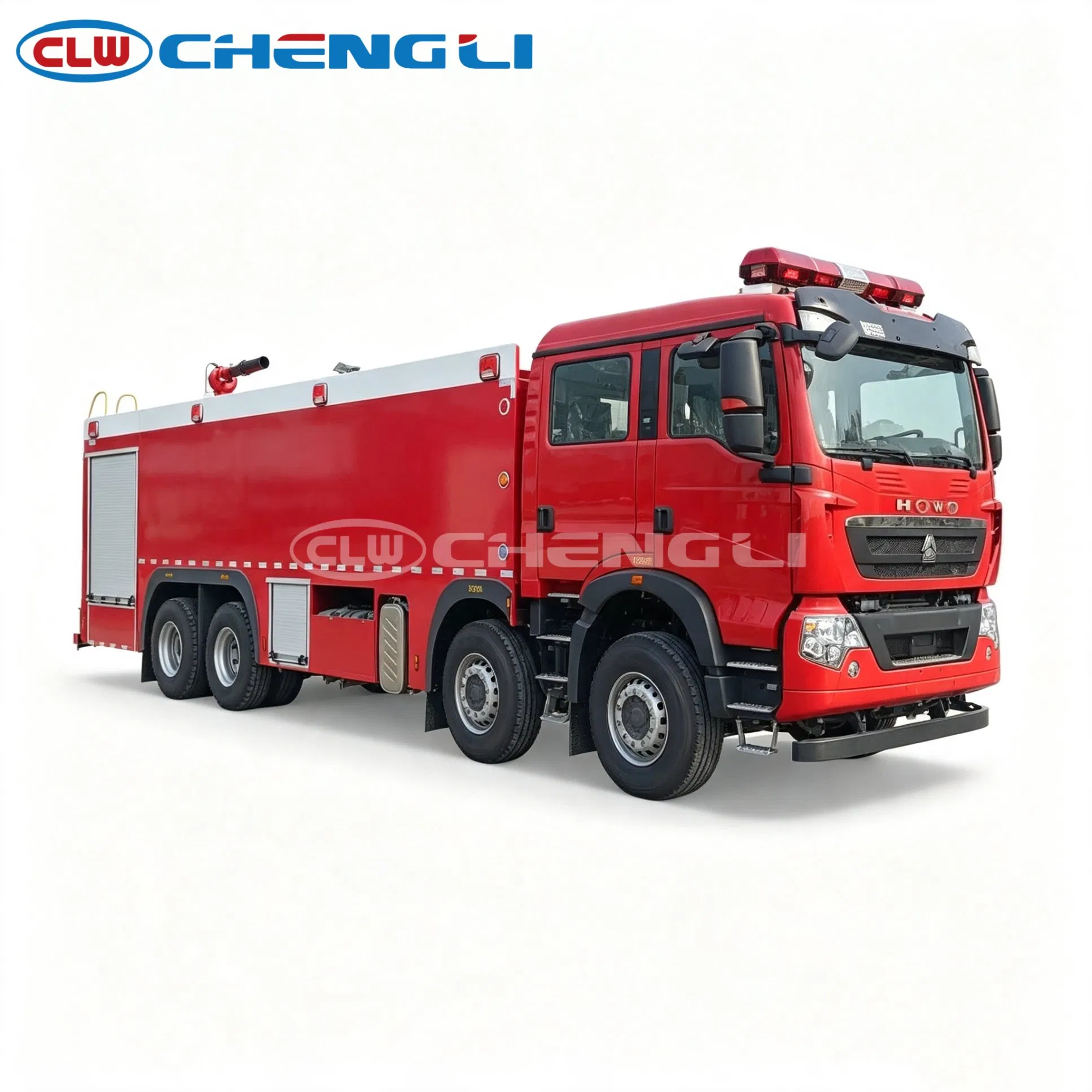
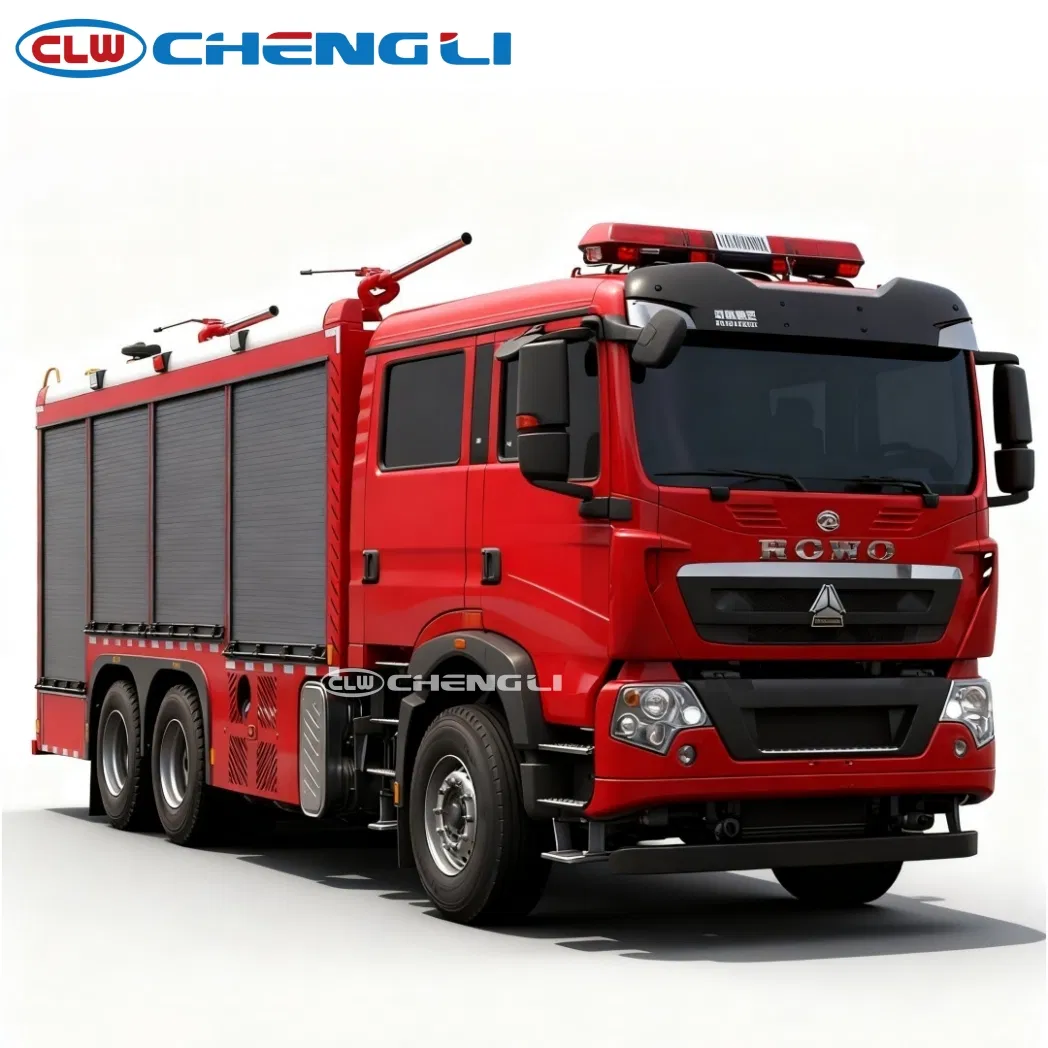
Burning wood, paper and cloth call for water, burning fuel and solvents call for foam, and pressurized gas or live electrical equipment calls for dry powder. The choosing rule: match the truck to the worst fuel on your site, then keep water available for cooling, because real incidents rarely involve a single fuel and powder on its own cools nothing.
How water, foam and dry powder put out a fire
Water cools. Each kilogram that turns to steam absorbs about 2.26 MJ, which is why nothing beats it on solid materials that burn deep. On a burning liquid, though, a water jet sinks, boils violently and can splash burning fuel outward.
Foam smothers. Water mixed with a few percent of foam concentrate and expanded with air forms a blanket that floats on a burning liquid, cuts off oxygen and holds down the vapors. Because foam is mostly water, it also cools, but less than a straight stream.
Dry powder interrupts the flame chemistry. A powder cloud knocks flame down faster than water or foam, but it leaves hot steel and hot fuel hot. Once the cloud settles, anything still above its ignition temperature can flash back.
Fire classes: why the letters differ between Europe and the US
European standard EN 2 and US standard NFPA 10 agree on Classes A, B and D but split gas, electrical and cooking-oil fires differently. The table compares them by fuel.
| Fuel on fire | EN 2 (Europe) | NFPA 10 (US) | Water | Foam | Dry powder |
|---|---|---|---|---|---|
| Wood, paper, textiles, rubber | A | A | Best choice | Works; Class A foam improves soaking | ABC powder only; no cooling |
| Diesel, petrol, crude oil, solvents | B | B | Unsuitable as a jet; spreads burning liquid | Best choice | Fast knockdown; re-ignition risk |
| LPG, natural gas, hydrogen | C | B | For cooling nearby tanks only | Not effective on gas jets | Best choice once the supply is isolated |
| Live electrical equipment | No letter class | C | Unsafe while energized | Unsafe while energized | Suitable; non-conductive |
| Magnesium, titanium, sodium | D | D | Dangerous; can react violently | Dangerous | Special Class D powder only |
| Cooking oils and fats | F | K | Dangerous; causes flare-up | Not the usual choice | Not the usual choice; wet chemical preferred |
So Class C means a gas fire on a European data sheet and an electrical fire on a US one. In a tender, name the fuel, such as LPG storage or a transformer yard, instead of relying on the letter.
Water, foam and dry powder trucks compared
For pumpers, rescue trucks and other mission types, see our overview of fire truck types.
| Truck type | Our agent range | Drive | Main strength | Main limit |
|---|---|---|---|---|
| Water tank truck | 850 L to 25,000 L water (about 225 to 6,600 US gal) | 4x2, 4x4, 6x4, 8x4 | Cooling; building and vegetation fires | Poor on burning liquids; unsafe near live equipment |
| Water and foam truck | 3,000 L to 21,000 L water plus 1,000 L to 5,500 L foam | 4x2, 4x4, 6x4, 8x4 | Fuel and solvent fires plus normal water work | Concentrate is a consumable with a shelf life |
| Dry powder truck | 4,000 kg or 6,000 kg powder | 6x4 | Gas, fuel spills, live electrical plant | No cooling; one charge per call-out |
| Water, foam and powder truck | 2,600 L water, 2,000 L foam, 2.0 m³ powder | 4x2 | Mixed hazards on one vehicle | Small quantity of each agent |
Foam fire trucks: tank ratio and foam type
A foam truck carries water and concentrate in separate tanks and mixes them at the pump through a proportioner, commonly at 3% or 6%. The ratio between the tanks tells you how the truck is meant to work.
Take our HOWO 6x4 foam tender with 11,900 L of water and 3,824 L of foam. For example, at 3% its full water tank uses only about 370 L of concentrate, and at 6% about 760 L. The rest, roughly five times what the onboard water can use, only pays off when the truck draws water from a hydrant, an open source or a supporting tanker. With no dependable water supply on site, a larger water tank is worth more than a larger foam tank.
Flow sets the clock. Our 8x4 truck with 20,900 L of water and 3,900 L of foam pumps 100 L/s at 1.0 MPa, so at full flow its water lasts about 209 seconds, or 3.5 minutes.
Foam type matters as much as volume. Standard AFFF and protein foams work on hydrocarbons such as diesel and crude oil, but polar solvents such as alcohols and ethanol-blended fuel break them down, so those sites need an alcohol-resistant grade. Some markets now restrict fluorinated foams; confirm what your authority permits. Concentrate is corrosive, which is why that 8x4 truck pairs a 304 stainless steel foam tank with a Q235 steel water tank.
Dry powder fire trucks: fast knockdown, no cooling
A dry powder truck stores powder in pressure vessels and expels it, usually with compressed nitrogen, through a roof monitor and hose reels. We offer a 6x4 unit with a 4 m³ tank and 4,000 kg charge at 17,650 kg GVW, and a larger HOWO 6x4 dry powder truck carrying 6,000 kg in two 3,000 L cylinders at 24,450 kg GVW.
BC powders, based on sodium or potassium bicarbonate, are for liquid and gas fires; ABC powders, based on monoammonium phosphate, add solid materials.
Because powder does not cool, a fuel pool on hot steel can re-ignite once the cloud clears, so crews follow up with foam or water. On a gas leak, putting out the flame before the supply is shut off lets an unburned gas cloud build up, which can be worse than the fire. The charge is one-shot, and refilling needs dry powder and nitrogen on hand.
Metal fires need a dedicated Class D powder and application method. Our powder trucks are not metal-fire units.
Combined-agent trucks: water, foam and powder on one chassis
When one site holds fuel, gas and electrical plant, a combined truck puts all three agents under one crew. Our HOWO 4x2 water, foam and powder truck carries 2.6 m³ of water, 2.0 m³ of foam and 2.0 m³ of powder, with a 60 L/s pump. The trade-off is quantity: at 60 L/s its water lasts about 43 seconds, so it is a first-strike vehicle, not a supply vehicle.
The alternative is a pair: a powder truck for knockdown and a large foam tender for the blanket that prevents re-ignition. That costs a second crew and chassis but carries several times more of each agent. Refineries and tank farms often weigh these options; our oil, gas and chemical fire protection page covers typical site risks.
What to confirm before ordering
- The fuels on site by name (diesel, crude, LPG, ethanol, transformers) and the fire class system your tender uses.
- Water and foam tank volumes, and whether the truck will draw from hydrants or open water.
- Foam concentrate type and proportioning rate.
- Powder type (BC or ABC), charge in kg, and how it is expelled and refilled.
- Pump flow in L/s at a stated pressure, plus monitor type and reach.
- Drive (4x2, 4x4, 6x4 or 8x4), axle loads and road limits on your route.
- Tank materials, for example stainless steel for foam concentrate.
- The fire apparatus standard your market requires; specify it and confirm it at quotation.
FAQ
What is a foam tender?
Foam tender is a common name, mostly in industrial and airport fire services, for a truck built around a large foam concentrate supply rather than a large water supply. It feeds its own monitor and hose lines, or supplies concentrate to other pumpers at a large incident, while hydrants or other trucks provide the water.
Can a dry powder fire truck fight building fires?
Only as a supporting unit. ABC powder can knock down flame on solid materials, but it does not penetrate deep-seated fires in furniture, stored goods or timber, and it gives the structure no cooling. A building fire still needs water in far larger quantity than any powder truck carries.
Is foam safe on electrical fires?
Not while the equipment is energized. Even at a 6% mix, foam solution is 94% water, so it conducts electricity and puts the crew at risk. The normal sequence is to have the utility isolate the supply, then attack what is burning, such as transformer oil, with foam once power is confirmed off.
How often does foam concentrate need replacing?
Shelf life depends on the concentrate type, the tank material and how well the tank is sealed. Keep the tank full to limit air contact, never mix brands or types, and test a sample at the interval the supplier recommends. After use, flush the proportioner with clean water so dried concentrate does not block valves.
Which fire classes does a dry powder truck cover?
That depends on the powder loaded, not the truck. BC powder covers flammable liquids and gases, Classes B and C in Europe but both Class B in the US, and live electrical equipment, US Class C. ABC powder adds solid materials, Class A in both systems. Neither covers metal fires.
Use water for solid materials and cooling, foam for burning liquids and dry powder for gas and live electrical risks, then combine agents when one site holds more than one fuel. Compare our water, foam and dry powder fire trucks, then send us your site's fuels and water supply and our engineers will propose an agent mix and chassis.