Three numbers define an asphalt distributor truck: tank volume, spray width and application rate. Our distributors carry nominal tanks from 5,000 L to 12,000 L, spray 4 m to 4.5 m wide with a 6 m option, and apply 0.2–3.5 L/m² with a stated accuracy of ±2%. A fourth number, rated payload, decides how much of that tank you can legally fill.
Asphalt distributor truck sizes and ratings
All five of our distributors run two-axle 4x2 chassis with thermal-oil heating, rock wool insulation, Siemens PLC control and both cab and rear operating stations. They differ in tank size, pump and spray bar.
| Distributor | Nominal tank | GVW | Rated payload | Spray width | Nozzles | Asphalt pump |
|---|---|---|---|---|---|---|
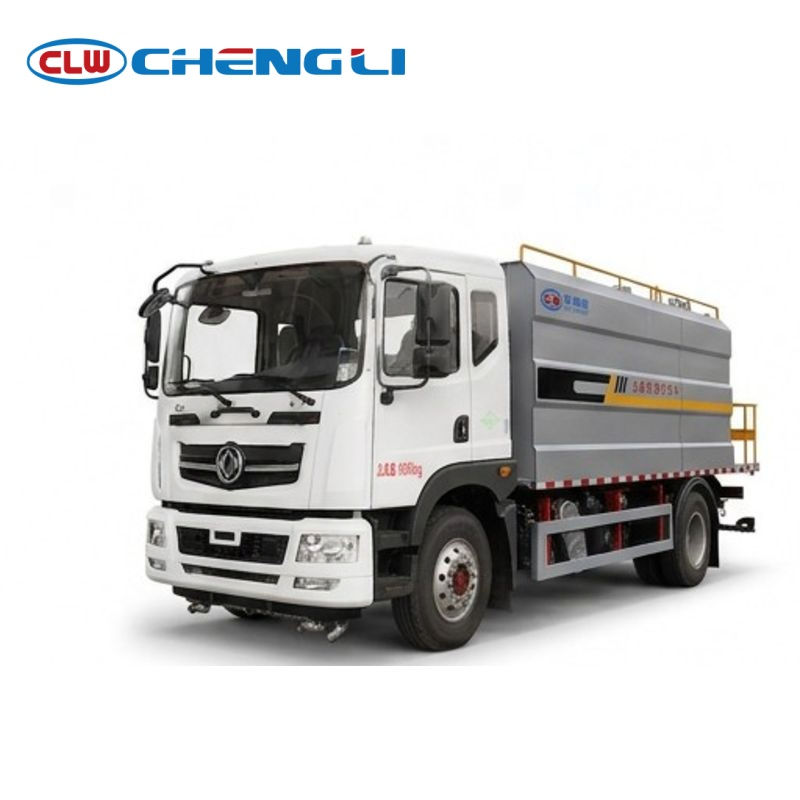
| Dongfeng D6 | Confirm at quotation | 7,360 kg | 2,030 kg | 4 m | 30 | 680 L/min |
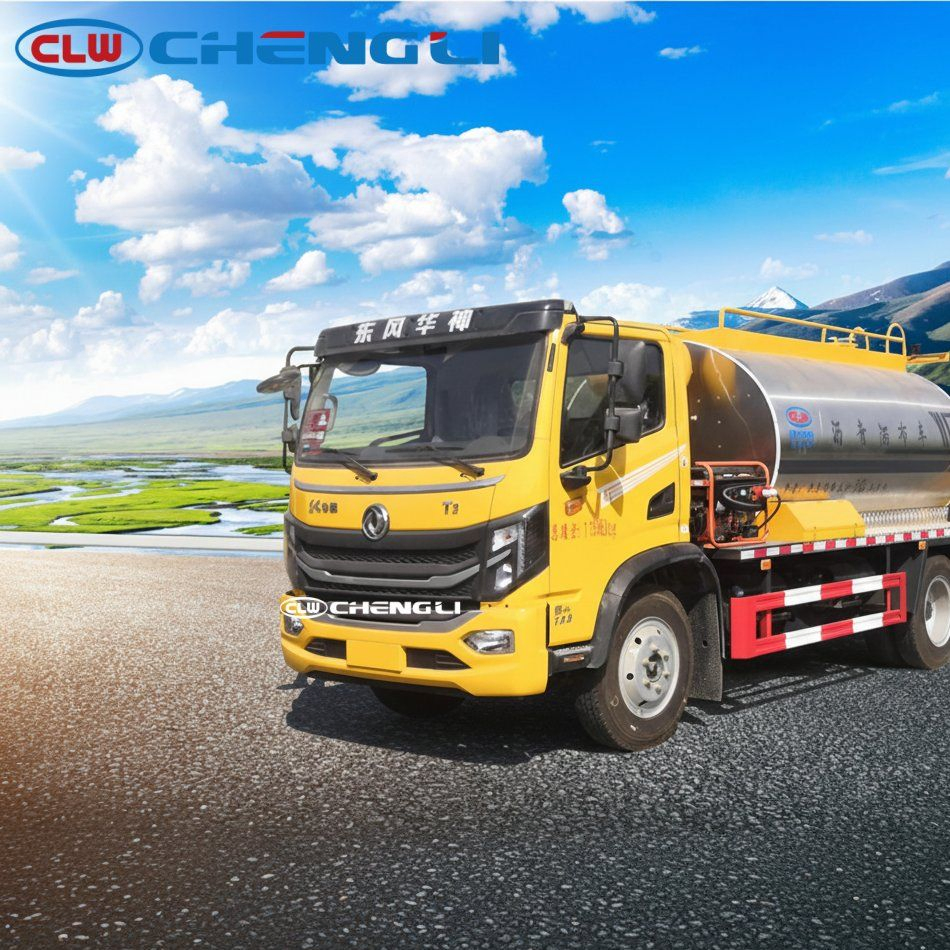
| Dongfeng T3 | 5,000–6,300 L | 11,990 kg | 4,910 kg | 4.5 m; 6 m optional | 34 | 680 L/min |
| Dongfeng Vasol | 6,300 L | 11,200 kg | 4,405 kg | 4.5 m; 6 m optional | 34 | 680 L/min |
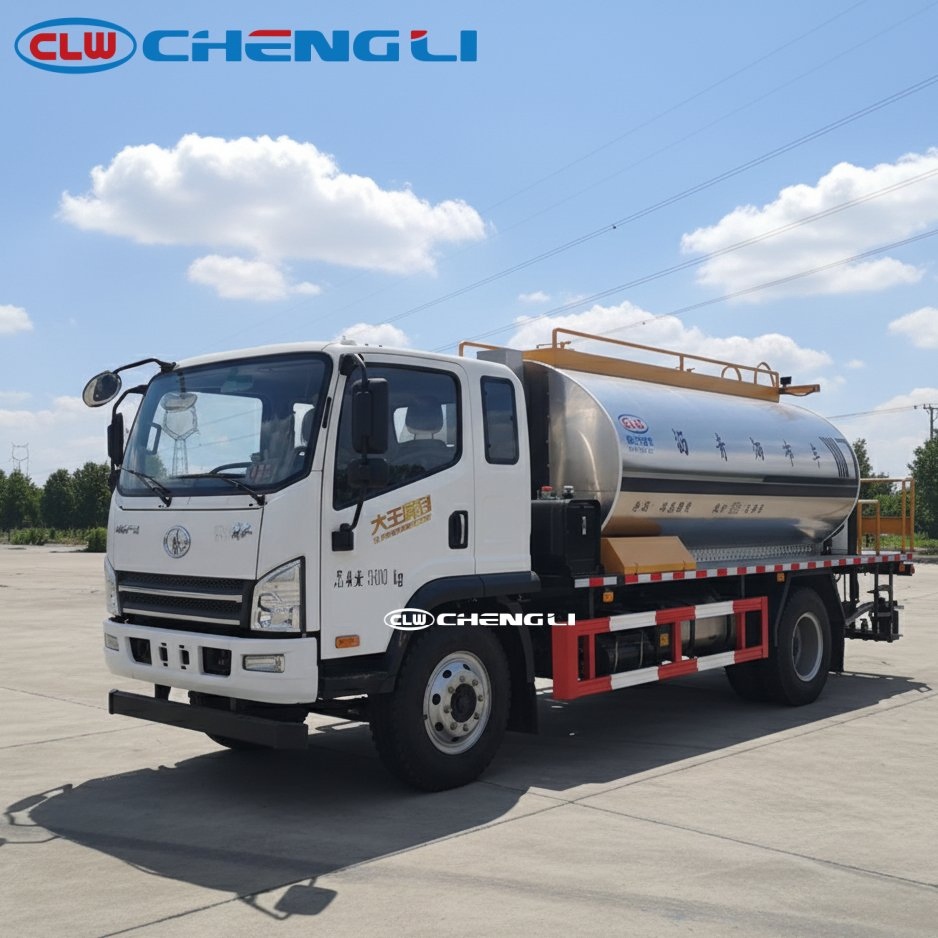
| FAW Jiefang | 8,000–9,300 L | 16,000 kg | 7,505 kg | 4.5 m; 6 m optional | 36 | 680 L/min |
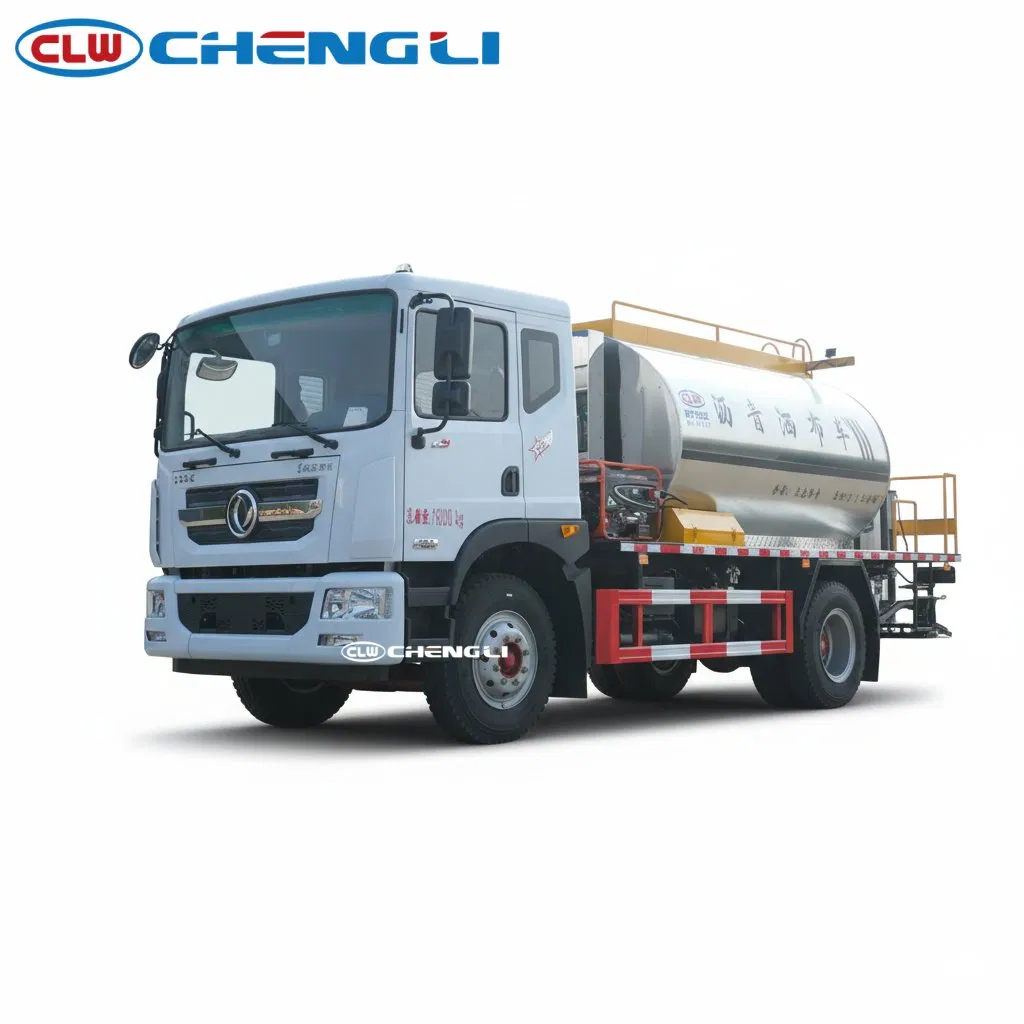
| Dongfeng D9 | 10,000–12,000 L | 18,000 kg | 8,420 kg | 4.5 m; 6 m optional | 36 | 950 L/min |
Tank volume vs payload: how much binder can you legally carry?
Paving bitumen and bitumen emulsions weigh roughly 1 kg per liter, slightly more when cold and slightly less when hot. That makes rated payload in kilograms a close guide to the legal fill in liters, and on every distributor with a stated tank size the nominal tank is larger than the payload.
- Dongfeng D6: 2,030 kg of payload means roughly 2,000 L of binder per load, whatever tank is fitted, which suits short patching and tack-coat runs.
- Dongfeng Vasol: about 4,400 L of a 6,300 L tank.
- Dongfeng T3: about 4,900 L, close to a full 5,000 L tank but short of the 6,300 L option.
- FAW Jiefang: about 7,500 L of an 8,000–9,300 L tank.
- Dongfeng D9: about 8,400 L of a 10,000–12,000 L tank.
Hot binder also expands, so no tank is filled to the brim. The practical rule is to plan each shift on the payload figure, not the nominal volume. If your contract needs 8,000 L per load, the FAW Jiefang is marginal and the Dongfeng D9 distributor with 950 L/min pump is the better starting point. Local axle and gross weight limits can lower these figures further.
Spray width, nozzles and application rate
Application rate is liters of binder per square meter of road. Our distributors cover 0.2–3 L/m² or 0.2–3.5 L/m² depending on model. Tack coats between asphalt layers sit at the low end of that range; prime coats and chip seal binder run higher. Your pavement design, not the truck, sets the target rate.
Spray width decides how many passes a lane needs. A 4.5 m bar covers a typical traffic lane plus shoulder in one pass; the 6 m option suits wider carriageways and airport or yard surfaces, while the 4 m bar on the Dongfeng D6 30-nozzle distributor folds in three sections and lifts and shifts sideways for narrower roads. More nozzles across the same width, 36 against 30, give finer overlap between spray fans. A 6 m hand spray gun on every model covers edges, joints and patches the bar cannot reach.
Why travel speed and pump flow must match
The truck lays binder by driving: the flow leaving the bar must equal rate × width × speed. Rearranged, the fastest possible spraying speed is pump flow ÷ (rate × width). Using our pump ratings as the upper limit:
| Pump | Spray width | Rate | Maximum speed |
|---|---|---|---|
| 680 L/min | 4.5 m | 0.5 L/m² | about 302 m/min (18 km/h) |
| 680 L/min | 4.5 m | 1.0 L/m² | about 151 m/min (9.1 km/h) |
| 680 L/min | 4.5 m | 3.0 L/m² | about 50 m/min (3.0 km/h) |
| 950 L/min | 6 m | 1.0 L/m² | about 158 m/min (9.5 km/h) |
Drivers cannot hold an exact speed over a kilometer, so the PLC reads a speed sensor and adjusts a proportional valve to keep the rate constant as the truck speeds up or slows down. That closed loop is what the ±2% accuracy figure depends on. Ask how the system is calibrated and how the rate is logged per job.
The same arithmetic sets production. At 1.0 L/m² and 4.5 m wide, about 4,400 L, the legal load of the Vasol, covers about 4,400 m², or roughly 980 m of lane. Divide your daily area by that figure to size the fleet.
Heating, insulation and cleaning
Bitumen must stay hot enough to pump and spray. Our distributors heat it with a thermal-oil circuit fired by a G20 burner, with a dual-burner option, and hold temperature with rock wool insulation. A 7 kW generator or an inverter powers the controls and burner. Thermal oil heats the tank and lines evenly without direct flame on the binder, which reduces local overheating.
Cleaning is part of every shift. Binder left in the pump, lines and nozzles sets as it cools, so each truck carries pneumatic and diesel flushing. Blow out and flush the system after spraying, and check the filter net before the next job.
Asphalt distributor vs cement slurry spray truck
Not every road layer uses bitumen. Cement-stabilized bases and some rehabilitation work use cement slurry, sprayed by a different body. Our Dongfeng 4x2 9 t cement slurry spreader carries a slurry tank with spray and lifting mechanisms on an 18 t 4x2 chassis rated for 9 t of payload, with engine options from 194 to 259 hp. Slurry is heavier than bitumen, so size its tank from payload too. Chip spreaders and synchronous chip sealers, which place aggregate over fresh binder, are part of the same paving train; we do not currently list them. Our roads and utilities solutions cover the wider fleet, and our guide to dump truck capacity covers aggregate haulage.
How to specify an asphalt distributor truck
- Binder type: hot bitumen, emulsion or cutback, and the working temperature it needs.
- Liters per load: checked against rated payload and your road limits, not nominal tank volume.
- Spray width: 4 m, 4.5 m or 6 m, matched to lane widths and the number of passes you accept.
- Rate range: the lowest and highest L/m² your specifications call for, and the logging you need for records.
- Pump capacity: 680 or 950 L/min, sized for the rate, width and speed you plan to work at.
- Heating: single or dual burner, and generator or inverter supply.
- Chassis details: left- or right-hand drive, seating for two or three and the emission level your market accepts.
FAQ
What does an asphalt distributor truck do?
It carries heated bitumen or bitumen emulsion in an insulated tank and sprays it evenly across the road through a rear spray bar. Typical jobs are tack coats between asphalt layers, prime coats on granular bases and the binder layer of chip seals. The control system holds the application rate as travel speed changes, and a hand spray gun covers edges and patches.
How much area can one load of asphalt cover?
Divide the liters on board by the application rate. About 4,400 L at 1.0 L/m² covers about 4,400 m²; at 0.5 L/m², the same load covers about 8,800 m². Use the legal fill, set by payload, rather than the nominal tank size, and allow a small reserve for priming the bar and hand-spraying edges.
Is a bitumen sprayer the same as an asphalt distributor?
Yes. Bitumen sprayer, bitumen distributor and asphalt distributor all describe the same truck. Asphalt is the usual American word for the binder, while bitumen is common in Europe, Africa, the Middle East and Asia. The specification points are identical: tank volume, payload, spray width, application rate and heating system.
Why is the nominal tank bigger than the payload?
The tank is built to a geometric size that suits several chassis and binder types, while the payload is fixed by the chassis rating. A tank that is not filled to capacity also leaves space for hot binder to expand. On our trucks with a stated tank size, the legal fill ranges from about 70% to 98% of the nominal volume, depending on the tank option.
Size an asphalt distributor from the liters you need per load and the rate and width your pavement design calls for, then check pump flow and payload against them. Compare current builds in our road construction truck range, then send your binder type, target rates, daily area and destination market through our contact page for a matched configuration.