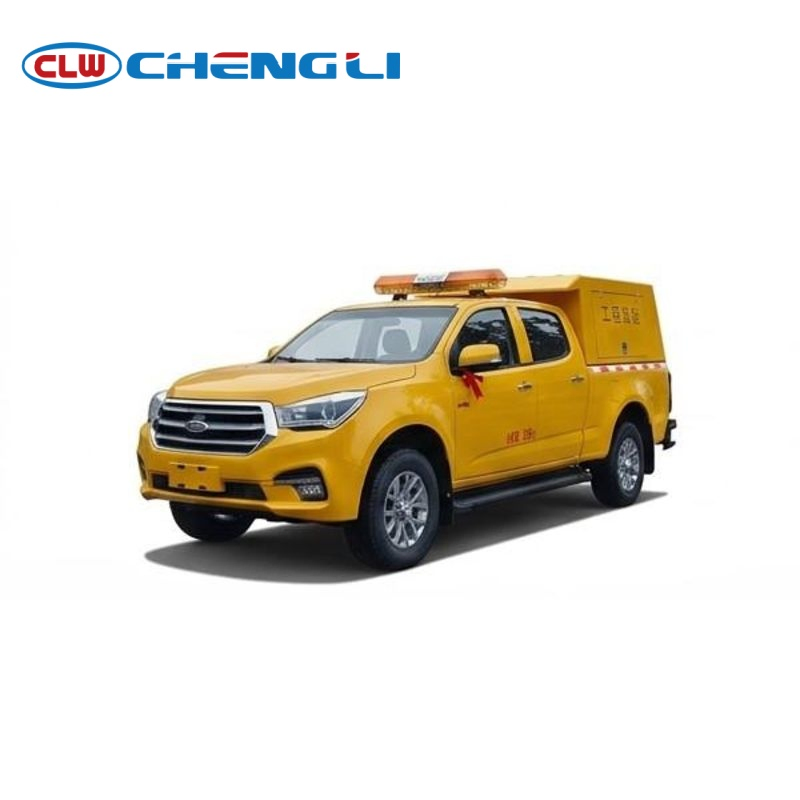
A disaster response fleet works in three layers that have to arrive together: rescue trucks that reach people and clear water or debris, power trucks that replace the failed grid, and water tankers that keep people and equipment supplied. Size each layer by a single figure: crew and tools for rescue, critical load in kW for power, and people served per day for water.
What goes into a disaster response fleet?
Most agencies already own fire trucks. What they lack after a flood, earthquake or storm is the supporting fleet that keeps a response running for days instead of hours. The table shows the roles, the figure that sizes each one and the trucks we build for it.
| Role | What it does on site | Sizing figure | Our current builds |
|---|---|---|---|
| Light rescue and drainage | Pumps flooded basements and underpasses, lights scenes, runs tools | Crew seats, pump duty, vehicle width | 3,300 kg pickup to 4,490 kg double-cab van |
| Heavy rescue and lighting | Lifts and pulls debris, lights large areas | Crane and winch rating, floodlight coverage | Dongfeng 12,000 kg GVW truck with crane and winch |
| Command | Coordinates teams and keeps communications up | Access to the scene, network links | 3,055 kg 4x4 pickup to 6 t 4x4 light truck |
| Mobile power | Feeds hospitals, pumps, shelters and lighting | Critical load in kW and runtime | 400 kW 4x2, 800 kW 6x4, 2,000 kW 8x4 |
| Water supply | Carries drinking water to camps, clinics and districts | People served per day, road access | 5,000 L, 8,000 L 4x4, 10,000 L and 20,000 L stainless tankers |
Shelter, kitchen and laundry trucks join later in long deployments. They depend on the same power and water, which is why those two layers need to be planned first.
Which trucks deploy first in the first 72 hours?
Order of arrival matters as much as fleet size. A practical sequence looks like this:
- Hours 0–6: command vehicle and light rescue trucks. They are small, fast and fit damaged or crowded streets. Their job is assessment, lighting and first pumping.
- Hours 6–24: heavy rescue and the first power truck. A crane truck clears access routes; the generator restores power to the most critical site, usually a hospital, pumping station or command post.
- Hours 24–72: water tankers on fixed delivery rounds, more power units and, if the response will last, shelter and kitchen trucks.
Two practical points follow. First, every truck in the first wave must be able to reach the scene on its own wheels, so drive type and width count more than capacity. Second, the second wave brings the heaviest vehicles, which need routes that have been checked for weight and height.
Rescue trucks: small and fast, or heavy with a crane?
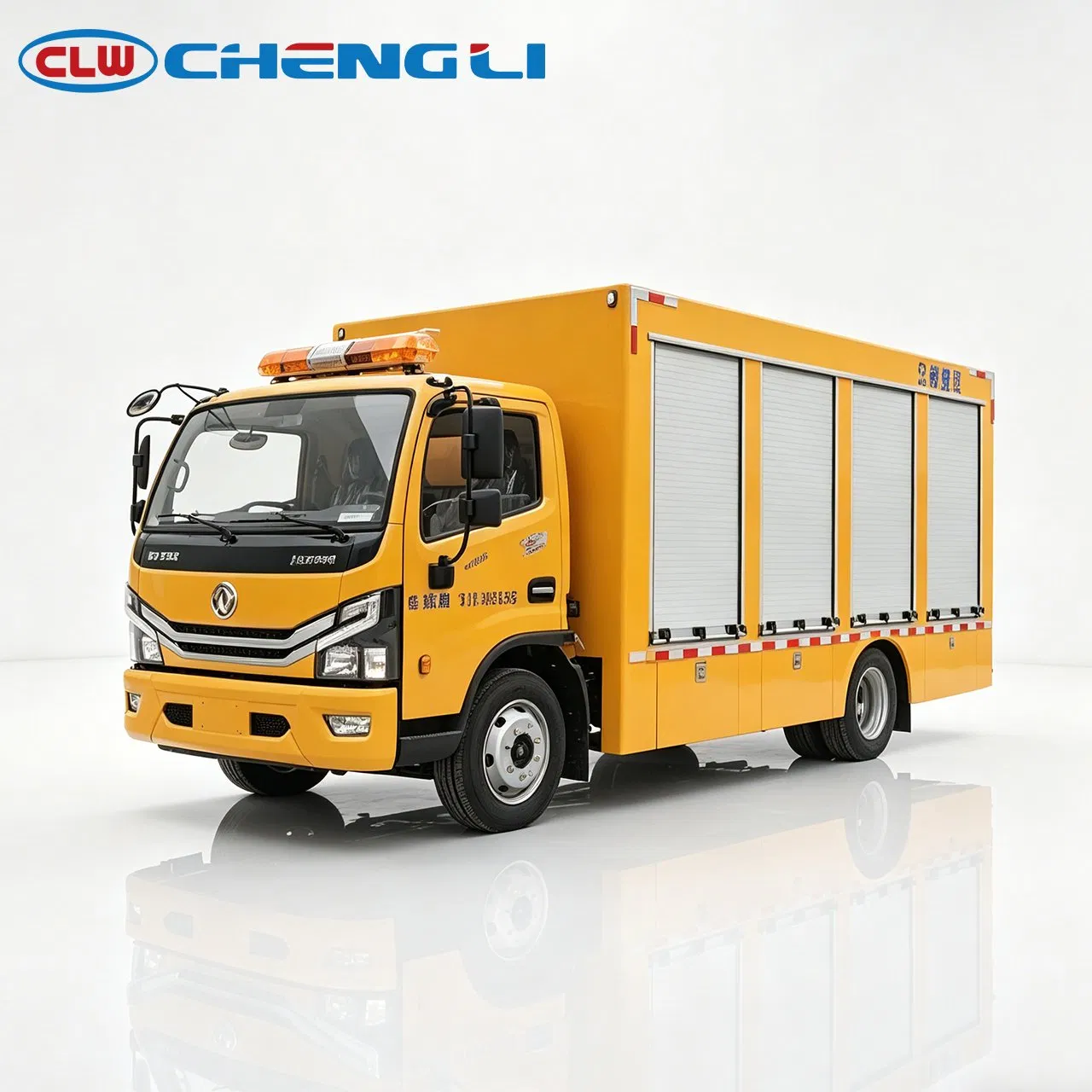
Light rescue trucks earn their place by getting in. Our CLW pickup generator and drainage rescue truck is 1,885 mm wide, weighs 3,300 kg gross and carries a crew of five with a built-in generator set and drainage equipment. It reaches underground garages, alleys and flooded underpasses where a full-size truck cannot turn. The Iveco double-cab drainage vehicle steps up to a 4,490 kg GVW with six seats, a drainage pump, a generator and a control cabinet. The JMC rescue van adds a compressor, cutter and welder for repair work and seats six to nine.
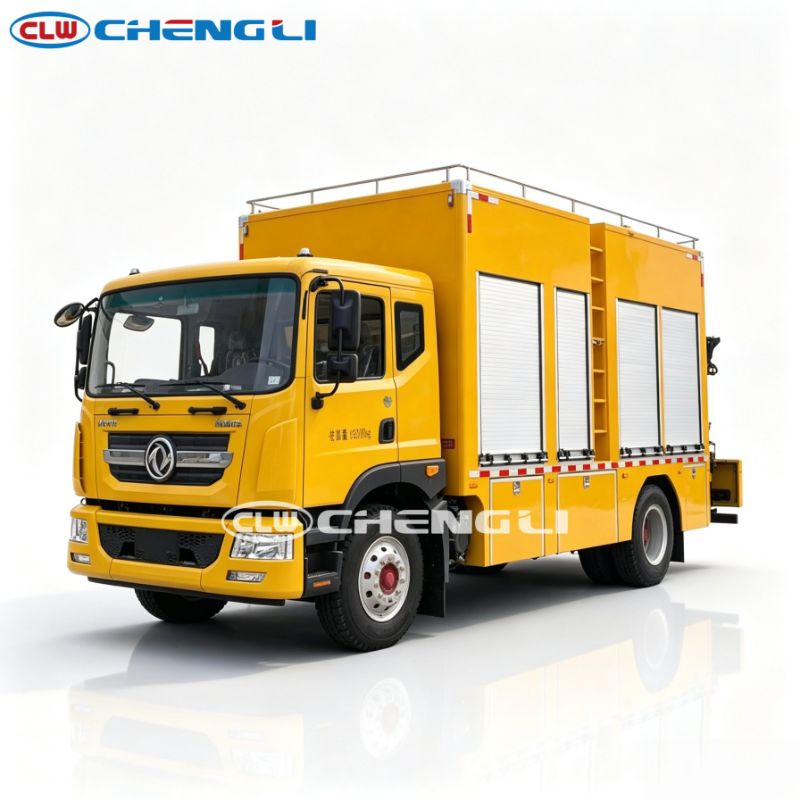
Heavy rescue starts where hand tools stop. The Dongfeng 12 t rescue lighting truck carries a generator, floodlights, a power cabinet, a crane and a winch on a 12,000 kg GVW chassis, 8,350 mm long. One such truck can clear fallen trees and wreckage from an access road and then light the work area overnight. For a city or district, a sensible ratio is several light units for each heavy one, because floods and storms create many small jobs and a few large ones.
Power trucks: size to the critical load, then plan fuel
Start with the loads that cannot go dark: hospital wards and theaters, water and sewage pumping stations, communications, shelter lighting. Add their running kW, then allow margin for motor starting current, since pumps and compressors draw several times their running current at start.
Our power trucks come in three steps. The Dongfeng 4x2 400 kW emergency power truck runs eight hours at full load, is 9,000 mm long and keeps noise to 75 dB or less at 1 m. The Dongfeng Tianlong 6x4 carries 800 kW in a body 3,800 mm or 3,980 mm high, and the 8x4 truck carries 2,000 kW on a 31,000 kg GVW chassis. A 400 kW truck often suits a district hospital or a single pumping station; a regional water plant may need the 800 kW or 2,000 kW class.
Fuel is the hidden part of the power plan. A diesel generator at full load typically burns about 0.25 L per kWh. Eight hours at 400 kW is 3,200 kWh, or roughly 800 L of diesel per truck per shift. Over three days of continuous running that becomes about 7,200 L, so a fuel bowser or a supply contract belongs in the same plan as the generators.
Water tankers: liters per person and delivery rounds
Humanitarian planning commonly uses a minimum of 15 L per person per day for drinking, cooking and basic hygiene, as set out in the Sphere Handbook. Clinics, field kitchens and sanitation need more. That figure turns tank volume into people served:
| Tanker | Drive | Volume | People per load at 15 L/day | Best use |
|---|---|---|---|---|
| Dongfeng 5,000 L potable | 4x2 | 5,000 L | About 330 | Villages, clinics, frequent short rounds |
| Dongfeng 8,000 L emergency | 4x4 | 8,000 L | About 530 | Damaged or flooded roads, remote camps |
| Dongfeng 10,000 L potable | 4x2 | 10,000 L | About 670 | Paved routes to relief camps |
| Dongfeng 20,000 L | 6x4 | 20,000 L | About 1,330 | Bulk transfer to storage tanks in towns |
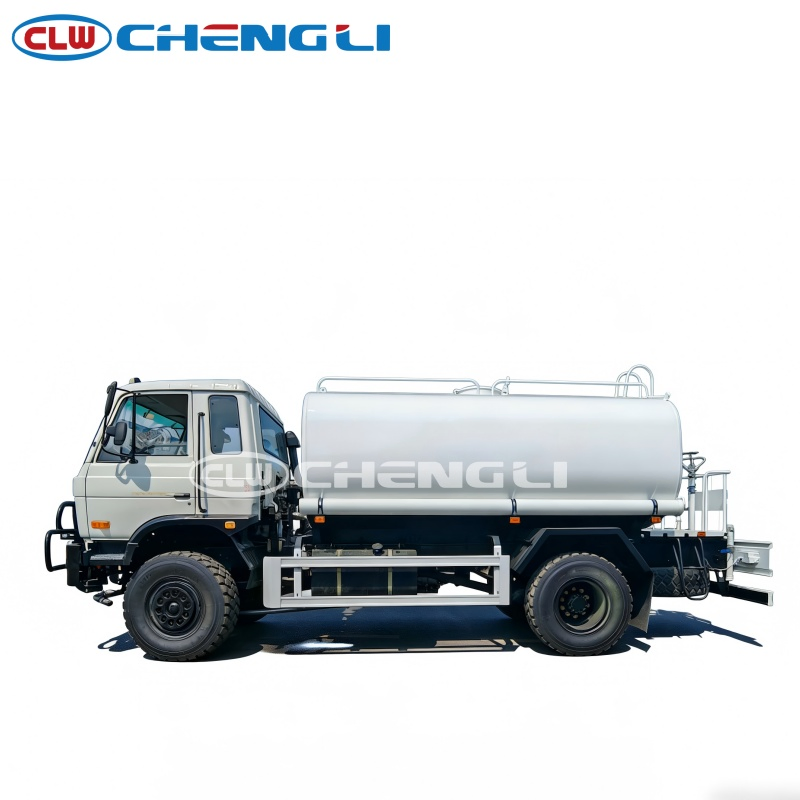
A typical pattern pairs a large tanker on the main road with smaller ones on the last stretch. The 20,000 L truck is 10,275 mm long on a 25,000 kg GVW chassis, so it fills bladder or storage tanks at a hub. The Dongfeng 4x4 8,000 L stainless emergency water tanker, 7,430 mm long, then carries water into areas where roads are broken or muddy. All four carry stainless steel tanks, which keeps the water path clean. Water weighs about 1 kg per liter, so an 8,000 L load is about 8 t on a 14,000 kg GVW truck; part-loading is an option on very poor ground.
Matching the fleet to the hazard
The same three layers apply to every disaster, but the balance shifts:
- Floods: drainage capacity leads. Plan several light drainage trucks per district, a power truck for each major pumping station and 4x4 water tankers, because flooding contaminates local supply while it blocks low roads.
- Earthquakes: heavy rescue and lighting lead, since crews work through the night on collapsed structures. Power for hospitals follows quickly, and water demand rises as mains break.
- Storms and typhoons: debris clearing and power restoration lead. Crane trucks reopen roads; generators bridge the gap until lines are repaired.
- Drought and long outages: water tankers and fuel lead, with fixed daily rounds and large tankers feeding storage at clinics and schools.
Our fire and emergency services solutions show how these trucks sit alongside fire engines in a wider fleet.
How to specify a disaster response fleet
- Hazard profile: the disasters you plan for, ranked by likelihood, and the population and area each district covers.
- Critical power load: kW, voltage, frequency and connectors at each facility that must stay powered, plus target runtime.
- Water demand: people to supply per day, liters per person you plan to deliver and the number of delivery points.
- Access limits: narrowest streets and the lowest or weakest bridges on likely routes, and where 4x4 is required.
- Rescue kit: pump duty, generator output, lighting, crane and winch ratings, and crew seats for each rescue truck.
- Fuel and refill: how generators and tankers will be refueled and refilled during a multi-day response.
- Market details: emission level, left- or right-hand drive, warning lights and livery required in your country.
FAQ
How many water tankers does a relief camp need?
Divide daily demand by the volume each truck delivers per day. A camp of 2,000 people at 15 L each needs 30,000 L a day. One 10,000 L tanker making three round trips covers that if the filling point is close; with a long haul, two or three trucks are safer. Add volume for clinics, kitchens and cleaning, and keep a storage tank on site so supply survives a missed delivery.
Can a fire truck supply drinking water after a disaster?
Not safely as a routine. Fire truck tanks, pumps and hoses are not built or cleaned for potable water, and they may have carried foam or untreated water. Use dedicated stainless tankers for drinking water and keep fire trucks for firefighting, wash-down and non-potable supply. If a fire tanker must be used in a crisis, treat the water before anyone drinks it.
Should disaster response trucks be 4x4?
The first-wave trucks and any tanker serving damaged roads benefit most from 4x4, as with our 8,000 L emergency tanker and 4x4 command vehicles. Large power trucks and 20,000 L tankers usually stay on paved routes, where 4x2, 6x4 or 8x4 road chassis carry more for the money and are easier to maintain. Mix the two rather than making every truck off-road.
How long can a mobile power truck run without refueling?
Our 400 kW and 800 kW trucks are rated for eight hours at full load. At lighter loads they run longer on the same fuel. For continuous supply, plan refueling every shift or connect an external tank, and size the fuel supply with the generator rather than after it arrives.
Plan the three layers together: rescue trucks sized by crew and kit, power trucks sized by the critical load, and water tankers sized by people per day and the roads they must use. Compare current builds in our emergency rescue vehicle range, then send your hazard profile, district population and destination market through our contact page, and our engineers will propose a fleet configuration.